On this page
Women in Sports is Chapter 16 of Khel Praveen, the NCERT Class 9 Physical Education book (First Edition, April 2026). The book places it in Unit 4, Sports for All. The CBSE 2026-27 Physical Education and Well-being curriculum lists the same topic, "Women's Participation in Sports", under its Unit 5, also called Sports for All. The unit numbers differ between the two documents; the content is the same.
What does Women in Sports Class 9 cover?
The chapter opens with three women from Indian history, Devi Ahilya Bai, Rani Laxmi Bai and Jhalkari Bai, as examples of courage and strength. It names no modern athletes. It then covers six ideas:
Rising participation, backed by government schemes such as Khelo India and the National Sports Talent Search Scheme
Gender equality and the barriers that remain
Physical, psychological and social benefits of sport for women
Special considerations: menarche, menstruation and menstrual dysfunction
The female athlete triad
Myths and taboos about exercise during periods
How many marks is this chapter worth in 2026-27?
The CBSE curriculum gives the subject 100 marks: 20 for theory and 80 for practical. Every one of the eight units carries 2 theory marks (MCQ, objective or short answer), 16 in all, and a viva adds 4. Sports for All is planned for 3 theory hours and 3 practical hours.
Those 2 marks cover the whole unit, shared with other chapters, so Women in Sports has no separate figure. The subject is assessed in school, not in a board exam.
What barriers do women still face in sports?
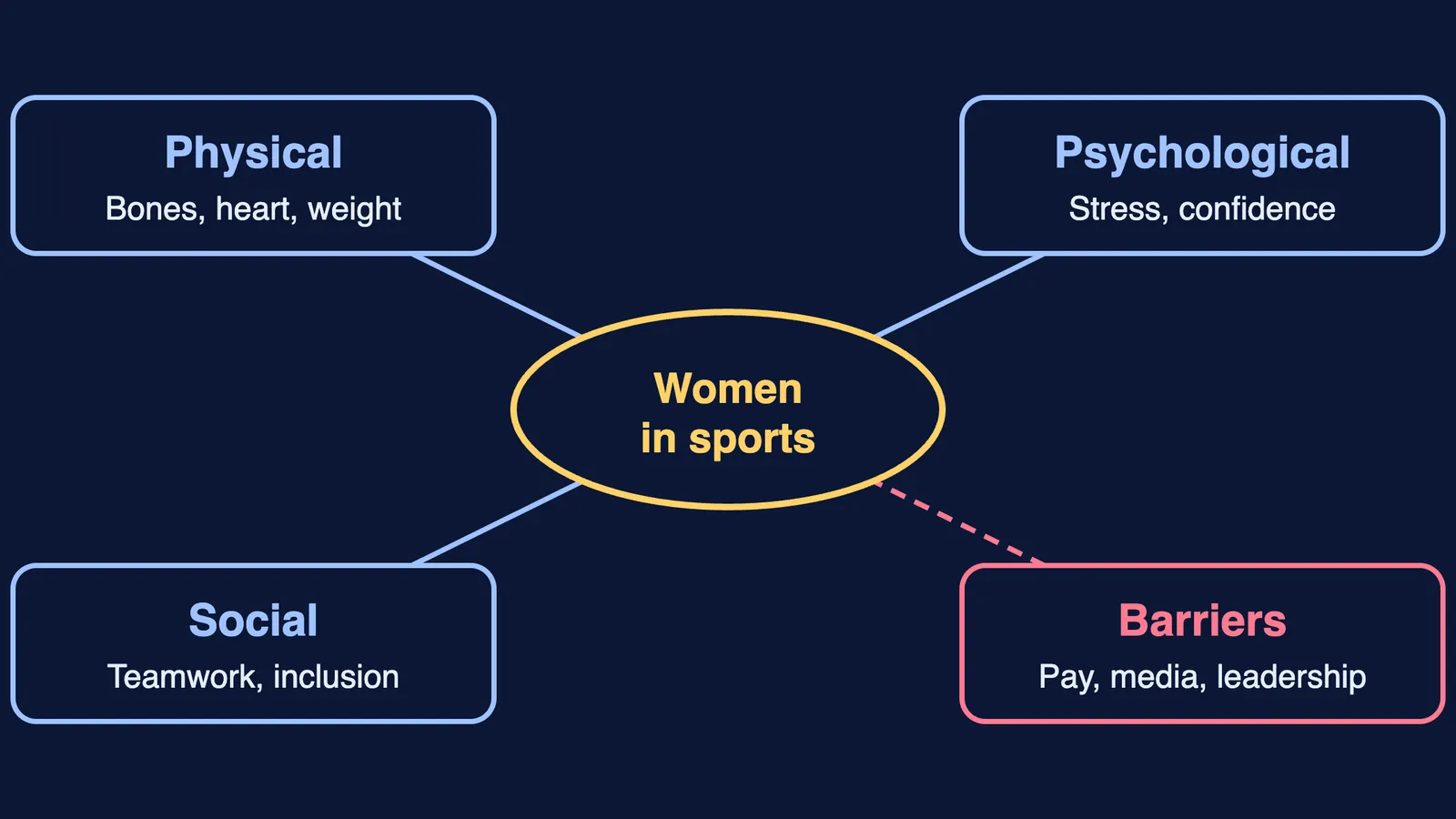
According to the chapter, the Constitution of India guarantees gender equality, yet women in sport still meet three problems:
Unequal pay
Less media coverage
Few places in sports administration and leadership
It also records progress: women now head the Indian Olympic Association as well as the Indian Paralympic Committee. The book says the International Olympic Committee is working for equal participation, and that women are expected to make up about 49 per cent of participants at the next Olympic Games.
What are the benefits of sports for women?
Learn the benefits in three groups. A quick hook is 5-4-4: five physical, four psychological, four social.
Physical: lower risk of obesity, diabetes and high blood pressure; denser bones (the book notes women are more prone to osteoporosis than men); better muscle tone and posture; a stronger heart and lungs; weight control.
Psychological: stress relief through endorphins, calmer emotions under pressure, higher confidence and self-esteem, and leadership.
Social: clearer communication, teamwork, better relationships with teammates and officials, and inclusion of women from different backgrounds.
In a 2-mark answer, name the group and give one benefit with a school example.
What does the chapter say about menstrual health and the triad?
Figures from Khel Praveen Chapter 16: Menarche, the first period, usually comes between 8 and 15 years of age. Genetics, nutrition and health, activity and body weight, and socio-economic and environmental conditions affect its timing. A typical cycle repeats every 21 to 35 days, and a period lasts 3 to 7 days, most often 3 to 5. Menopause usually arrives between 45 and 55 years.
Disorder names in the book:
Polymenorrhea: periods less than 21 days apart
Oligomenorrhea: periods more than 35 days apart
Primary amenorrhea: periods have not started by puberty
Secondary amenorrhea: no period for three months or longer after they began
Dysmenorrhea: painful periods; menorrhagia: very heavy or long bleeding; metrorrhagia: bleeding between periods
Pre-menstrual syndrome: mood and body changes in the days before a period
Postmenopausal bleeding: bleeding after menopause
The book says the American College of Sports Medicine first described the female athlete triad in 1992. Its three linked parts are low energy availability, menstrual dysfunction and low bone mineral density. They often occur together in athletes who train hard without eating enough.
On the common myth that girls should skip exercise during periods, the book says light activity often eases cramps and lifts mood.
How should you revise and practise this chapter?
Draw the concept map from memory.
Write the disorder key from memory and check it.
Adapt the book's talk-show activity: speak for two minutes on how your school could get more girls playing.
Practice questions (mark labels are our suggestion):
(1 mark) Which is not part of the female athlete triad? (a) low energy availability (b) menstrual dysfunction (c) low bone mineral density (d) high blood pressure. Answer: (d).
(1 mark) Periods that come 40 days apart are called ____. Answer: oligomenorrhea.
(2 marks) Give two challenges women still face in sport and one sign of progress in Indian sports administration.
(Viva) Explain one psychological and one social benefit of sport, using an example from your school.
Not sure where to start? Fermi's AI tutor works out what you already know and builds a plan for the session.
If you move on to Class 11, the Olympism, values and symbols guide and the guide to physical education for CWSN go further; in Class 12, see children and women in sports.