On this page
Chapter 5 of NCERT's new Class 8 book, *Exploring Society: India and Beyond*, Part 1 (code hees1; first edition July 2025, reprinted March 2026, per its front pages), opens the Governance and Democracy theme. The CBSE 2026-27 curriculum page covers Classes 9 to 12 only; Classes 6 to 8 follow the NCERT book, so this chapter is assessed by the school.
What is universal adult franchise in Class 8?
Franchise (or suffrage) is a right to vote granted by a constitution or government. Universal adult franchise means one vote for each adult citizen, with every vote of equal value: any Indian citizen aged 18 or over may vote, whatever their caste, religion, gender, education or income (NCERT Chapter 5). The book links this to Article 326 of the Constitution and applies it to Lok Sabha, assembly and local elections.
The voting age fell from 21 to 18 in 1988.
You must be on your constituency's voter list; nobody may vote for another.
About 13 per cent of Indians could vote before Independence. Indian women voted from the start; Swiss women only from 1971.
Literacy in 1947 was about 14 per cent (about 8 per cent for women), yet franchise was universal from the outset.
In 2024, over 968 million voters were eligible for 543 Lok Sabha seats; about 34 per cent did not vote.
How does the Election Commission of India run elections?
Set up in 1950, the Election Commission of India (ECI) is independent and constitutional. It runs polls for the Lok Sabha, Rajya Sabha, state assemblies, President and Vice President (NCERT Chapter 5). It sets dates, registers parties and enforces the Model Code of Conduct, led by a Chief Election Commissioner and two Election Commissioners. State Election Commissions run panchayat and city polls.
At the booth, three polling officers check your name and ID, ink your finger and check the chit; you then vote on the EVM and check the VVPAT slip. NOTA rejects every candidate but does not change who wins.
The Model Code of Conduct, first adopted in Kerala in 1960, stops the party in government from using government resources for the election, for example by announcing new schemes that may sway voters and makes vote-buying with gifts punishable. The book credits T.N. Seshan, Chief Election Commissioner from 1990, with voter IDs and spending checks.
How are Lok Sabha, Rajya Sabha and President elections different?
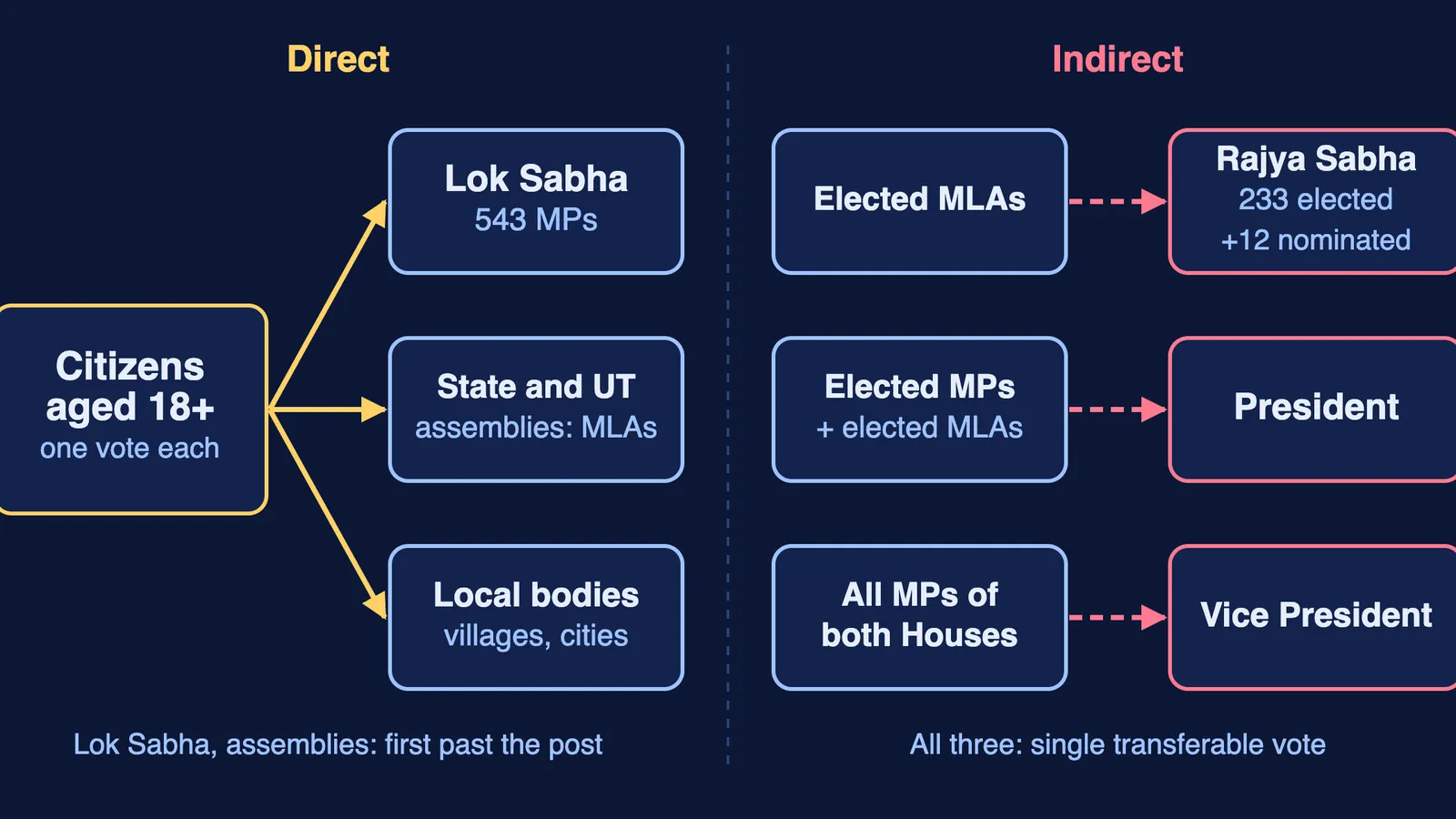
The hero diagram sums this up (NCERT Chapter 5).
Lok Sabha and assemblies (direct): voters elect MPs and MLAs by first past the post; the top vote-getter wins, even below 50 per cent. Of 543 Lok Sabha seats, 84 are reserved for scheduled castes and 47 for scheduled tribes. The majority party or coalition forms the government; its leader usually becomes prime minister (or chief minister).
Rajya Sabha (indirect): 233 of its 245 members are elected by MLAs; the President nominates 12. Seats follow state population. It is never dissolved; members serve six years, and a third retire every two years.
President (indirect): elected MPs of both Houses and elected MLAs of the states, Delhi and Puducherry vote.
Vice President (indirect): elected and nominated members of both Houses vote. The Vice President chairs the Rajya Sabha.
These three indirect elections use the single transferable vote.
Worked example: who wins under first past the post?
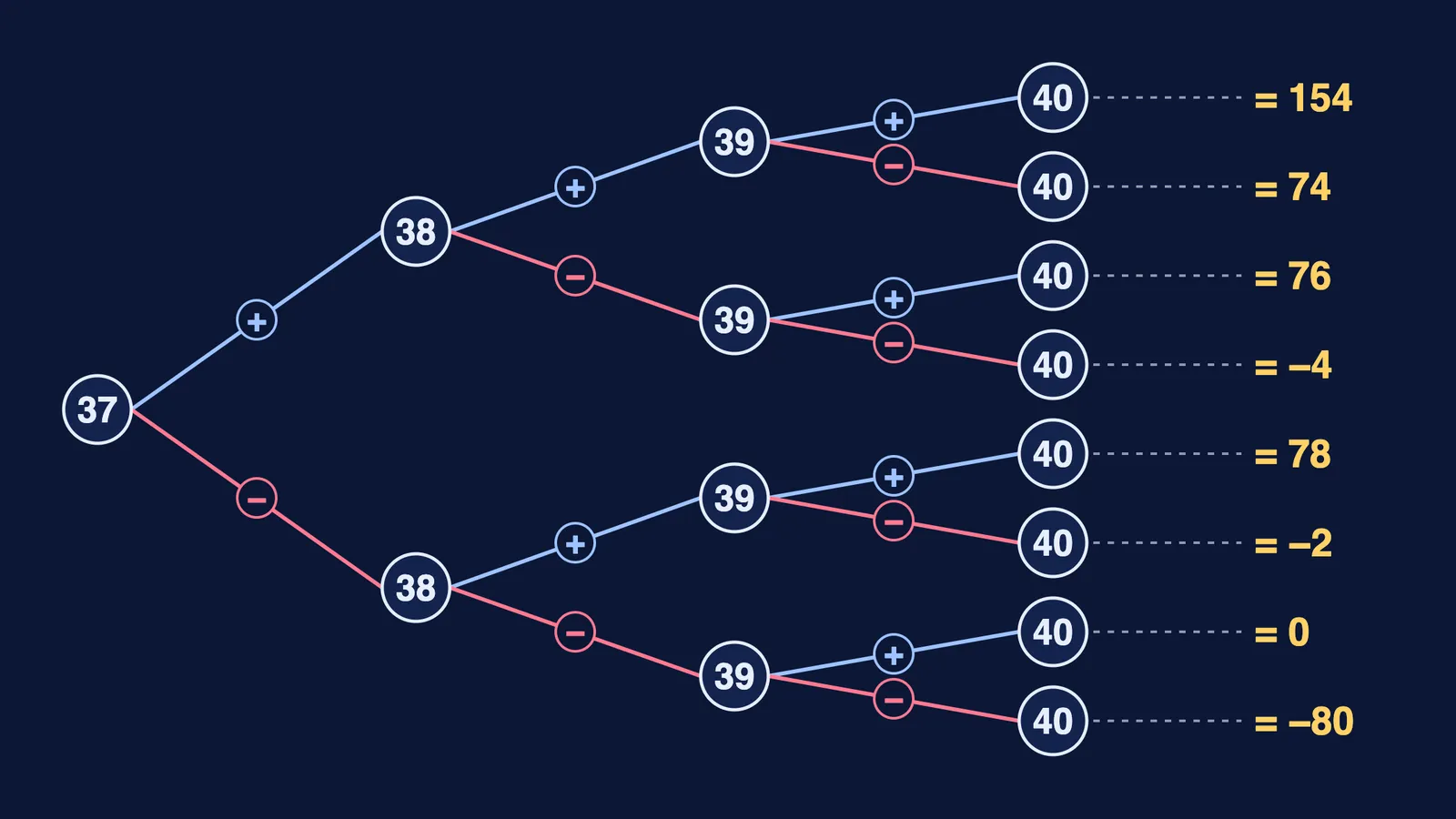
Our example: 39 of Class 8C's 40 students vote. Meera gets 14, Tanvi 12, Arjun 9, NOTA 3, and 1 ballot is blank.
Ballots cast: 14 + 12 + 9 + 3 + 1 = 39.
Valid votes: 39 − 1 = 38.
Meera has the most votes, so she wins.
Her share: 14 ÷ 38 = 36.8 per cent. The other 24 valid votes (63.2 per cent) went elsewhere.
NOTA's 3 votes change nothing.
A note on the book's school election: its printed tallies (8, 12, 10 and one invalid) add to 31, while the text says 33 votes were cast; ask your teacher which figure to use.
Practice questions for Chapter 5
Mark labels are our suggestion.
(1 mark) When was the voting age lowered to 18?
(2 marks) Class reps elect a student council head. Is this direct or indirect? Name one Indian election of the same type.
(3 marks) Describe three tasks of the ECI.
(3 marks) A gets 410 votes, B 395, C 290 and NOTA 25. Who wins, with what share of all 1,120 votes? Does NOTA matter?
(5 marks) Someone says only school graduates should vote. Give two reasons from the chapter for universal adult franchise.
Answer to 4: A wins with 410 of 1,120 (36.6 per cent), 15 ahead of B; NOTA changes nothing.
How does this chapter connect to the rest of the book?
Chapter 6 then shows what these MPs and MLAs do. See our older-syllabus guide on why India needs a Parliament and the features of the Indian Constitution for Class 8. Class 9 returns to this in Elections, Chapter 7.
Want a plan before you revise? Fermi's AI tutor works out what you already know and builds a plan for the session.