On this page
In NEET-UG 2026, chemistry had 45 multiple-choice questions with four options and one correct answer (+4 right, −1 wrong), in a paper of 180 questions in 180 minutes, per the NTA Information Bulletin for NEET (UG)-2026. NEET 2027 is not yet notified.
That is about a minute a question: recall a reagent, colour or reason, or run a short titration sum. Our practical chemistry guide for JEE Main details the cation groups; this one is about speed and elimination.
What does Unit 20 of the NEET syllabus list?
Unit 20 of the NMC NEET (UG)-2026 syllabus names:
Detection of extra elements in organic compounds: nitrogen, sulphur, halogens.
Functional groups: hydroxyl (alcoholic and phenolic), carbonyl (aldehyde and ketones), carboxyl, amino.
Inorganic preparations: Mohr's salt, potash alum.
Organic preparations: acetanilide, p-nitroacetanilide, aniline yellow, iodoform.
Titrimetric exercises: acids, bases and the use of indicators; oxalic acid vs KMnO4; Mohr's salt vs KMnO4.
Salt analysis cations: Pb2+, Cu2+, Al3+, Fe3+, Zn2+, Ni2+, Ca2+, Ba2+, Mg2+, NH4+.
Salt analysis anions: CO3 2−, S2−, SO4 2−, NO3−, NO2−, Cl−, Br−, I− (insoluble salts excluded).
Experiments: enthalpy of solution of CuSO4; enthalpy of neutralisation of strong acid and strong base; lyophilic and lyophobic sols; kinetics of iodide ions with hydrogen peroxide.
Where is practical chemistry in the 2026-27 NCERT books?
Mostly in NCERT's chemistry laboratory manuals, not a textbook chapter:
Lassaigne's test: Class 11 Chemistry Part II, Unit 8 (Reprint 2026-27), and Experiment 7.2 of the Class 11 manual.
Acid-base titrations and indicators: Class 11 manual, Unit 6.
KMnO4 titrations: Class 12 manual, Unit 6.
Salt analysis: Unit 7 of both manuals. Its ion list is longer (adding As3+, Mn2+, Co2+, Sr2+, SO3 2−, PO4 3−, C2O4 2−, CH3COO−) than the NMC list.
Functional groups: Class 12 manual, Unit 8; preparations, Units 9 and 10.
The four experiments: Class 12 manual Units 1 to 3.
One gap: Unit 10 has no iodoform preparation; learn the reaction from the iodoform test in Unit 8.
How do you solve a KMnO4 titration question fast?
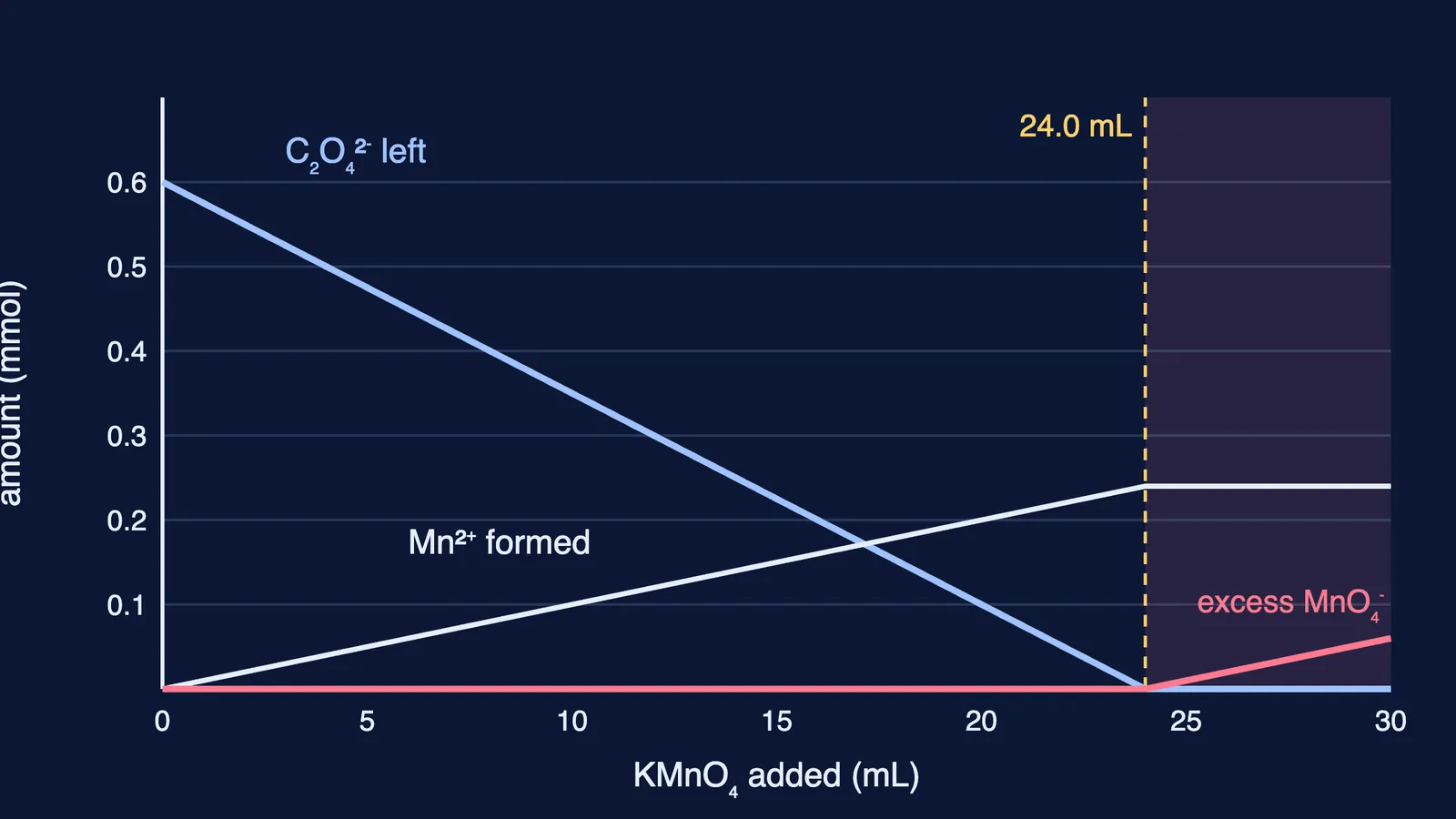
Worked example 1. 0.945 g of oxalic acid dihydrate (126 g/mol) is made up to 250.0 mL. 20.0 mL needs 24.0 mL of KMnO4 in dilute H2SO4. Find the KMnO4 molarity.
Oxalic acid: 0.945 ÷ 126 = 0.00750 mol per 0.250 L = 0.0300 M.
Ratio (Class 12 manual): 2MnO4− + 5C2O4 2− + 16H+ → 2Mn2+ + 10CO2 + 8H2O.
Oxalate: 0.0300 × 20.0 = 0.600 mmol, so MnO4− = 0.600 × 2/5 = 0.240 mmol.
Molarity: 0.240 ÷ 24.0 = 0.0100 M (about 1.58 g/L).
Check by electrons: 5 × M × 24.0 = 2 × 0.0300 × 20.0, so M = 0.0100 M. 0.025 M comes from a 1:1 ratio, 0.0625 M from a flipped one: eliminate both.
Worked example 2. A colourless salt gives no precipitate with dilute HCl, acidic H2S, or NH4OH with NH4Cl, but a white one with H2S in ammoniacal solution. Its acidified sodium carbonate extract gives a yellow AgNO3 precipitate insoluble in NH4OH. Name the salt.
Of NEET's Group IV ions, only Zn2+ gives a white sulphide (NiS is black); yellow silver halide insoluble in NH4OH is AgI (Class 11 manual, Unit 7). Answer: ZnI2.
Which traps cost marks?
From the same manuals:
KMnO4 titrations use dilute H2SO4: HNO3 is an oxidant, HCl is oxidised to chlorine.
Warm oxalic acid to 50-60 °C; Mn2+ catalyses the reaction, so it starts slowly. Mohr's salt is not heated.
KMnO4 is its own indicator: the first permanent light pink.
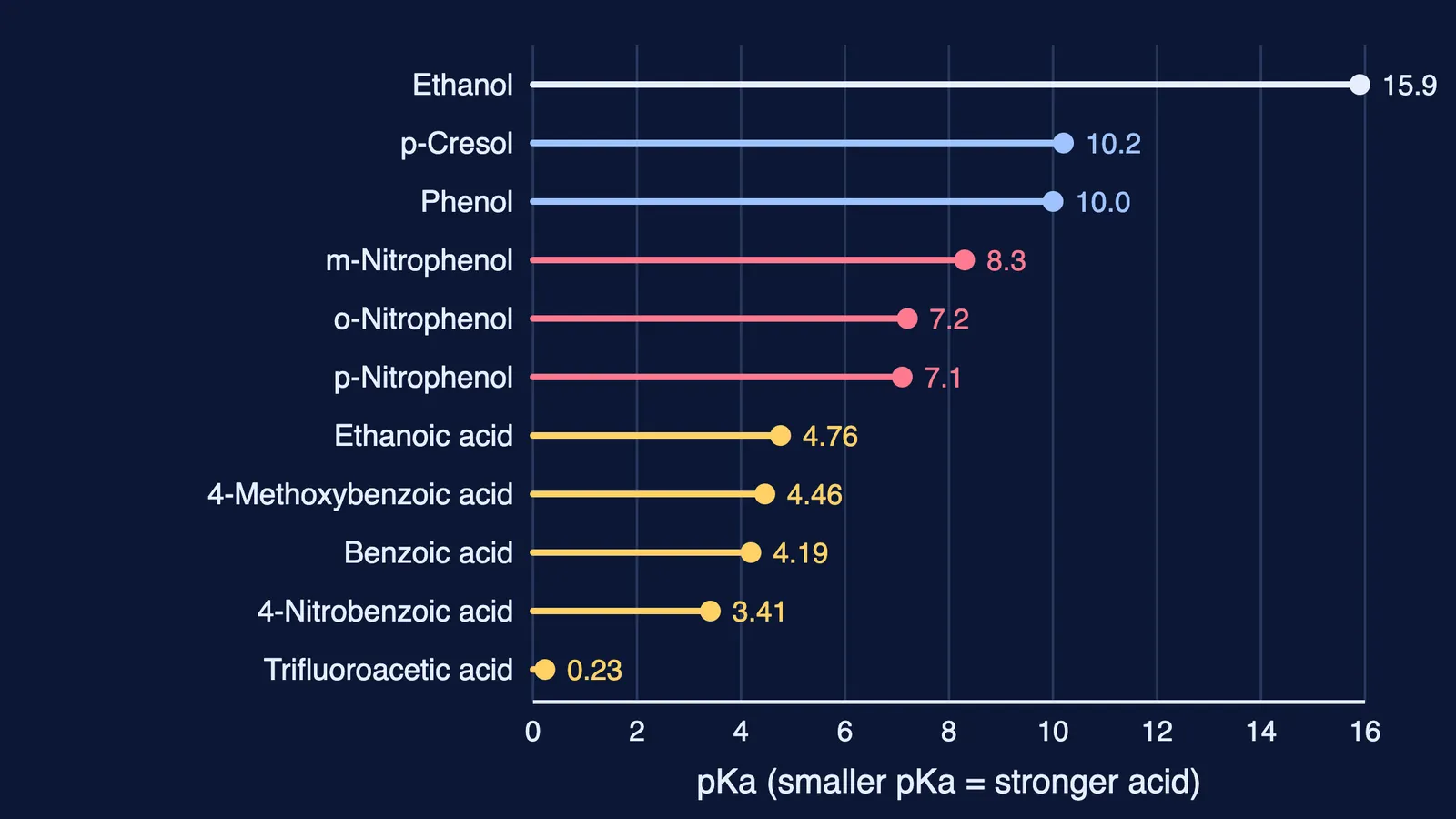
Phenolphthalein for weak acid vs strong base, methyl orange for strong acid vs weak base, either for strong vs strong (Class 11 manual, Unit 6).
Boil Lassaigne's extract with nitric acid before AgNO3, to remove HCN or H2S.
Dilute H2SO4 stops hydrolysis while preparing Mohr's salt and potash alum.
How should you plan 10 days for this unit?
Days 1-2: write the NMC list from memory; map each item to its manual unit.
Days 3-5: reagent-observation cards for the NMC ions, Lassaigne's and functional-group tests.
Day 6: the six preparations and each reagent's role.
Days 7-8: titration sums by moles, checked by electrons; see our NEET redox guide and mole concept guide.
Day 9: the four experiments.
Day 10: a timed mixed set; log every wrong colour.
Stuck on a step? The Fermi Problem Library has worked problems with a step-by-step solver that explains the reasoning rather than printing an answer.
Practice: can you do these in a minute each?
15.0 mL of 0.0200 M KMnO4 oxidises all the Fe2+ in 25.0 mL of Mohr's salt solution. Fe2+ molarity: (a) 0.0120 M (b) 0.0600 M (c) 0.0300 M (d) 0.0750 M.
A compound gives an orange precipitate with 2,4-DNP, no silver mirror with Tollens' reagent, and yellow crystals with iodine and NaOH. It is: (a) propanal (b) butan-2-one (c) pentan-3-one (d) benzaldehyde.
Answers: 1 (b), 2 (b).