On this page
This unit covers six functional groups: alcohols, phenols, ethers, aldehydes, ketones and carboxylic acids. Prepare it from one acidity ladder, a short list of named reactions and a few tests.
What does the NEET syllabus list for organic compounds containing oxygen?
NEET-UG 2027 has not been notified, so this guide follows the National Medical Commission's syllabus for NEET (UG)-2026, dated 22 December 2025. Organic Compounds Containing Oxygen is Unit 17 there, covering general methods of preparation, properties, reactions and uses:
Alcohols: identifying primary, secondary and tertiary alcohols; the mechanism of dehydration.
Phenols: acidic nature; halogenation, nitration and sulphonation; the Reimer-Tiemann reaction.
Ethers: structure.
Aldehydes and ketones: the carbonyl group; nucleophilic addition (HCN, NH3 and its derivatives, Grignard reagent) and relative reactivity; oxidation; Wolff-Kishner and Clemmensen reduction; acidity of the α-hydrogen; aldol condensation; Cannizzaro reaction; haloform reaction; tests that tell aldehydes from ketones.
Carboxylic acids: acidic strength and the factors affecting it.
In NCERT Class 12 Chemistry Part II this is Unit 7, Alcohols, Phenols and Ethers, and Unit 8, Aldehydes, Ketones and Carboxylic Acids, both marked Reprint 2026-27. We checked both against the NMC list. Nearly everything is there, including the Lucas test, Tollens' and Fehling's tests and the iodoform reaction. One gap: NCERT's list of phenol's ring substitutions has only nitration and halogenation. Sulphonation of phenol appears only in passing, as the first step in making picric acid. Learn that one line.
How should you practise this unit for NEET?
As in NEET-UG 2026, the NTA information bulletin sets 180 compulsory questions in 180 minutes, 45 of them in Chemistry, each a multiple-choice question with four options and a single correct or best answer. A right answer earns +4, a wrong one −1, a blank 0. That is about a minute a question, so:
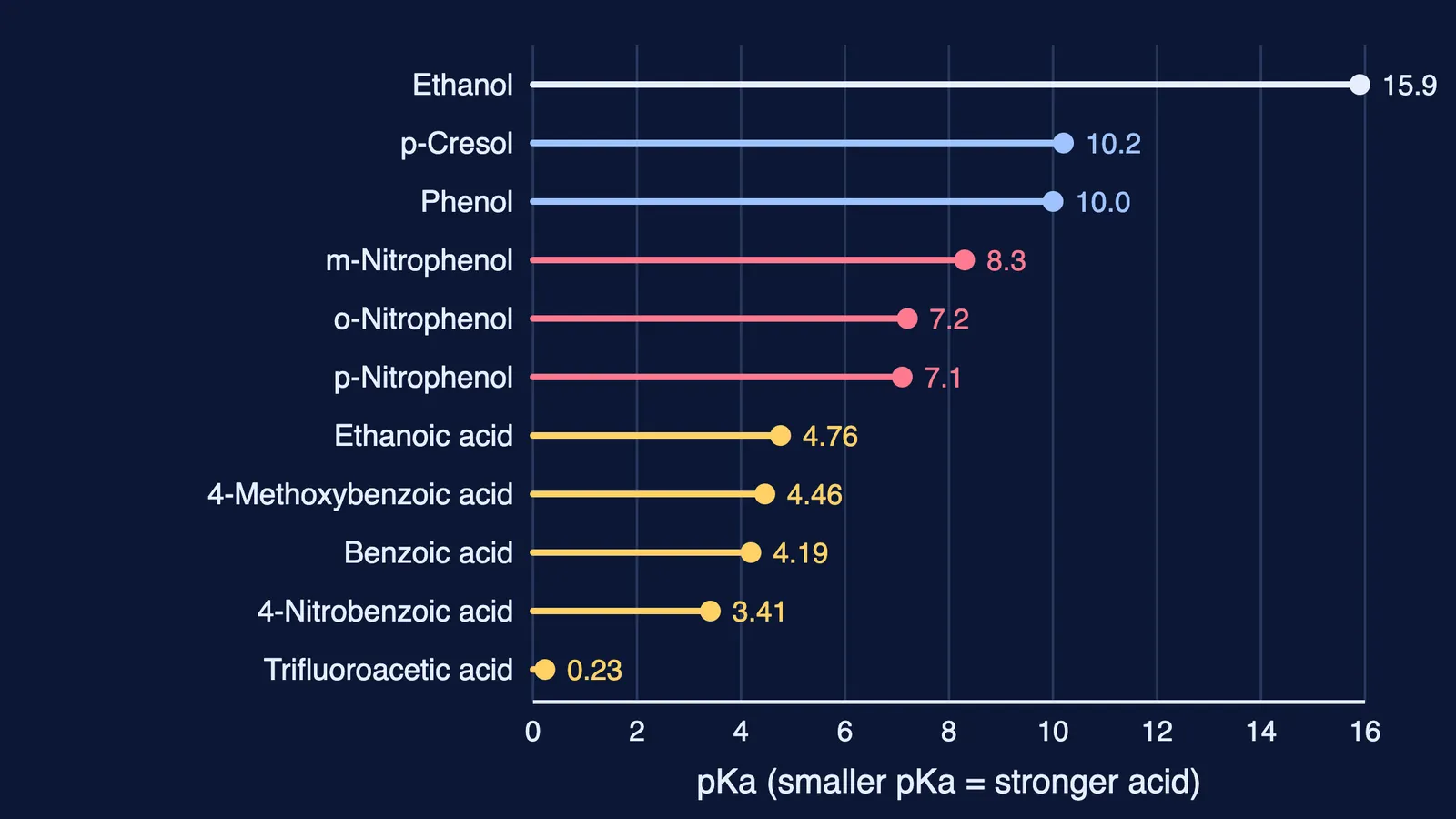
Learn the pKa ladder below as numbers, not adjectives.
For every reagent, know which group it attacks.
Eliminate options by counting carbons: the haloform reaction removes one, ozonolysis splits the chain.
In NCERT Table 7.3, ethanol has a pKa of 15.9, phenol 10.0 and p-nitrophenol 7.1. In NCERT Unit 8, ethanoic acid is 4.76, benzoic acid 4.19 and trifluoroacetic acid 0.23. A smaller pKa means a stronger acid.
Three worked examples, solved the NEET way
Example 1 (acidity in numbers). Using the NCERT pKa values above, how many times stronger an acid is p-nitrophenol than phenol, and benzoic acid than phenol?
Ka ratio = 10 raised to the pKa difference. p-Nitrophenol: 10^(10.0 − 7.1) = 10^2.9 ≈ 790 times. Benzoic acid: 10^(10.0 − 4.19) = 10^5.81 ≈ 6.5 × 10^5 times. That gap is why carboxylic acids release CO2 from hydrogencarbonate and phenols do not.
Example 2 (Lucas, dehydration, ozonolysis). An alcohol C6H14O turns Lucas reagent cloudy at once. Hot concentrated H2SO4 gives an alkene whose ozonolysis yields only propanone. Identify the alcohol and the alkene.
Instant turbidity means a tertiary alcohol. Only one product means a symmetrical alkene, (CH3)2C=C(CH3)2, 2,3-dimethylbut-2-ene: cutting it gives two (CH3)2C=O, 3 + 3 = 6 carbons. Working back, the alcohol is 2,3-dimethylbutan-2-ol, (CH3)2C(OH)CH(CH3)2. Dehydration through its tertiary carbocation gives mainly this more substituted alkene.
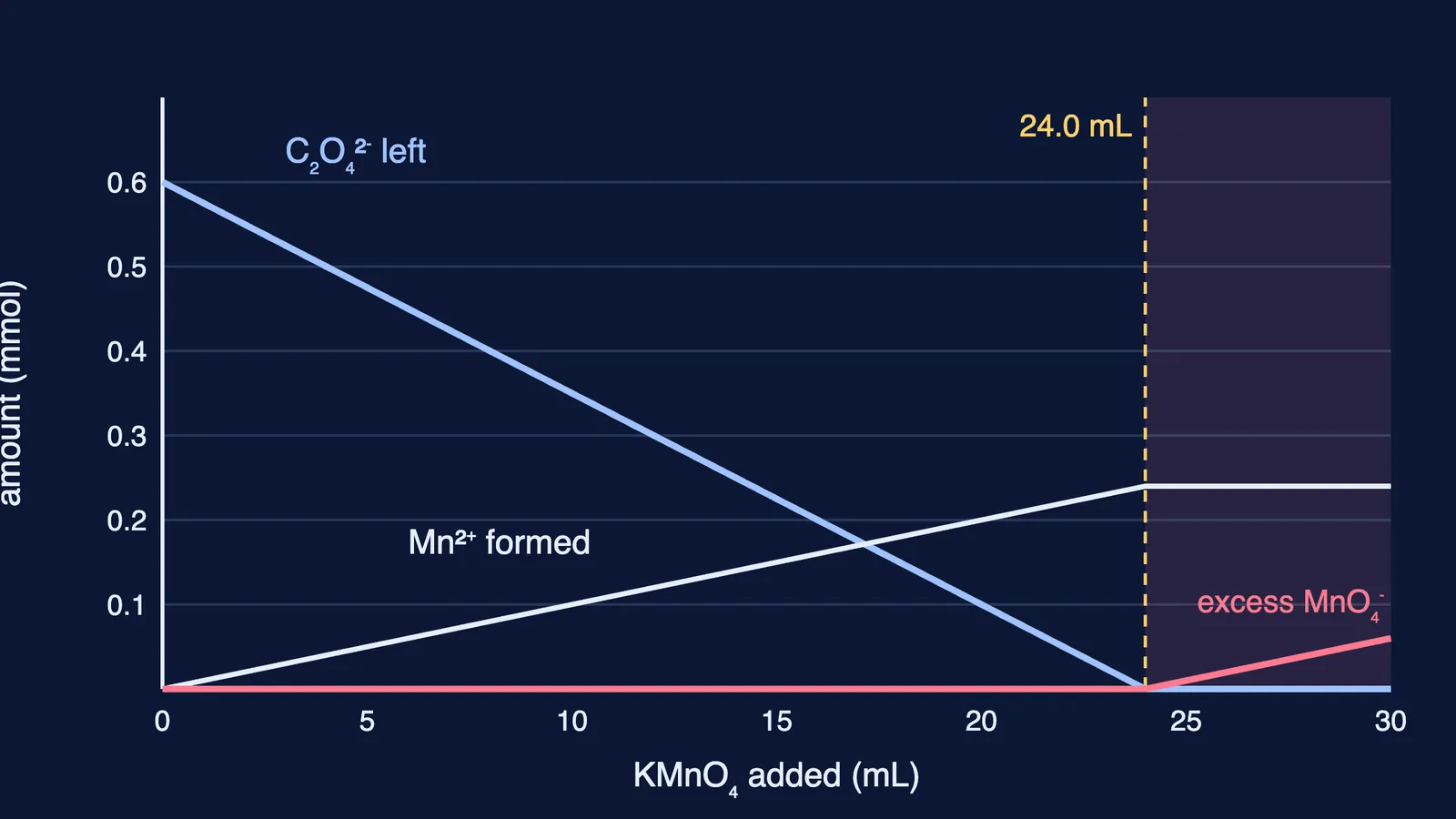
Example 3 (haloform by mass). 2.90 g of propanone reacts completely with iodine and sodium hydroxide. What mass of iodoform forms?
CH3COCH3 + 3I2 + 4NaOH → CHI3 + CH3COONa + 3NaI + 3H2O. Propanone: 2.90/58.08 = 0.0499 mol, so 0.0499 mol of CHI3 (393.7 g/mol): about 19.7 g of yellow precipitate.
What are the common traps?
Cresols vs phenol. A methyl group lowers acidity: in NCERT Table 7.3, p-cresol (10.2) is weaker than phenol (10.0).
Iodoform is not only for ketones. Ethanal, and alcohols with a CH3CH(OH)– group such as ethanol, also respond.
Cannizzaro needs no α-hydrogen. Methanal and benzaldehyde react; ethanal does aldol instead.
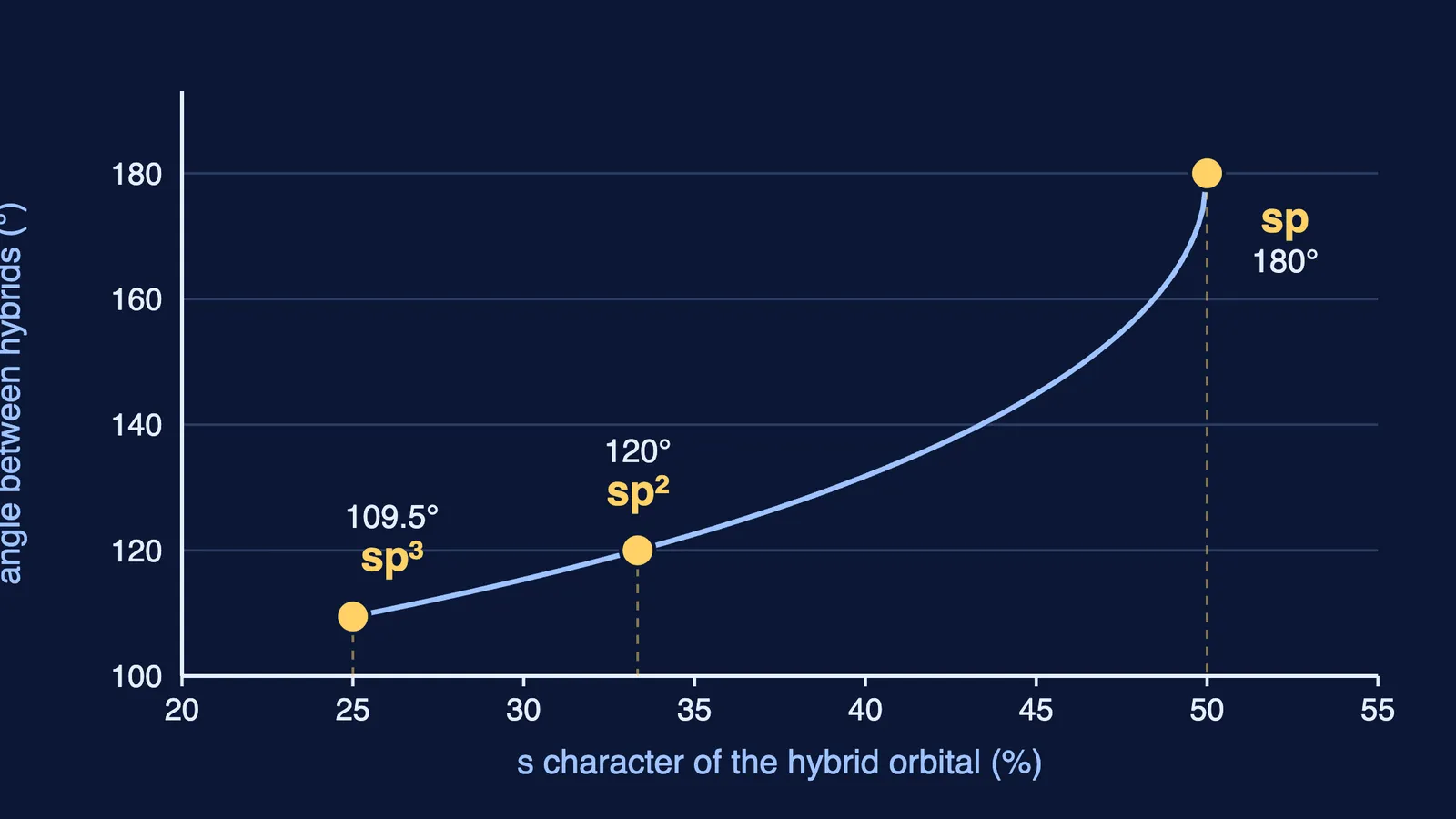
Phenyl on –COOH. Benzoic acid (4.19) is stronger than ethanoic acid (4.76): the sp2 ring carbon is more electronegative, which outweighs the expected resonance effect.
Primary alcohols and Lucas. No turbidity at room temperature is the expected result.
Stuck on a step? The Fermi Problem Library has worked problems with a step-by-step solver that explains the reasoning rather than printing an answer.
A seven-day practice plan
Day 1: naming and classifying.
Day 2: Lucas test, dehydration mechanism, alkene products.
Day 3: phenol acidity and ring substitution, Reimer-Tiemann.
Day 4: carbonyl structure, nucleophilic addition, Grignard routes.
Day 5: reductions, aldol, Cannizzaro, haloform, Tollens' and Fehling's.
Day 6: carboxylic acid strength and substituent effects.
Day 7: 20 mixed questions, a minute each; name every miss's trap.
Try these original questions in four minutes:
Strongest acid: p-cresol, m-nitrophenol, p-nitrophenol or ethanol?
Which undergoes the Cannizzaro reaction: ethanal, propanone, 2,2-dimethylpropanal or butanal?
Clemmensen reduction of 1-phenylbutan-1-one gives what?
Which gives a positive iodoform test: pentan-3-one, butan-2-ol, propan-1-ol or methanal?
Answers: 1. p-Nitrophenol. 2. 2,2-Dimethylpropanal. 3. Butylbenzene. 4. Butan-2-ol.
Sitting JEE Main too? See Alcohols, Phenols and Ethers for JEE Main and Aldehydes, ketones and carboxylic acids for JEE Main. For boards, read Alcohols, phenols and ethers Class 12: board answers and traps.