On this page
Chapter 5 of NCERT's Exploring Society: India and Beyond, Part II (book code gees2, First Edition November 2025, Reprint 2026-27) is the only chapter in Theme C, Our Cultural Heritage and Knowledge Traditions. CBSE publishes no separate 2026-27 curriculum for Classes 6 to 8; these classes follow the NCERT book, and this chapter is assessed by the school.
What is India, a Home to Many about?
This chapter looks at communities that came to India from other lands and settled. It asks what made India a home for people from far away, and why persecuted people sought refuge here.
Which communities does the chapter cover?
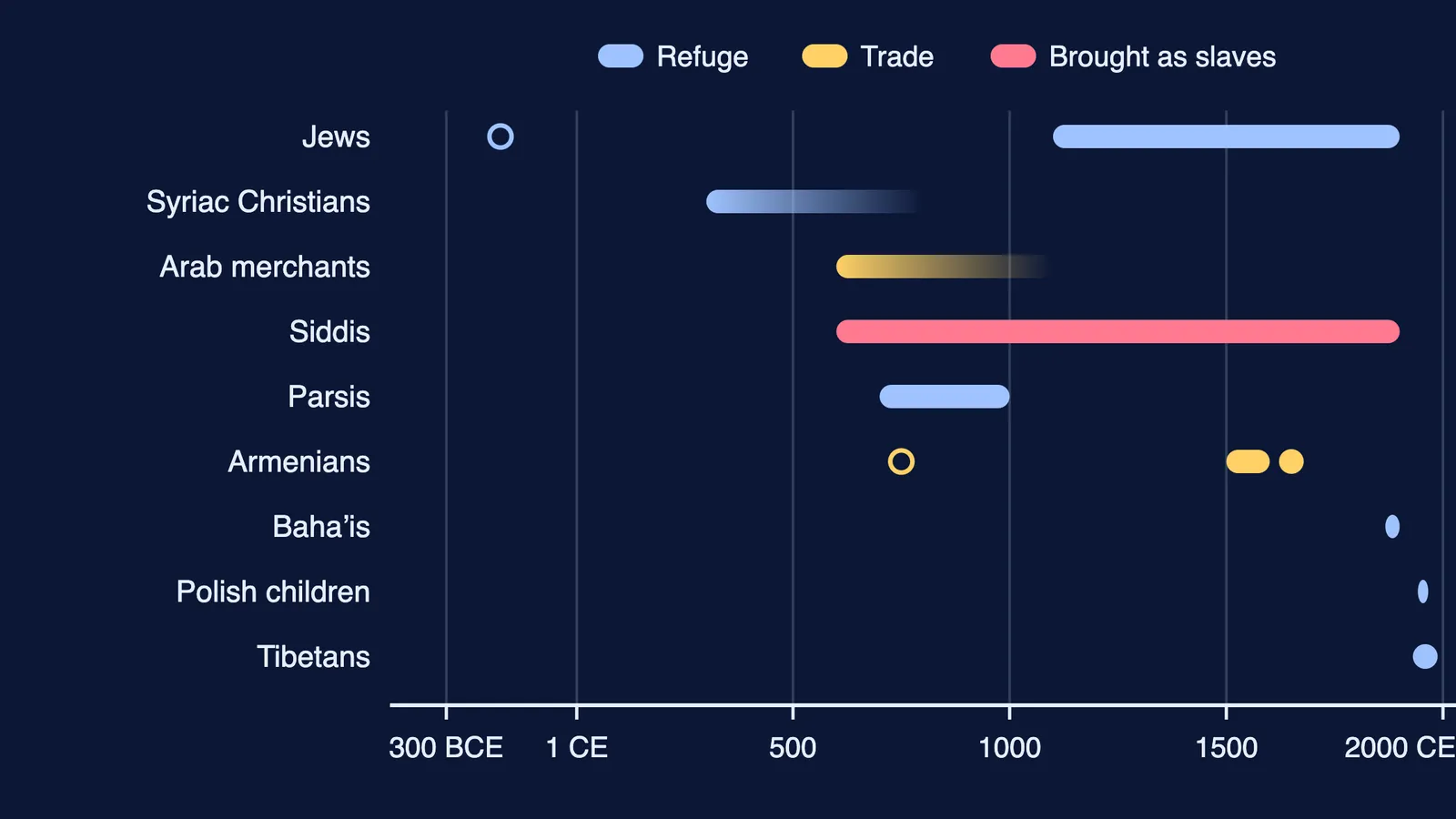
Jews: the Bene Israel lived on the Konkan coast south of Mumbai. Some scholars date their arrival to around 175 BCE, when a ship was wrecked near the coast. By shortly after Independence they numbered over 25,000. Other groups, also facing persecution, arrived between the 12th and 19th centuries; some settled near Kochi, where the Raja of Kochi granted them land and they built a synagogue.
Syriac Christians: from the 4th century CE, groups who used Syriac in worship faced difficulties in West Asia. The book says Rome sometimes treated them as heretics, while Persia suspected them of helping Rome and persecuted them. Some travelled along trade routes to the Malabar coast, in present-day Kerala.
Parsis: followers of Zoroastrianism faced religious persecution after Arab Muslim forces conquered the Sassanid Empire in the mid-7th century, as the book describes, left Persia and reached the Gujarat coast between the 8th and 10th centuries. In a legend, Raja Jadi Rāṇā of Sanjān showed them a full jug of milk; a Parsi wise man dissolved sugar in it without spilling any, and the Raja let them settle. Their sacred fire still burns at Udvada.
Arab merchants: traders from the 7th century onward settled in Kerala, Gujarat and Karnataka. In Kerala they joined the Mappila Muslim community, and the book credits them with helping build the Cheraman Juma Masjid.
Siddis: people of African origin, enslaved in Africa and, between the 7th and 19th centuries, brought to India as slaves by Arab, Portuguese and British traders. They are designated a scheduled tribe; the book notes their economic condition remains poor and that efforts to improve it are under way. Hirabai Lobi won the Padma Shri in 2023 for work with Siddi women.
Armenians: merchants in spices and muslins. Akbar let them build a church in Agra, and they later settled in Surat, Kolkata and Chennai.
Baha’is: a faith that began in Persia in the mid-1800s; its followers began arriving in India in the late 19th century.
Polish children: between 1942 and 1946, the Maharaja of Nawanagar sheltered about a thousand orphans from the Second World War in Jamnagar.
Tibetans: in 1959 the 14th Dalai Lama took refuge in India, which granted him asylum. The government helped set up settlements, and many monasteries were built in Karnataka.
What values does the book link to this?
The chapter ties these stories to ideas from Indian schools of thought: vasudhaiva kutumbakam (the whole world is family), atithi devo bhava (a guest is like God), sarve bhavantu sukhinah (may all creatures be happy) and compassion.
Worked example: how do you study one community?
Fill a five-line card per community. Here are the Armenians.
From where? Armenia, a small mountainous country just north of Iran; in the Mughal period many came from Persia.
When? Some evidence of a Malabar settlement in the 8th century; larger settlements from the 16th century, in the Mughal period.
Why? Trade, especially spices, muslins, silk and precious stones.
Where did they settle? Agra first, then Surat, Kolkata and Chennai.
What kept and what blended? They kept their Christian faith and churches, and served in the Mughal household, army and administration. Armenian Street in George Town, Chennai, still carries their name.
Now sort the communities by the main reason they came, as the book describes it. Refuge: Jews, Syriac Christians, Parsis, Baha’is, Polish children, Tibetans. Trade: Arab merchants and Armenians. Brought as slaves: Siddis.
How does this chapter connect to the rest of the book?
It points back to Turning Tides (Nālandā) and forward to the Mughals in Grade 8. For an older-syllabus view of Kerala's culture, see the making of regional cultures, Class 7. Later, see Understanding Social Science, Class 9 and cultural diversity in Class 12 Sociology.
Practice questions
Marks are our suggestion; your school sets the pattern.
Name the place where the Parsis' sacred fire still burns. (1 mark)
Name two places outside Agra where Armenians settled, and one thing they built there. (2 marks)
Who was Hirabai Lobi, and what did her work for Siddi women include? (3 marks)
Why did the 14th Dalai Lama come to India, and how were Tibetan refugees helped? (3 marks)
Fill a five-line card for the Parsis and compare it with the Armenians' card. (5 marks)
Which community first? Fermi's AI tutor works out what you already know and builds a plan for the session.