On this page
This NCERT chapter asks how a nation holds together when its people belong to many communities. Here are the definitions examiners want, the textbook's Indian examples, and practice questions.
What does the chapter cover, and how many marks is it worth?
In the CBSE Sociology curriculum for 2026-27, The Challenges of Cultural Diversity carries 10 marks in Part A, Indian Society. The curriculum lists five sub-topics: cultural communities and the nation-state, regionalism, religion-related identities, communalism and secularism, and state and civil society. Work from the current NCERT chapter (Reprint 2026-27).
The 2026-27 sample paper shows how the marks can come: by our reading, two 1-mark MCQs, two 2-mark questions and one 4-mark question draw on this chapter. Its instructions cap 2-mark answers at 30 words and 4-mark answers at 80 words, and the marking scheme follows the NCERT text closely.
What are the key definitions in this chapter?
All of these come from the NCERT chapter.
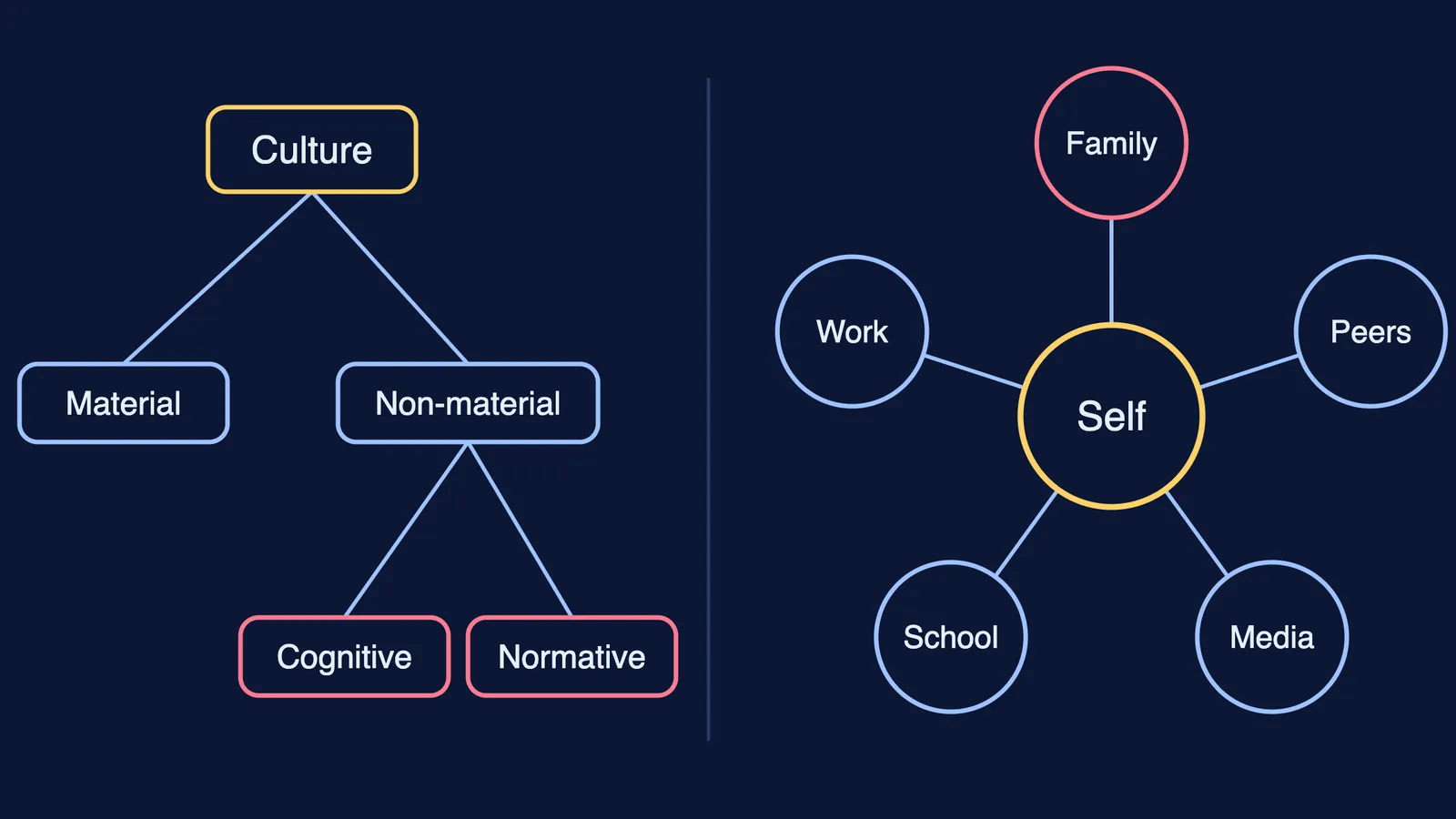
Cultural diversity: many communities defined by language, religion, sect, race or caste living within one larger whole. It stresses difference, not inequality.
Community identity: an ascriptive identity, given by birth rather than earned, which is why people feel it so strongly.
Nation-state: a nation is hard to define except as a community that has a state of its own.
Assimilation vs integration: assimilation pushes everyone to adopt the dominant group's culture; integration keeps public life to one national pattern and pushes other cultures into private life. Both assume a single national identity.
State-nation: a single state in which many "nations" (ethnic, religious, linguistic) coexist. NCERT presents India as a good example, though not free of problems.
Minority (sociological sense): a group that is relatively small, disadvantaged and has a feeling of togetherness. Left-handed people are a statistical minority, not a sociological one.
Regionalism: rooted in India's diversity of language, culture, tribe and religion, strengthened when these cluster in one area, and driven by a feeling that the region has been neglected.
Communalism: an aggressive political ideology linked to religion. NCERT stresses it is about politics, not faith.
Secularism: in the Western sense, separating religion and state; in the common Indian sense, the state favouring no religion and showing equal respect to all.
Civil society: the voluntary, non-state and non-market part of public life, such as NGOs, trade unions, media and political parties.
Which Indian examples earn marks?
All of these are in the NCERT text.
Diversity in numbers: the chapter cites Census 2011 for about 1.21 billion people speaking about 1,632 languages and dialects, with 22 languages in the Eighth Schedule.
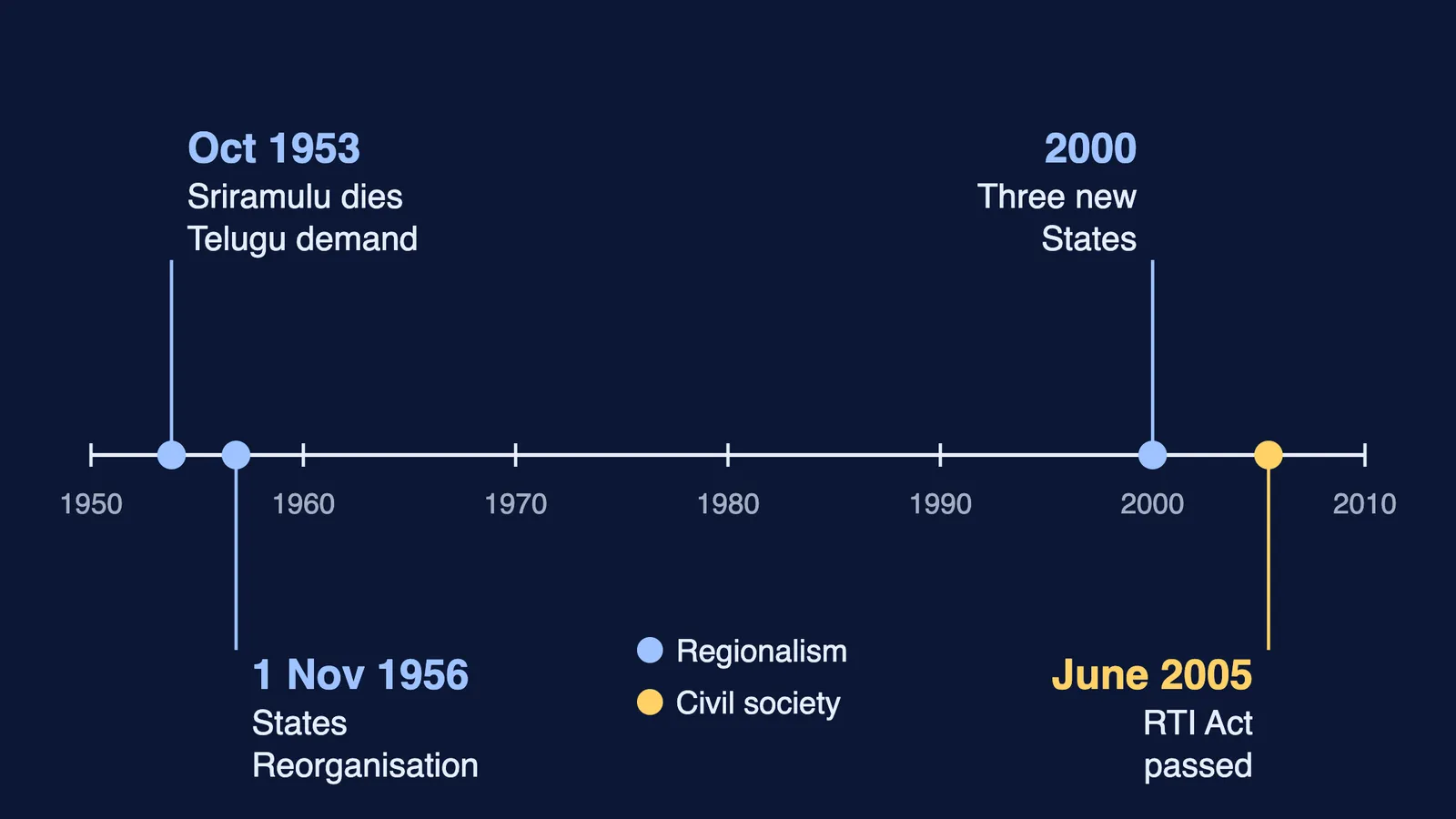
Linguistic States: Potti Sriramulu died in October 1953 after a fast for a Telugu-speaking State. The States Reorganisation Commission's report was implemented on 1 November 1956. NCERT argues linguistic States strengthened Indian unity.
Not only language: Chhattisgarh, Uttaranchal and Jharkhand were created in 2000 on grounds of tribal identity, regional deprivation and ecology.
Federal accommodation: subject lists, the Rajya Sabha, the Finance Commission and the GST Council.
Minority rights: Articles 29 and 30 protect the right to conserve a culture and to run educational institutions.
Syncretism: the Bhakti and Sufi traditions, with Kabir's poetry as NCERT's example.
Civil society at work: the Right to Information campaign began in rural Rajasthan. Parliament passed the RTI Act on 15 June 2005.
For how caste and tribe fit the same syllabus, see our guide to social institutions in Class 12.
How do you answer sensitive questions in a balanced way?
First, separate faith from communalism: NCERT says a devout person need not be communal. Second, present the secularism debate both ways, as the chapter does: critics see minority protection as favouritism, while supporters say that without it the majority's norms could be imposed. Third, where NCERT shows both conflict and syncretism in history, mention both.
What practice questions should you try?
Our own questions, in sample-paper style:
(2 marks) Why do people feel so strongly about community identity? Plan: ascriptive, by birth; unconditional belonging; anchors self-identity.
(2 marks) Why are Parsis or Sikhs described as minorities even if some are well-off? Plan: small numbers relative to the majority; cultural disadvantage.
(4 marks) Language was not the only basis for creating States. Explain how India accommodates regional sentiment. Plan: the 1956 linguistic States; the three States of 2000 (tribal identity, deprivation, ecology); federal lists, Rajya Sabha and the Finance Commission.
(4 marks) How does civil society keep the state accountable? Plan: define civil society; examples from the textbook; RTI campaign and Act.
A worked 4-mark answer plan
For question 4, write in 80 words or fewer: a definition (non-state, non-market, voluntary), two issues civil society takes up, the RTI story from rural Rajasthan to the 2005 Act, and one closing line on accountability.
How should you revise it?
Do one session each on definitions, examples and timed answers. Pair this chapter with patterns of social inequality and exclusion, since minority and caste questions overlap. If you need a study plan, Fermi's AI tutor works out what a student already knows and builds a plan for the session.