On this page
Social Change and Social Order in Rural and Urban Society is Chapter 2 of NCERT's Understanding Society, and the CBSE Sociology curriculum for 2026-27 keeps all of it: types, causes and consequences of change; domination, authority and law; contestation, crime and violence; and village, town and city. The unit carries 12 of the 80 theory marks.
What is social change, and what are its types?
Social change means big changes that alter the underlying structure of a situation over time, not every small shift (NCERT, Chapter 2). To count, a change must be both intensive (deep) and extensive (spread over a large part of society). NCERT sorts change three ways:
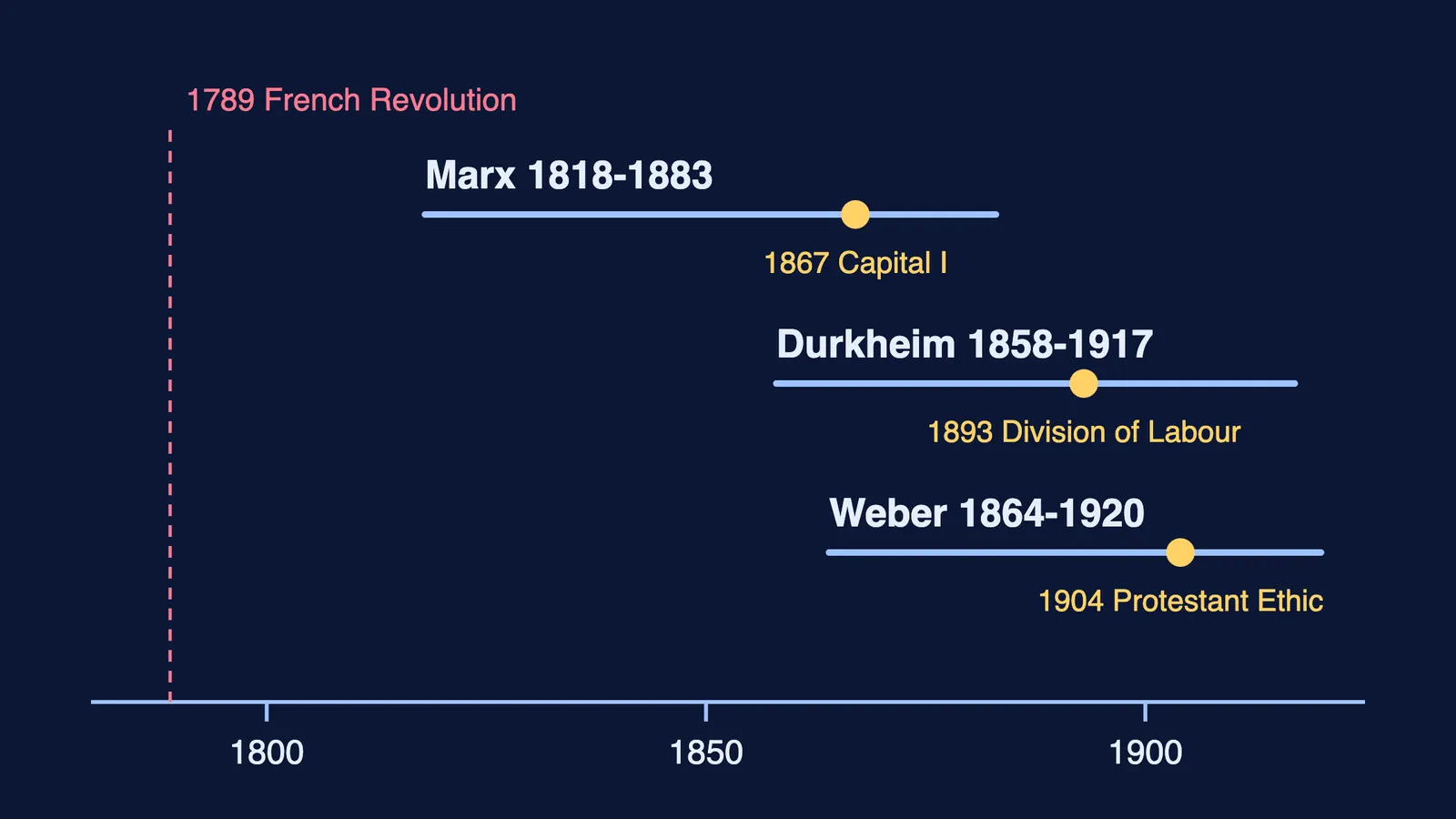
By pace: evolutionary change is slow, over a long period; revolutionary change is quick and sudden, as in the French Revolution (1789-93) or the Russian Revolution of 1917.
By nature: structural change alters institutions or their rules, as paper money did to banking; change in values alters ideas, as when childhood came to be seen as a separate stage and laws banned child labour.
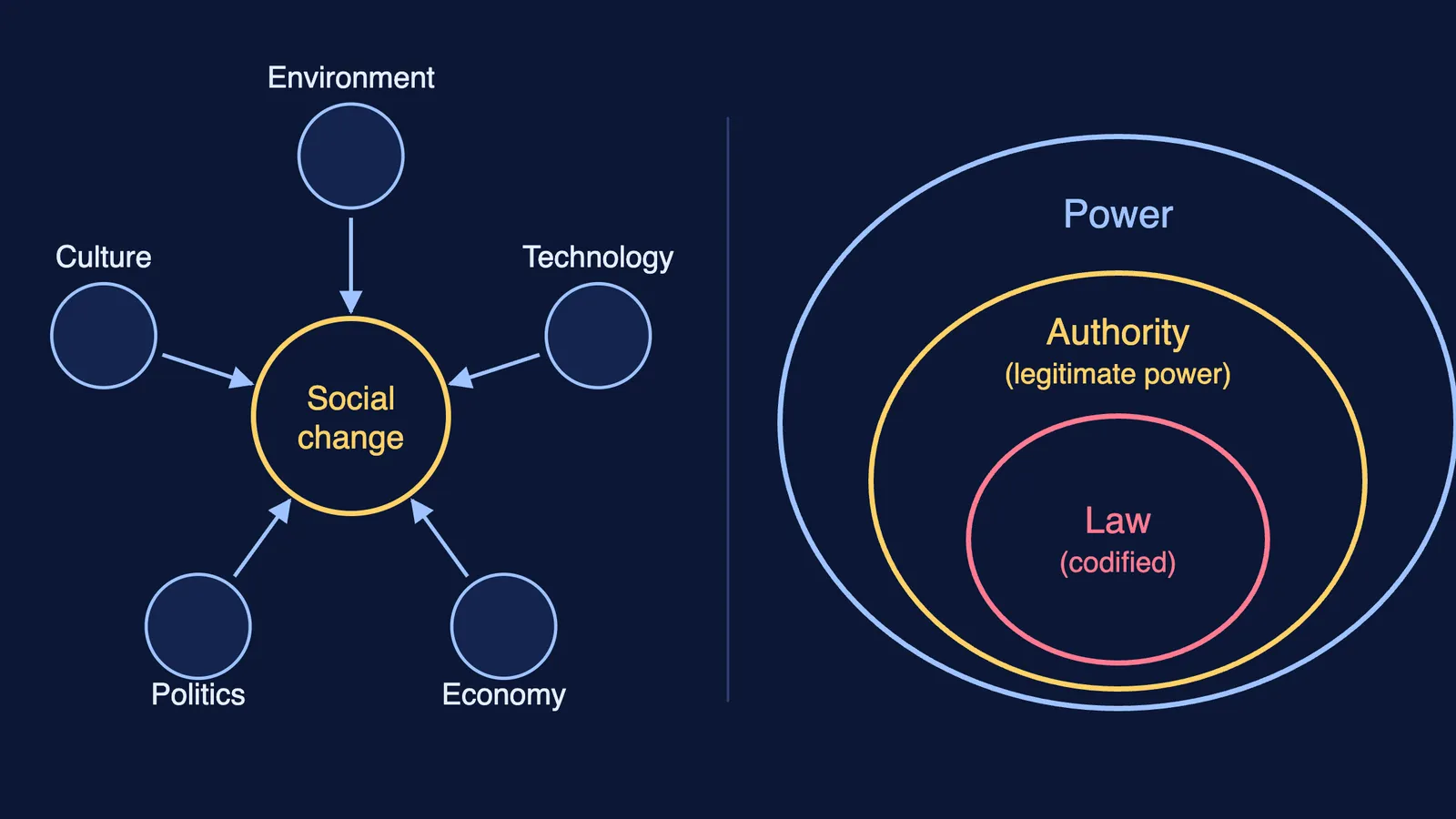
By cause: internal or external, and grouped under five sources.
What are the five causes of social change?
Environment: disasters such as the December 2004 tsunami can change societies for good; discoveries such as oil in West Asia can too.
Technology: steam power reshaped trade and migration; railways shaped India's economy after 1853.
Economy: plantation agriculture created demand for labour, including forced labour migration to Assam's tea gardens.
Politics: independence changed Indian society, not just its rulers; NCERT calls universal adult franchise probably the biggest political change in history.
Culture: religion (Weber on the Protestant ethic, Buddhism, the Bhakti movement), women's changing place, even cricket.
NCERT's conclusion: no single factor explains change, and causes are often interrelated (NCERT, Chapter 2).
How is social order maintained: domination, authority and law?
Social order is the tendency in established systems to resist and regulate change. Groups who benefit from the present arrangement have a vested interest in stability; disadvantaged groups have one in change. Order comes from two sources: spontaneous consent, built through socialisation, and compulsion through power (NCERT, Chapter 2).
Power: the capacity to get people to act as you wish, even against their own wishes.
Domination: a stable, settled relationship of power.
Authority: Weber's term for legitimate power, power accepted as proper; a judge in court or a teacher in class.
Law: an explicitly codified norm, made in a democracy by elected representatives and binding on every citizen.
So they nest: much power is authority, and much authority is written into law.
Order is still contested. Contestation covers youth counter-cultures, elections and protest. A crime is simply an act that breaks an existing law; NCERT's example is Gandhi breaking the salt law at Dandi. The modern state claims a monopoly over legitimate violence, so violence by anyone else challenges its authority.
How are a village, town and city different?
Villages arose when settled agriculture produced a surplus, and with it wealth and social differences. Rural and urban areas are told apart by population density and the share of agriculture in economic life, not by size alone; town and city differ mainly by size and administrative definition (NCERT, Chapter 2).
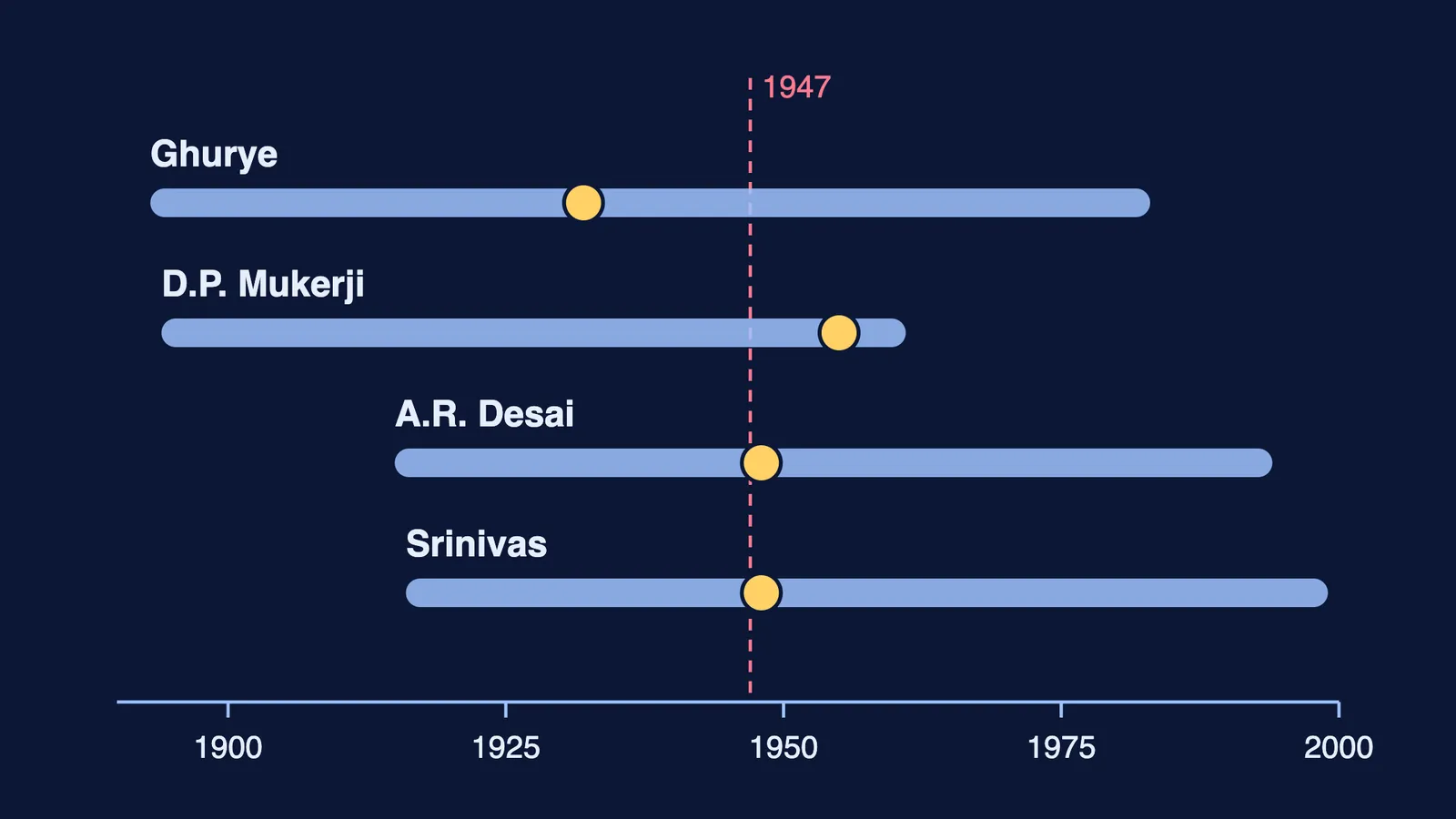
Rural order: personal ties, strong caste and custom, and few alternatives to dominant groups, so dissent is hard and change slow. Land reform, new farm technology and programmes like MGNREGA (2005) cause fast change. M.N. Srinivas called the landowning intermediate castes that gained power after land reform "dominant castes".
Urban order: the city offers anonymity and opportunity, though mostly to a privileged minority. Its core problem is space: housing, slums, gated communities, mass transit. Change shows up in gentrification and the rise and fall of neighbourhoods.
How do you apply the chapter to one example?
Take an imagined case: a new bridge links Ramnagar, a river village, to the district town.
Is it social change? Only if it alters how most villagers live and work.
Cause: technological, with economic effects.
Rural order: labourers can find work in town, so they depend less on local landowners.
Urban side: more daily commuters, more pressure on housing at the town's edge.
Contestation: landowners may resist higher wages; workers may organise.
Practice questions (our own)
The curriculum's question paper design gives 30 marks to Knowledge & Understanding, 32 to Application of Knowledge and Concepts, and 18 to Formulate, Analyse, Evaluate & Create.
Why is a new mobile phone model not, by itself, social change?
Distinguish power, authority and law, with one example of each from your school.
Explain why social order is usually stronger in villages than in cities.
Is every crime morally wrong? Argue using one example from the chapter.
Revise the basics with our guide to sociology and society for Class 11 and social institutions, and look ahead to change and development in rural society in Class 12.
Fermi's AI tutor can work out what you already know and build a plan for the session.