On this page
Healthcare is Chapter 10 of Kaushal Vikas, NCERT's Skill Education Textbook for Grade 9 (code 0916, first edition April 2026). It sits in Unit III, Work in Human Services, after the compulsory Chapter 9. It is an illustrative vocation: your school picks the one you carry out, so ask your teacher whether healthcare is yours.
The CBSE 2026-27 Kaushal Vikas curriculum does not name the textbook. This guide follows the chapter and maps it to the curriculum's Work in Human Services goals: service tools, costing, consent, feedback and confidentiality.
What does the Healthcare chapter ask you to do?
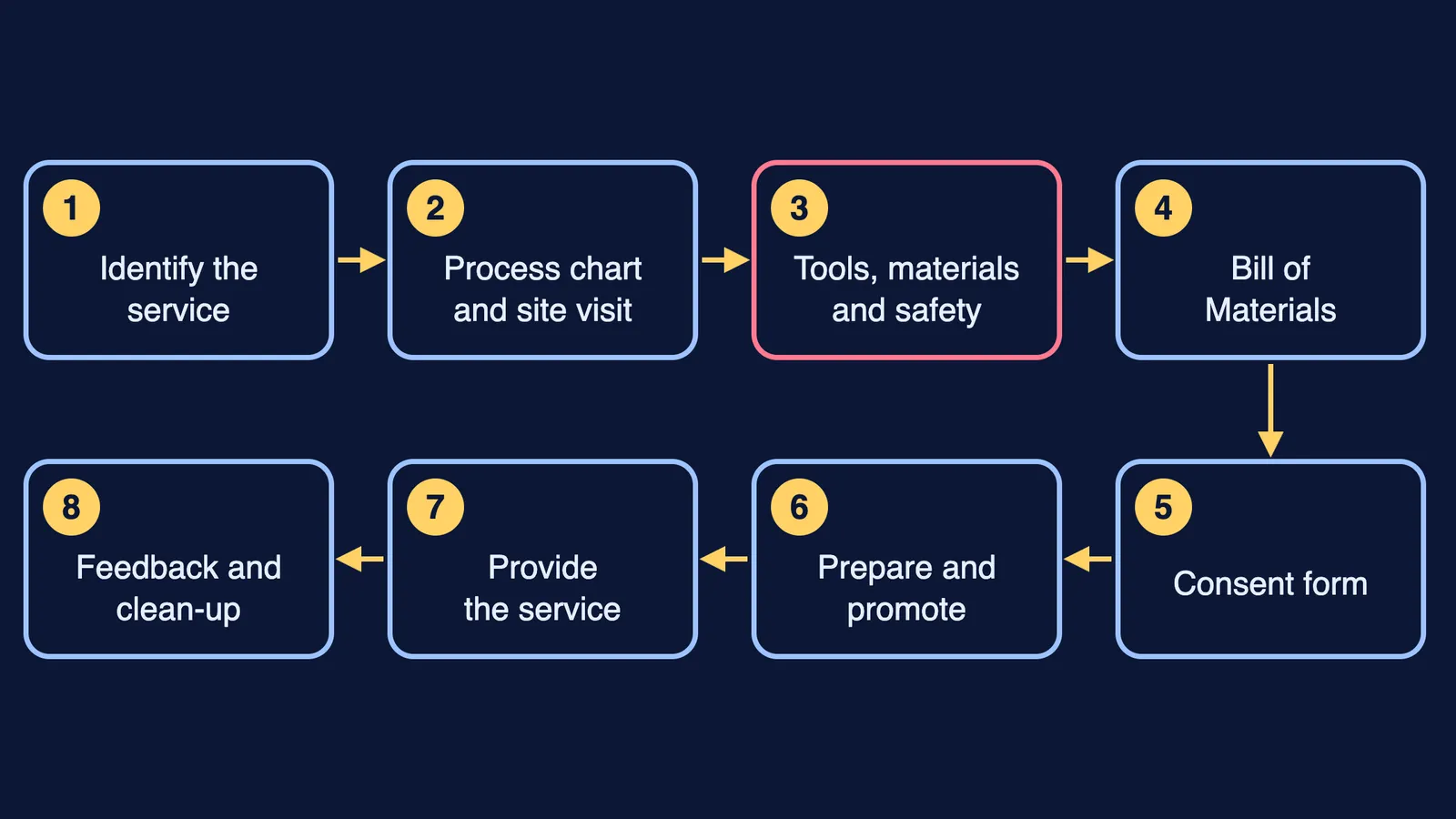
The chapter is one group project, modelled on a school health camp:
Scope the work: choose a service (hygiene, nutrition or first-aid awareness, a camp), check resources and expert help, confirm the need, pick a clean, safe spot.
Make a process chart: each task, a target date, who is responsible.
Visit a site with your teacher and talk to a practitioner, such as a nurse or ASHA/ANM worker.
Select materials and tools, then cost them in a Bill of Materials.
Write a consent form.
Practise under supervision: measuring vital signs, collecting home remedies from elders, learning about work strain and stretches.
Promote the service, deliver it, then gather feedback, clean up and reflect.
One limit runs through all of it: support and awareness only. Students never diagnose, treat, interpret readings or give out medicines, and home remedies are demonstrated, never handed out.
What safety and hygiene rules does the book set?
The chapter's safety table has four rules: clean hands with soap and water or a 70 per cent alcohol sanitiser before and after handling tools; a clean mask and wiped surfaces; tools used only as taught; and disposables in separate, labelled bins.
Used gloves and masks go into a covered biomedical waste bin. The tools are a thermometer, pulse oximeter, stopwatch, blood pressure monitor and a glucometer for blood sugar, which the book allows for demonstration only (its Table 10.7 prints "suger"; we use the standard spelling). A teacher, nurse or other practitioner attends every demonstration and visitor interaction; call them at once if a reading looks unusual. CPR is for trained adults only.
How do you work out a Bill of Materials?
A Bill of Materials (BoM) estimates cost early and avoids waste. Labour counts too: hours × hourly rate × people. Our own example, a hygiene desk on sports day:
Materials: gloves, 30 pairs, ₹180; sanitiser, ₹150; chart paper and markers, ₹220; thermometer borrowed, ₹0. Total ₹550.
Labour at ₹40 an hour: posters, 3 × 40 × 3 = ₹360; running the desk, 2 × 40 × 4 = ₹320; clean-up, 1 × 40 × 2 = ₹80. Total ₹760.
Grand total: ₹550 + ₹760 = ₹1,310.
How do consent, promotion and feedback work?
The book treats a consent form as a statement of shared expectations, not a legal document. Your form should name the services and safety steps, say the service does not replace medical treatment, and ask permission for health data and photos. Note likely gaps, such as a visitor expecting medicine.
Promote with posters (date, time, place, services), assembly announcements, neighbourhood walks and, with permission, social media. On the day, spread desks to avoid crowding, signpost the route, explain each check first and keep it private.
Collect feedback by a short form or a few questions, with no names. Clean up using separate dry, wet and sanitary waste bins, then compare plan with outcome.
How is Kaushal Vikas assessed in Class 9?
CBSE's Kaushal Vikas Class IX assessment guidelines for 2026-27 weight five modes: paper-pencil test 40%, demonstration with oral presentation or viva 20%, site visit report 10%, portfolio 20% and teachers' observations 10%. The 40-mark written test splits into objective items (8), short answers (12), scenario or case questions (16) and one reflective or decision-making question (4). These marks cover the whole subject, not this chapter, and your school does the assessing. Your consent form, poster and feedback form go in the portfolio.
Practice questions (marks are our suggestion)
(1 mark) Order these: promote the service, make a process chart, collect feedback, prepare a consent form.
(2 marks) Why should a student team not explain a visitor's blood pressure reading, and what should it do instead?
(3 marks) A fitness corner needs ₹260 of materials, 4 hours of poster work by 2 students and 3 hours of running by 3 students at ₹30 an hour. Find the total cost. (Answer: ₹240 + ₹270 + ₹260 = ₹770.)
(4 marks) A visitor at your stall asks for something to take for a headache. How should your team respond, and which consent-form line covers it?
(4 marks) Feedback says the weighing queue was long. Suggest two fixes.
Unsure where to begin? Fermi's AI tutor works out what you already know and builds a plan for the session.
Pair this with our First Aid Class 9 PE notes and Yoga for holistic health Class 9 guide. Looking ahead: what CBSE skill subjects in Class 11 and 12 involve.