On this page
How does an everyday observation become a business worth starting? This guide walks through the seven topics the CBSE 2026-27 Entrepreneurship curriculum lists, with an original worked example and practice questions. It is a study summary, not business or financial advice.
How many marks is Entrepreneurial Opportunity worth?
The 2026-27 curriculum prints one figure for Units 1 and 2 together: 30 of the 70 theory marks, shared with Entrepreneurial Planning. There is no separate figure for Unit 1. Project work carries another 30 marks.
The curriculum names CBSE's own Class XII Entrepreneurship book as the prescribed text. We could not find an official copy online, so this guide follows the curriculum's topic list, the 2026-27 sample paper and its marking scheme. See our overview of Entrepreneurship as a Class 12 subject.
What does Unit 1 cover?
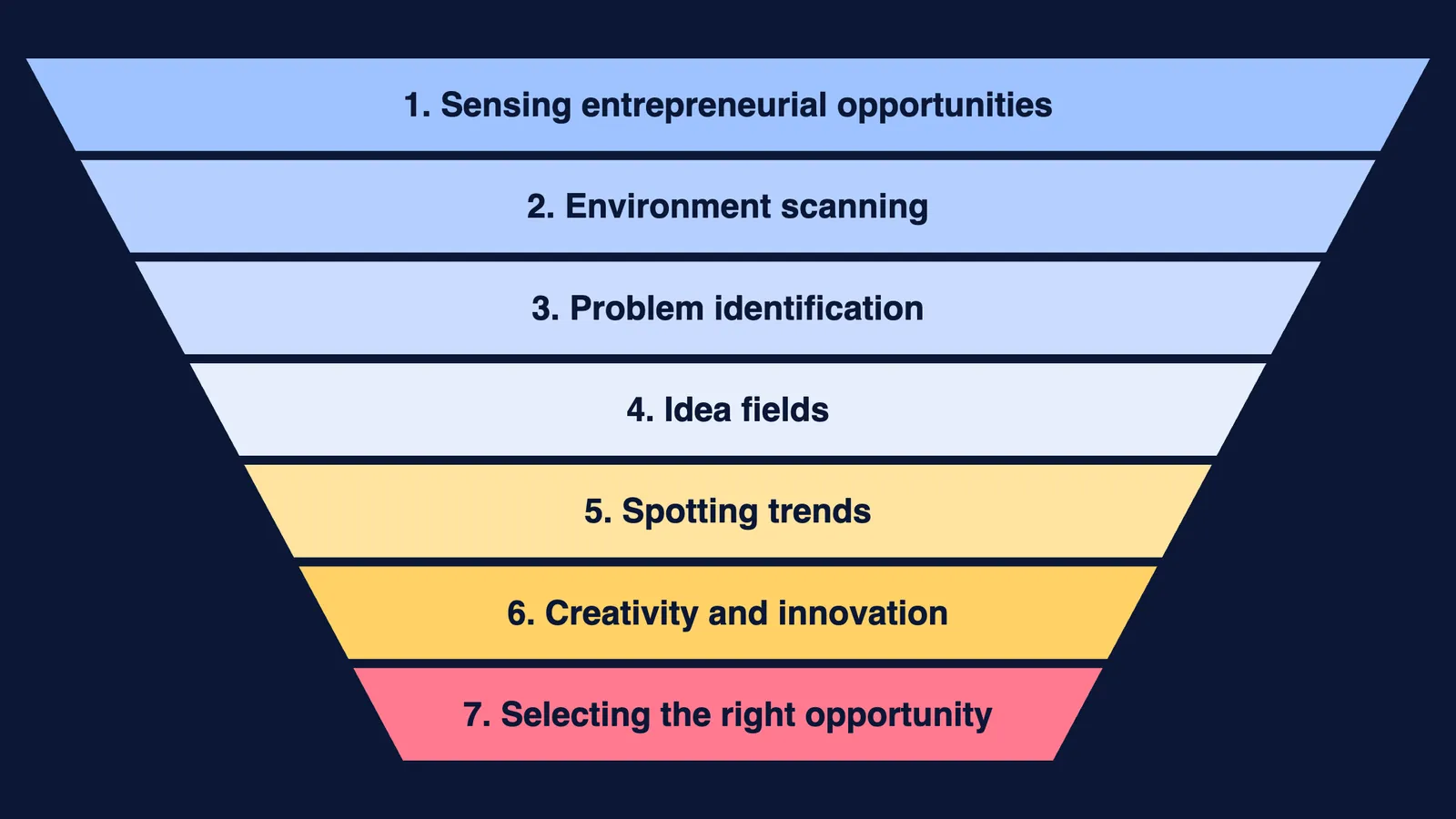
The seven listed topics in plain words, citing the sample paper and marking scheme where they define a term.
Sensing entrepreneurial opportunities. Noticing a need that someone could meet at a profit. The marking scheme calls the first spark "idea germination": the seed stage, when the entrepreneur first sees that an opportunity is there.
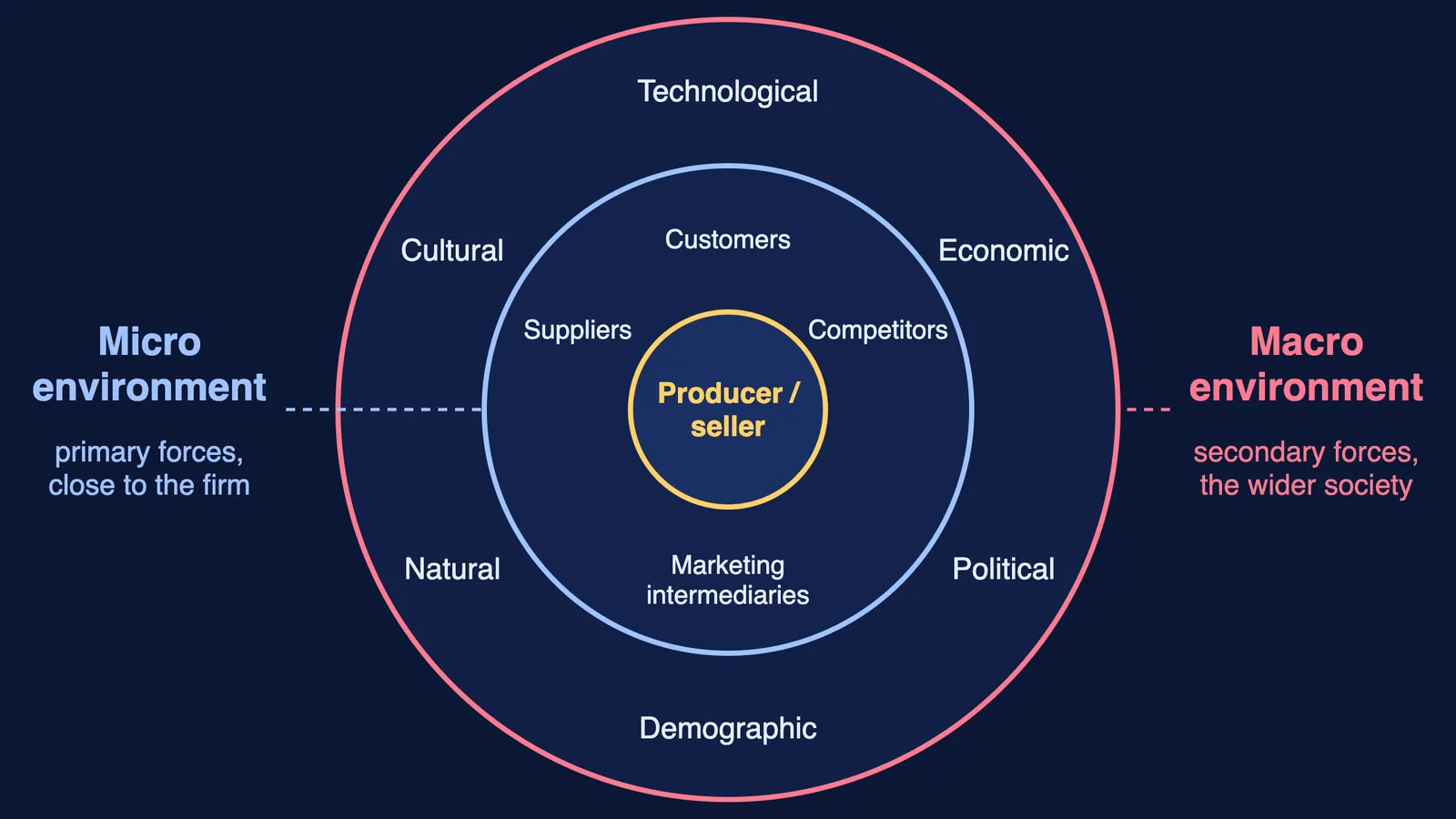
Environment scanning. Tracking the forces outside the business. The sample paper asks about the PESTEL model of outside forces, and its marking scheme names environmental and technological factors as two of them. The marking scheme credits three gains from scanning: spotting opportunities early, shaping strategy around threats and openings, and finding raw materials, technology and finance. Our Class 12 business environment guide covers the same forces.
Problem identification. Building a product that removes a difficulty people face. In the sample paper, an idea born from buyers' confusion is classed as problem identification.
Idea fields. The areas an idea grows from. The sample paper names natural resources, trading-related ideas, service-sector ideas, and market-driven or demand-driven ideas.
Spotting trends. The marking scheme accepts three ways: read (reports, social media), watch (rivals and shops) and talk (surveys, conversations with customers and experts).
Creativity and innovation. CBSE's 2013 Class XII marking scheme, not the current curriculum, sets out five stages of the creative process: idea germination, preparation, incubation, illumination and verification.
Selecting the right opportunity. A good idea is not automatically a good opportunity. The 2026-27 sample paper weighs four things: demand in the market, feasibility, likely returns and the entrepreneur's own competence.
How do you pick the right opportunity? A worked example
This example is fictional; names, ideas and ratings are made up. Riya and two classmates want to run a small business near their school for one term. Three ideas:
A: evening tiffin delivery for hostel students
B: a second-hand textbook exchange
C: cut-fruit cups at the school gate
They score each idea from 1 (poor) to 5 (strong) on the four sample-paper criteria, weighted demand 30%, feasibility 25%, returns 25%, competence 20%. The weights are theirs, not a CBSE rule.
A: demand 4, feasibility 2, returns 4, competence 2. Score = 0.30×4 + 0.25×2 + 0.25×4 + 0.20×2 = 1.20 + 0.50 + 1.00 + 0.40 = 3.10
B: 3, 5, 2, 4. Score = 0.90 + 1.25 + 0.50 + 0.80 = 3.45
C: 4, 4, 3, 3. Score = 1.20 + 1.00 + 0.75 + 0.60 = 3.55
Idea C wins narrowly, even though A matches it on demand and beats it on returns. Tiffin delivery fails on feasibility and competence: no kitchen, little evening time. The exam point: a popular idea still has to pass the other tests.
What do exam questions on this unit look like?
The 2026-27 sample paper has 34 questions: 1-mark multiple choice, 2-mark and 3-mark short answers, and 5-mark long answers. Try these, written by us in the same formats.
(1 mark) A student sees that parents waiting outside a coaching centre have nowhere to sit, and opens a small tea corner. Which method of idea generation is this? (a) Trend spotting (b) Problem identification (c) Verification (d) Incubation
(2 marks) Distinguish between the incubation and illumination stages of the creative process.
(3 marks) A baker reads food blogs, visits rival bakeries and chats with regular customers before adding millet cookies. Match each step to a way of spotting trends, and give one further example of each from your own town.
(5 marks) Score three business ideas of your own on demand, feasibility, returns and competence. Explain why the idea with the highest demand may not be the right opportunity.
Answer to 1: (b). For 4, look for all four criteria and a clear comparison.
How should you revise Unit 1?
Learn the seven topic names in order, each with one fictional example of your own.
Practise one case question a day: underline the line, name the concept, explain it.
Revise Unit 1 alongside Unit 2, since they share 30 marks. From ideas to startups in Class 9 is a short refresher on business plans.
Not sure where to start tonight? Fermi's AI tutor works out what you already know and builds a plan for the session.