On this page
This guide follows CBSE's own Entrepreneurship Class XI textbook, the CBSE Textbook the curriculum refers to, and keeps to the sub-topics the 2026-27 syllabus lists. It is a study summary, not business or financial advice.
What does Unit 3 cover in the 2026-27 syllabus?
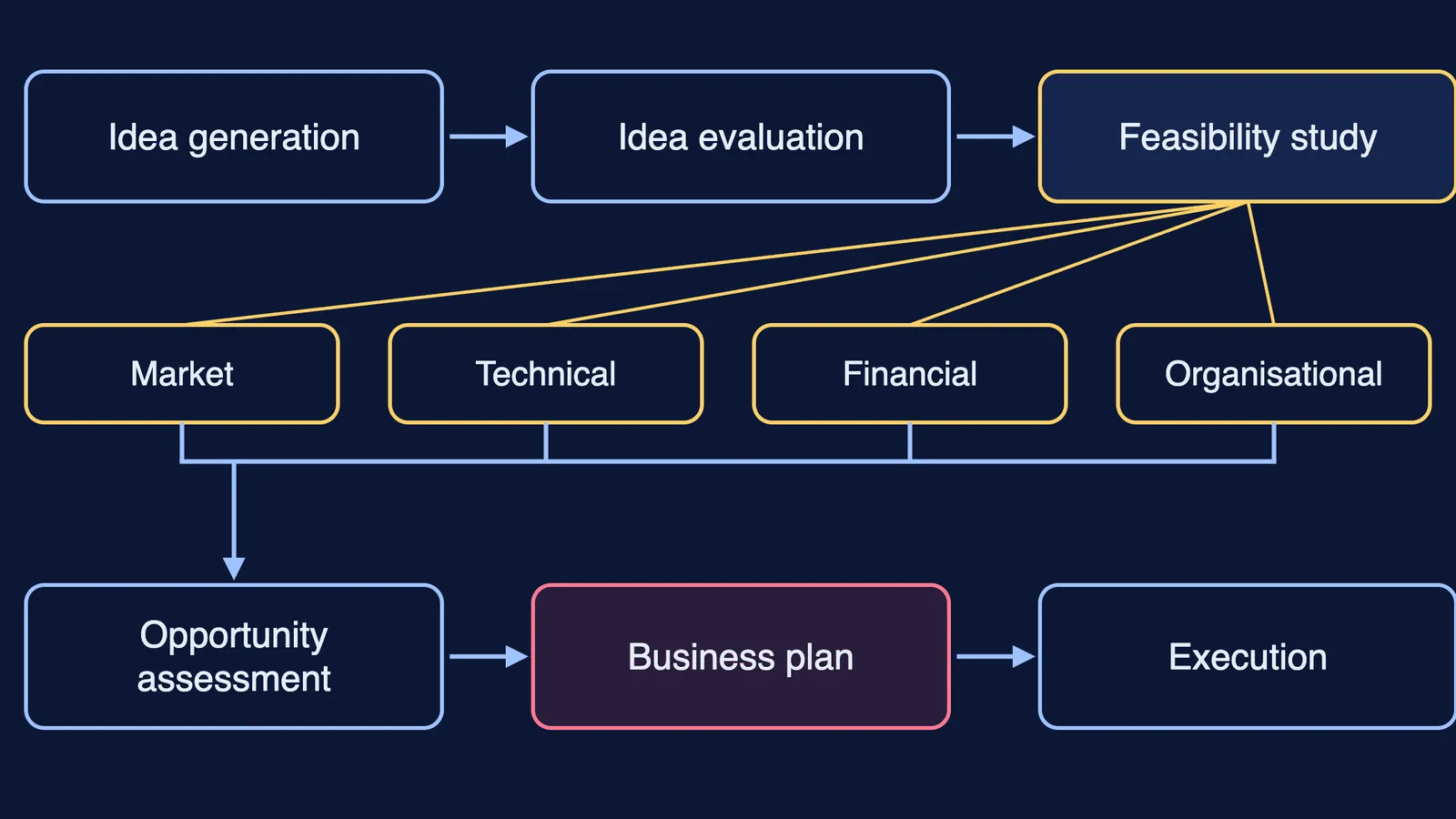
The CBSE Entrepreneurship (066) curriculum for 2026-27 lists four sub-topics: idea generation, feasibility study and opportunity assessment, the business plan (meaning, purpose, elements), and executing the plan. You should finish able to draft a basic business plan.
Units 3 and 4 share one printed figure of 20 out of 70 theory marks; there is no separate mark for Unit 3. Project work adds 30 marks. The book's chapter also covers entrepreneur personality types, family and society, and women entrepreneurs; the curriculum does not list these, so we leave them out. Next year: Entrepreneurship in CBSE Class 12.
How do entrepreneurs generate business ideas?
Good ideas rarely appear from nowhere; the book says strong idea generators work at it on purpose. It names five structured methods:
Environment scanning: sifting news, trade and government publications for emerging trends.
Creativity and creative problem solving: for example attribute listing (study a product's good and bad features) and free association (follow a chain of linked words).
Brainstorming: a group throws out ideas freely, one sparking the next.
Focus groups: a moderator guides a group through a proposed product.
Market research: studying demand and supply for products already on sale.
Why evaluate ideas first? To decide what matters to you, to see each idea's strengths and weaknesses, to spend limited money and time well, and to keep risk low while aiming for a good return.
What is a feasibility study, and what are its four types?
A feasibility study is a structured check of whether, and how, an idea will work: it spots problems and opportunities, sets objectives and weighs the costs and benefits of the options. It comes before the business plan and becomes its base.
Market feasibility: the industry, current and future market, competitors, likely buyers, sales projections.
Technical feasibility: how you will deliver: materials, labour, transport, location, technology.
Financial feasibility: start-up capital, its sources, expected returns.
Organisational feasibility: the legal structure and what the founders bring.
Opportunity assessment goes deeper, adding due diligence such as intellectual property, timing, barriers to entry, industry trends, growth potential and pricing.
How would a student stall pass a feasibility check?
Worked example (our numbers, fictional stall). Two Class 11 students plan a lemonade stall.
Market: a week of counting passers-by; two other drink sellers nearby.
Technical: a folding table, a cooler and jars; lemons from the local market.
Financial: start-up cost ₹6,000; stall space ₹2,400 a month; each cup sells for ₹25 and costs ₹15.
Organisational: a two-person partnership.
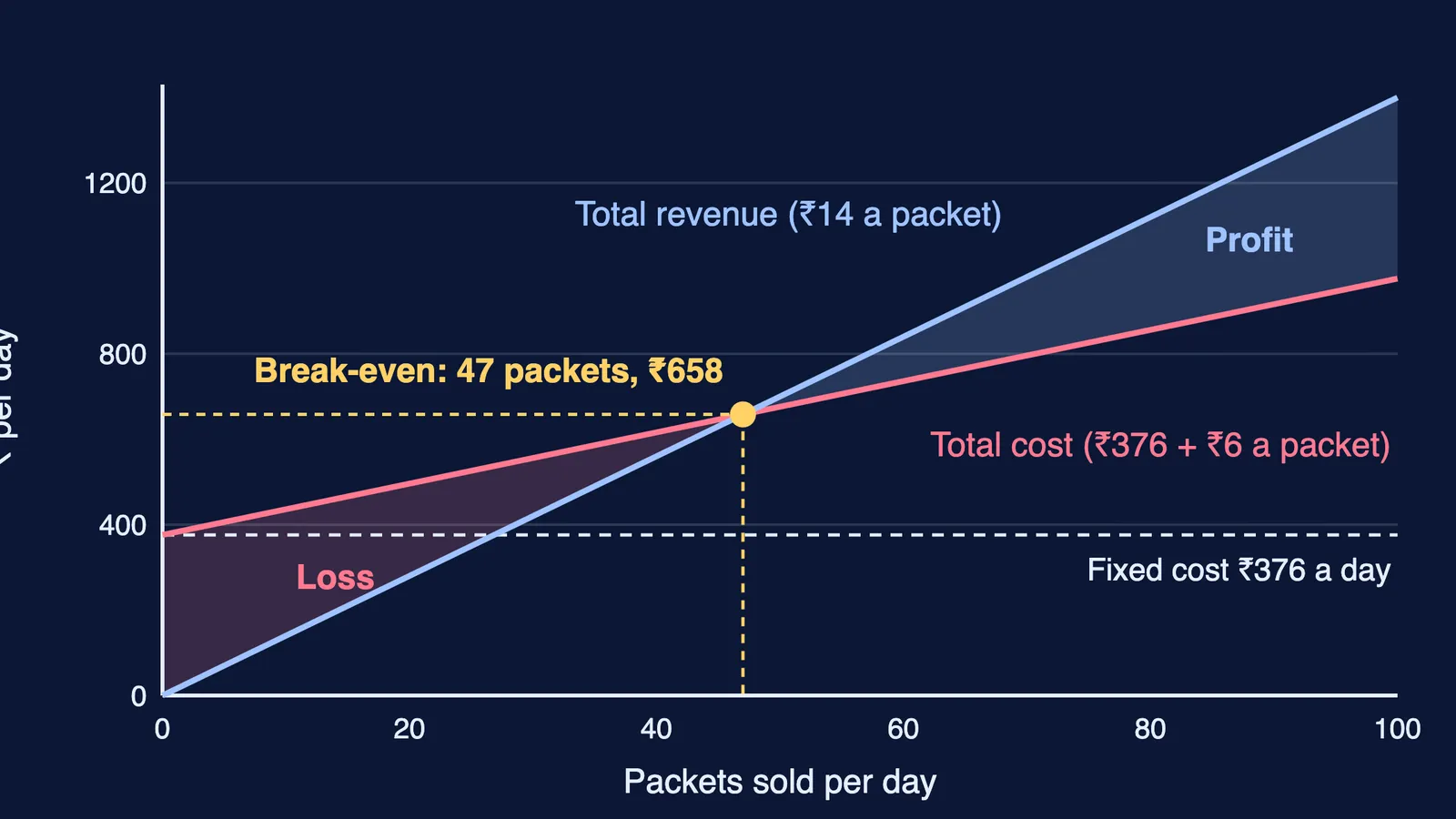
Each cup leaves 25 − 15 = ₹10, so covering ₹2,400 needs 2,400 ÷ 10 = 240 cups a month. At 20 cups a day for 20 days (400 cups), profit is 400 × 10 − 2,400 = ₹1,600, and the ₹6,000 start-up cost comes back in 6,000 ÷ 1,600 = 3.75 months. At 12 cups a day they only break even. More on this in when two plans cost the same.
What goes into a business plan, and why do plans fail?
A business plan is a written account of how a new enterprise will organise its resources, reach its goals and track progress. It serves as a blueprint for action, a guide to raising the factors of production, a guide to organising work, a yardstick for progress, and a message to investors, lenders and suppliers.
The book's model plan has eight parts: general introduction, business venture, organised plan (ownership and management), production plan, human resource plan, marketing plan, financial plan, and an appendix (market research, contracts, risks, contingency plan). For forms of ownership, see small business and enterprises in Class 11.
Plans most often fail in execution, not strategy. The key is alignment of strategy, people and work processes. The steps: set measurable goals, put the right people in the right jobs, name key initiatives and gaps, budget, communicate, and review as markets change.
Practice questions for Unit 3
Our own questions. Mark values are our suggestion.
(1 mark) Five friends call out snack ideas, each building on the last. Name the method.
(3 marks) A student plans a bicycle repair service. Name the feasibility type for each finding: (a) she needs a pump and tool kit; (b) three repair shops are within a kilometre; (c) she needs ₹4,000 to start.
(5 marks) A notebook-binding service has fixed costs of ₹1,800 a month, charges ₹40 a notebook and spends ₹28 on each. Find the break-even and the profit at 180 notebooks.
Answers: 1 brainstorming. 2 (a) technical (b) market (c) financial. 3: 1,800 ÷ 12 = 150 notebooks; 180 × 12 − 1,800 = ₹360.
Not sure where to start revising? Fermi's AI tutor works out what you already know and builds a plan for the session.