On this page
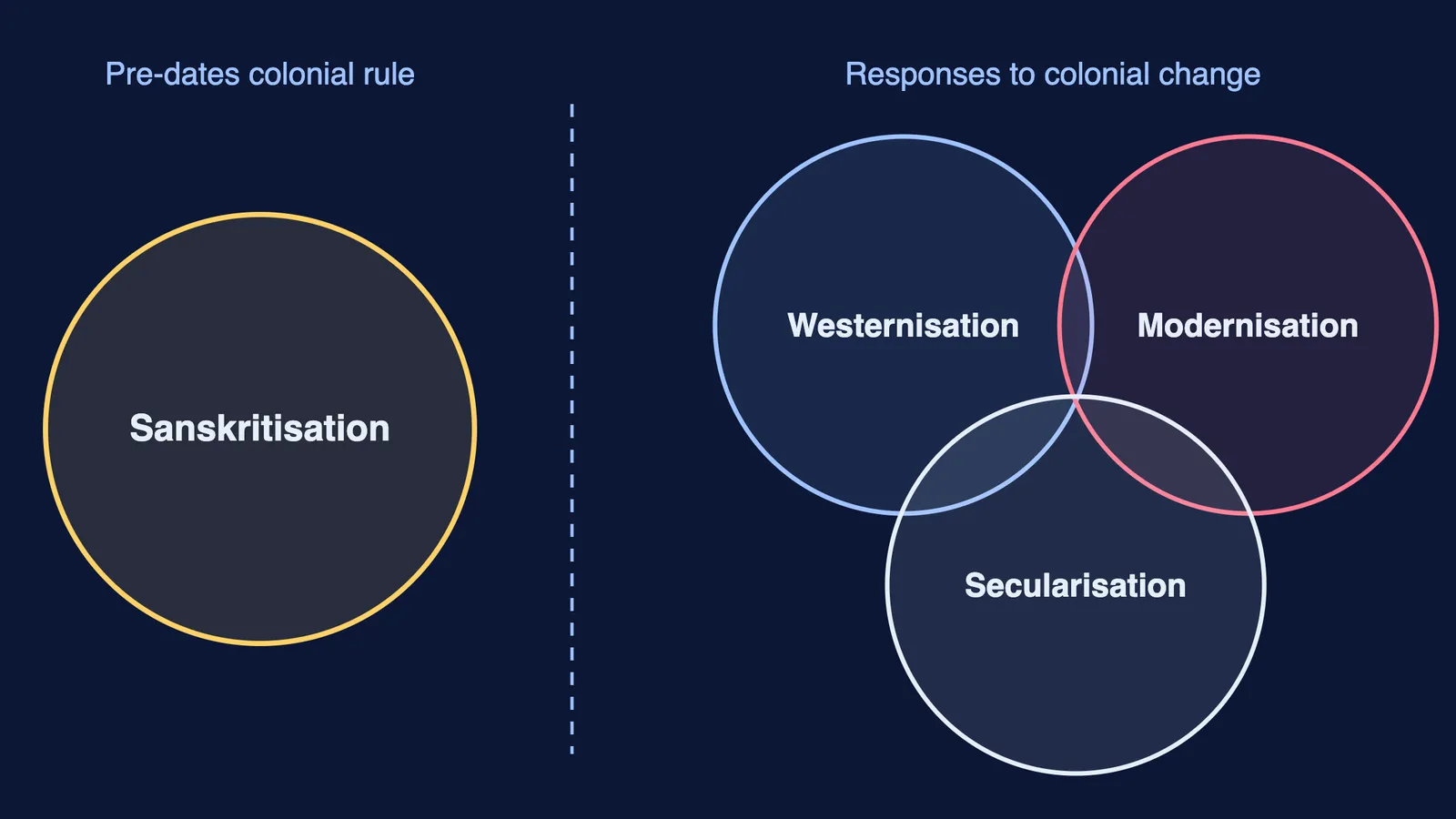
This NCERT chapter tracks deliberate social reform and four slower processes: sanskritisation, westernisation, modernisation and secularisation.
What does Cultural Change cover, and how many marks is it worth?
In the CBSE Sociology curriculum for 2026-27, Cultural Change carries 5 marks in Part B, Social Change and Development in India. Work from the current NCERT chapter (Chapter 2, Reprint 2026-27).
The 2026-27 sample paper has a 1-mark MCQ on the Rudolphs' definition of modernity and a 4-mark question on criticisms of sanskritisation. It caps 2-mark answers at 30 words and 4-mark answers at 80, and the marking scheme follows NCERT's wording closely.
How did 19th-century social reform movements change Indian society?
The NCERT chapter says reformers took on sati, child marriage, the ban on widow remarriage and caste discrimination. What was new was the mix of ideas: Western liberalism combined with a fresh reading of traditional texts. Raja Ram Mohun Roy, for example, attacked sati using both humanitarian and natural-rights arguments and the Hindu shastras.
Satish Saberwal names three aspects of the modern framework of change:
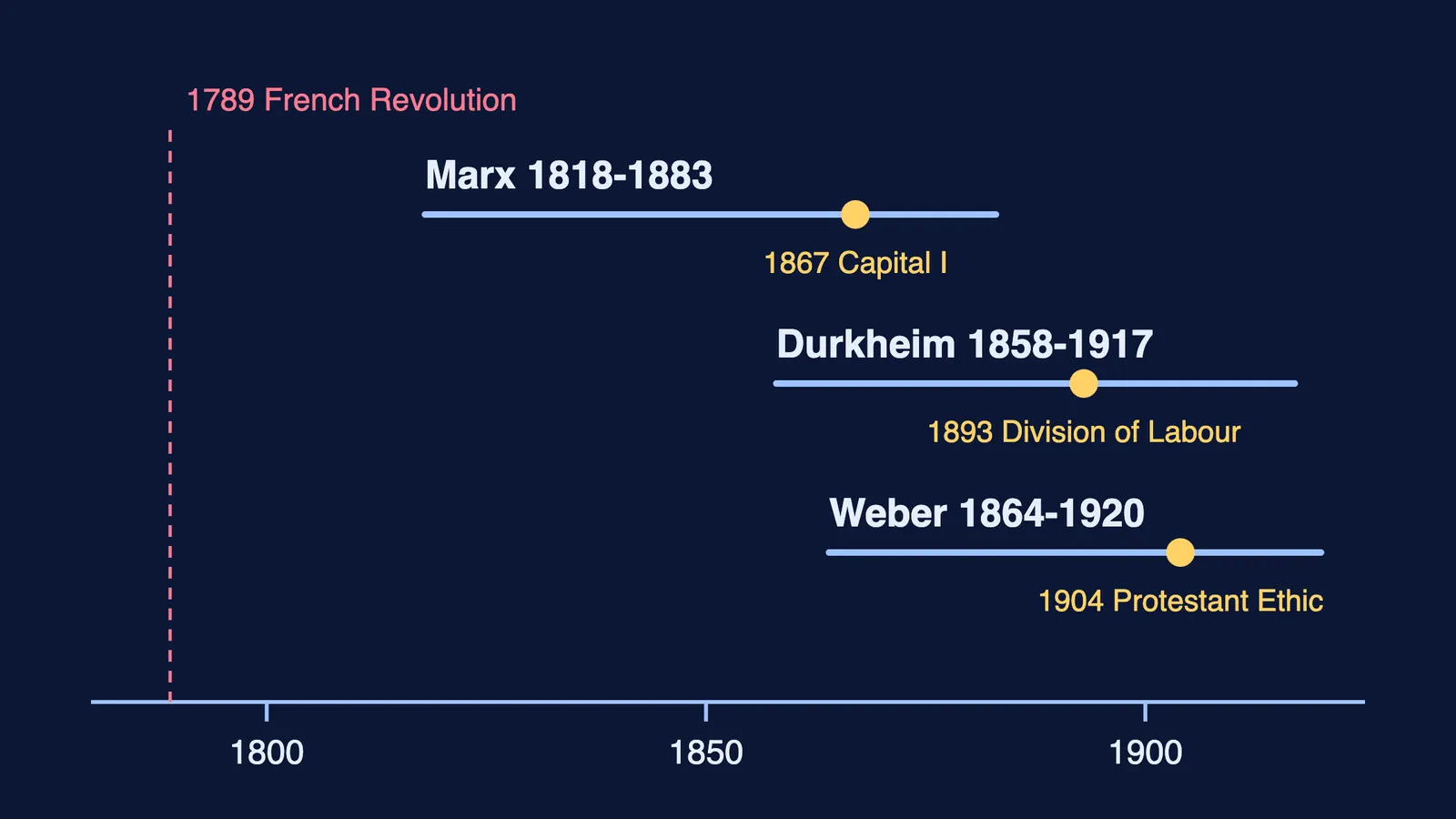
Modes of communication: the printing press, telegraph, railways and steamships moved ideas quickly. In 1864 Bengal's Keshav Chandra Sen travelled to Madras.
Forms of organisation: the Brahmo Samaj in Bengal, the Arya Samaj in Punjab, and the All-India Muslim Ladies Conference, founded in 1914.
The nature of ideas: liberalism, freedom and the value of education. Jotiba Phule started Pune's first school for women.
Reform met resistance: orthodox Hindus in Bengal set up the Dharma Sabha, which petitioned the British, saying reformers could not interpret scripture.
What are sanskritisation, westernisation, modernisation and secularisation?
NCERT stresses that these processes overlap and often co-exist in one person. Definitions below follow the NCERT chapter.
Sanskritisation is M.N. Srinivas's term for a 'low' caste, tribe or other group adopting the customs, rituals, beliefs, ideology and way of life of a higher caste, above all a 'twice-born' (dwija) caste. It pre-dates colonial rule. Where non-Sanskritic castes were dominant, their own influence was stronger: de-Sanskritisation.
Srinivas argued it usually lifts a group's standing in its local caste ranking; NCERT adds that dominant castes traditionally punished such attempts. NCERT then records five criticisms of the concept:
It overstates mobility: some individuals move, the unequal structure stays.
It takes 'upper caste' ways as superior and 'lower caste' ways as inferior.
It seems to justify inequality and exclusion, including ideas of purity and pollution.
Adopting upper-caste rites brings secluding girls and women, dowry instead of bride-price, and discrimination against other castes.
It erodes Dalit culture, making labour seem shameful and craft and work-based knowledge seem useless.
Westernisation, in Srinivas's definition, means the changes in Indian society and culture produced by over 150 years of British rule, across technology, institutions, ideology and values. It has two kinds: a small Western-educated sub-culture of intellectuals, and a wider spread of Western dress, food and technology. Srinivas suggested 'lower castes' sanskritised while 'upper castes' westernised, but NCERT notes this is hard to maintain: elite Thiyyas in Kerala consciously westernised.
Modernisation first meant better technology and production; later, the path of development taken by much of west Europe and North America. The Rudolphs' definition, which NCERT quotes, stresses universal over local ties, choice over birth, achieved over ascribed identity, and science over the non-rational.
Secularisation in the modern West usually meant a decline in the influence of religion. NCERT shows the Indian picture is more mixed: rituals serve secular ends, such as a wedding displaying a family's standing, and caste now works through caste associations and caste-based parties that press demands on the state, described as the secularisation of caste.
How do you tell the four processes apart in an answer?
Run any exam example through this check:
Is a group adopting the rituals and lifestyle of a higher caste? Sanskritisation.
Is it adopting Western dress, gadgets, food or institutions? Westernisation.
Are choice, achievement and a scientific attitude replacing birth and custom? Modernisation.
Is religion's influence changing, or is caste acting as a political pressure group? Secularisation.
Name the process, define it in one line, then link it to the example. See our guide to Class 12 sociology board answers with Indian examples. Secularism as a state policy is covered in The Challenges of Cultural Diversity, and Dalit and backward class movements in our Social Movements guide.
What practice questions should you try?
Our own questions, in the board's style:
(1 mark) Who coined the term sanskritisation?
(2 marks) Using Saberwal's three aspects, give two examples of how new technology or organisations spread reform ideas.
(2 marks) A caste association lobbies the state for reservations. Which process does this illustrate, and why?
(4 marks) Explain, with two examples, why westernisation does not always lead to modern values.
(6 marks) "Nineteenth-century reformers combined Western ideas with a new reading of tradition." Discuss with reference to sati, widow remarriage and female education.
For help planning a revision session, Fermi's AI tutor can work out what you already know and build a plan for the session.