On this page
Cortisol is known as the stress hormone, but immunologists also see it as the body's built-in brake on inflammation. That brake is why synthetic glucocorticoids have been used to treat immune-related disorders since 1948, according to a 2017 review in Nature Reviews Immunology by Derek Cain and John Cidlowski. Scientists also ask what happens when stress keeps it pressed for weeks.
What is cortisol, and where does it come from?
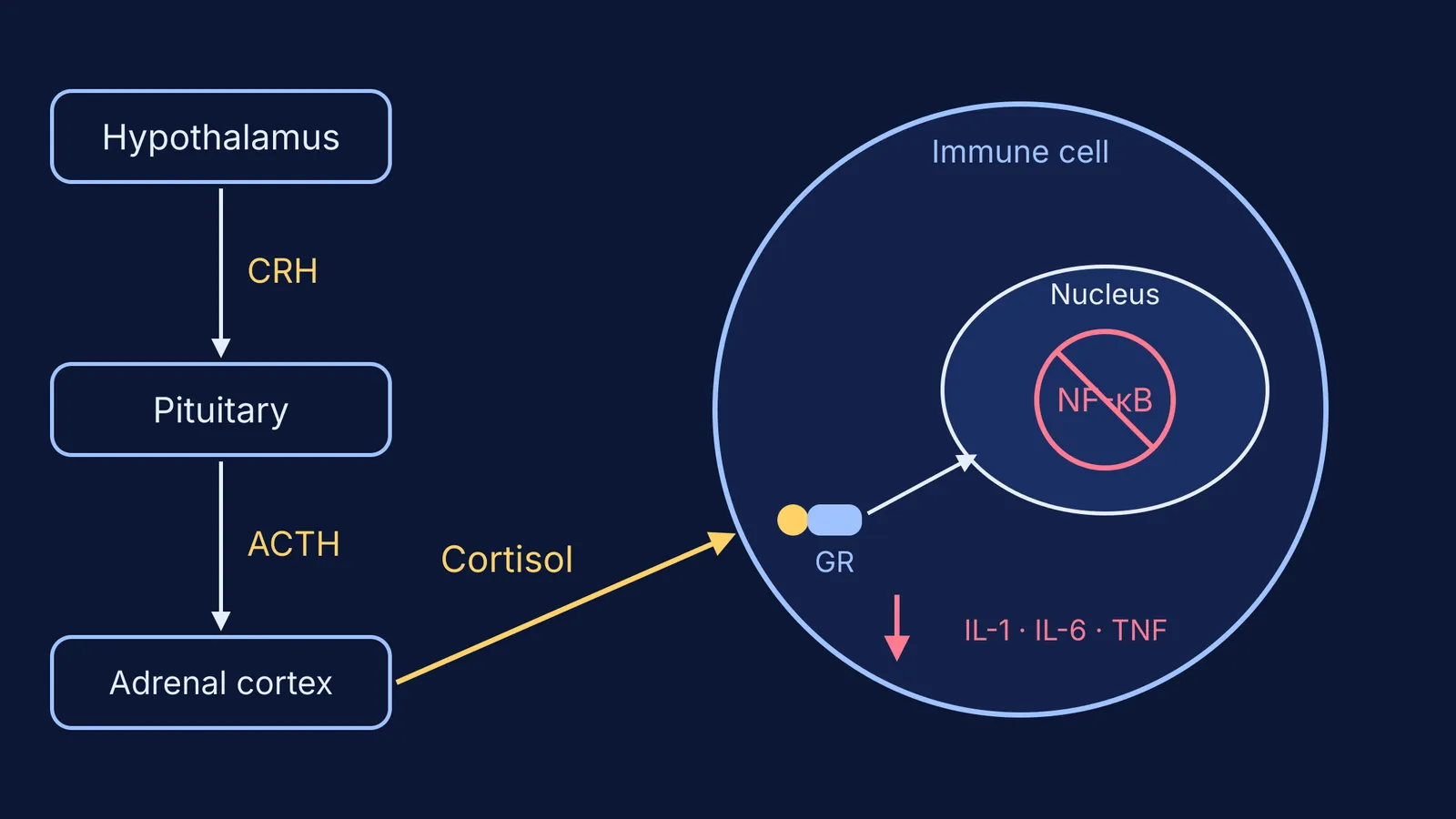
Cortisol is a glucocorticoid, a steroid hormone made in the outer layer of the adrenal glands (our explainer on the adrenal cortex vs the adrenal medulla covers the anatomy). Its release is run by the HPA axis. As Cain and Cidlowski describe it, the hypothalamus responds to daily rhythms, stress (real or perceived) and inflammatory cytokines by releasing corticotropin-releasing hormone (CRH). CRH makes the anterior pituitary release ACTH, and ACTH tells the adrenal glands to make glucocorticoids.
The daily rhythm alone moves immune cells around: the same review notes a 40% decline in circulating T cells in human blood from night to morning, mirroring the daily glucocorticoid pattern, as the cells home to tissues.
How does cortisol suppress the immune system?
Cortisol is fat-soluble, so it crosses cell membranes and binds the glucocorticoid receptor (GR), which is found in nearly every cell with a nucleus and waits in the cytoplasm (Cain and Cidlowski, 2017). The hormone and receptor then move into the nucleus and act in three main ways:
It interferes with the inflammation switches. The receptor interferes with NF-κB and AP-1, two transcription factors that turn on inflammatory genes.
It turns on brake genes. It raises proteins such as GILZ, DUSP1, IκBα (which holds NF-κB back) and annexin A1 (which cuts the release of arachidonic acid, raw material for inflammatory signals).
It quietens messengers and some cells. It lowers many cytokines, including IL-1β, IL-2, IL-6, interferon-γ and TNF, and developing T cells in the thymus are highly sensitive to glucocorticoid-induced cell death.
It is not a simple off switch. The review reports that glucocorticoids largely spare or even enhance gene pathways linked to innate immunity, while selectively suppressing pathways involved in adaptive immunity.
Does exam stress weaken your immunity?
The type of stress matters. Segerstrom and Miller's 2004 meta-analysis of more than 300 studies found:
Acute stressors lasting minutes went with an increase in some measures of natural (innate) immunity.
Brief real-life stressors such as exams tended to suppress cellular immunity while preserving humoral immunity (a refresher: humoral vs cell-mediated immunity).
Chronic stressors went with suppression of both cellular and humoral measures.
In a 1998 study by Marucha and colleagues, 11 dental students had a small 3.5 mm wound made on the roof of the mouth, once during summer vacation and once three days before a major exam. The exam-time wounds took an average of 3 days, or 40%, longer to heal, and production of IL-1β messenger RNA fell by 68%. In a mouse study from the same year, a drug blocking the glucocorticoid receptor brought stressed animals' healing back to the normal rate, which points to glucocorticoids as part of the cause.
Why are long-term stress hormones studied for their immune effects?
If cortisol damps inflammation, why is chronic stress linked to inflammation-related disease? Sheldon Cohen and colleagues (2012) proposed that long-term stress makes immune cells less responsive to cortisol, which they called glucocorticoid receptor resistance. In 276 healthy adults exposed to a cold virus, those with a recent long-term threatening stressful experience showed this resistance, and resistance went with a higher risk of developing a cold. In a second group of 79 people, greater resistance predicted more inflammatory cytokines in nasal secretions after infection.
In other words, the brake can stop working well when pressed for too long, so researchers look not only at how much cortisol people make but at how well their cells respond to it.
How do you write the cortisol pathway in a biology answer?
Write one arrow per line and name the molecule at each step:
Stress: the hypothalamus releases CRH.
CRH: the anterior pituitary releases ACTH.
ACTH: the adrenal cortex releases cortisol.
Cortisol binds the glucocorticoid receptor in the cytoplasm; the pair enters the nucleus.
NF-κB and AP-1 are held back, brake genes such as IκBα switch on, and cytokines such as IL-1, IL-6 and TNF fall, so inflammation drops.
Add one line of nuance: brief stress mainly affects cellular immunity, chronic stress affects both arms, and long-term stress can make cells resistant to cortisol.
If one link feels shaky, such as how steroid hormones act through receptors inside the cell, the Fermi Concept Library has a lesson for every concept in biology, each placed in its map.
These studies describe group averages, not a diagnosis for anyone. If stress leaves you unwell or low for a long time, talk to a doctor or counsellor, or call Tele MANAS, India's free 24x7 mental-health helpline, on 14416.
For the coping side in Class 12 psychology, read our guide to stress and coping in Meeting Life Challenges.