

On this page
The study of Human health and disease for NEET: pathogens, immunity, vaccines begins with a fundamental split in how the body defends itself. When a pathogen enters the bloodstream, the immune system mounts a highly specific response. This acquired immunity works through two distinct pathways: humoral immunity and cell-mediated immunity.
While both arms of the immune system coordinate to clear infections, they rely on different primary cells and tactics. This distinction is not just a syllabus requirement for biology exams; it is the central mechanism behind why the body accepts or rejects transplanted organs.
What is humoral immunity?
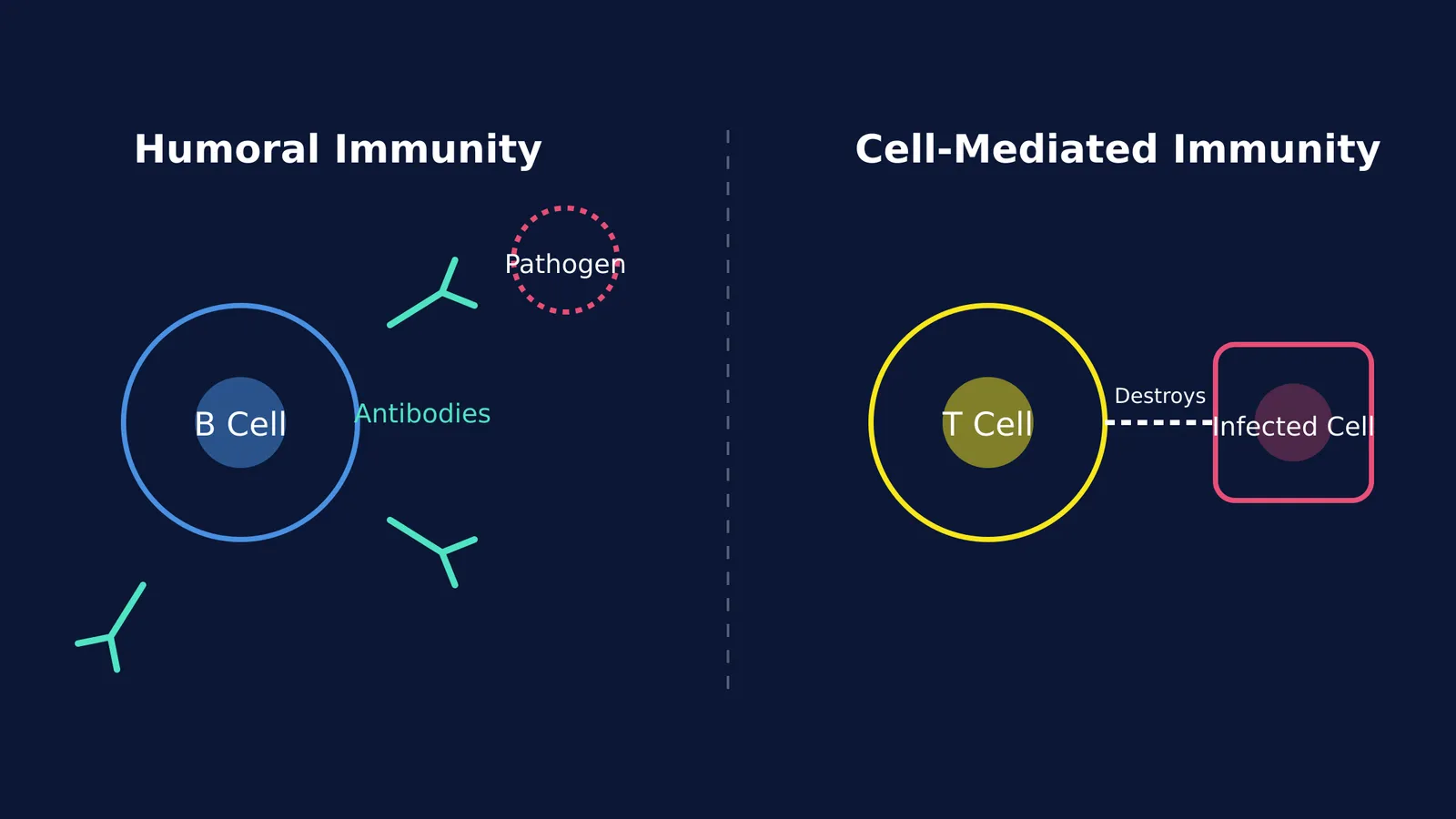
Humoral immunity is driven by B lymphocytes (B cells). The term "humoral" refers to the body's fluids, or humors, where these cells release their primary weapon: antibodies.
When a B cell encounters a foreign antigen that matches its specific receptor, it becomes activated and multiplies. These activated cells differentiate into plasma cells, which function as microscopic factories, rapidly pumping out highly specific Y-shaped antibodies. These antibodies circulate widely in the blood and lymph.
Once deployed, antibodies bind to free-floating pathogens such as bacteria, toxins, and viruses that have not yet invaded a cell. This binding can neutralise the threat directly—by physically blocking a virus from docking with a host cell—or it can act as a tag, signalling large phagocytic cells to engulf and destroy the intruder. Because antibodies patrol the extracellular fluids, humoral immunity forms the first line of targeted defence in the bloodstream.
What is cell-mediated immunity?
Cell-mediated immunity does not involve antibodies. Instead, it relies on T lymphocytes (T cells) to hunt down and destroy compromised cells directly.
Once T cells mature—a process involving the role of the thymus in immunity—they continuously inspect the body's own cells. They look for cells displaying foreign antigens on their surface. This includes cells infected by viruses, cells that have become cancerous, and cells introduced from a transplanted organ.
When a cytotoxic T cell recognises a target, it binds tightly to it and releases powerful chemicals. Perforins punch physical holes in the target cell's membrane, while granzymes enter through these pores and force the cell to undergo apoptosis, or programmed cell death.
Meanwhile, helper T cells release chemical signals called cytokines. These signals recruit macrophages and stimulate the production of both B cells and cytotoxic T cells. This central coordinating role is why their loss is so devastating; the mechanism of how HIV replicates: reverse transcription and helper T cell loss directly undermines the entire cell-mediated network, leaving the body vulnerable.
Why do organ grafts get rejected?
When a patient receives a kidney, heart, or liver transplant, the organ brings its own set of Human Leukocyte Antigens (HLA) from the donor. Even with careful tissue matching, the recipient's immune system will eventually recognise these antigens as foreign.
Between 10% and 20% of kidney transplant recipients experience an episode of acute rejection within the first year. This acute rejection is predominantly a cell-mediated response. Recipient T cells infiltrate the transplanted tissue, view the donor cells exactly as they would view a viral infection, and begin a direct assault on the functional tissue of the new organ.
While humoral rejection also occurs—where newly formed antibodies attack the blood vessels of the graft—it is the direct T cell attack that forms the most common acute hurdle in the months following surgery. Modern immunosuppressive drugs are specifically designed to dampen this T cell activity, maintaining a delicate balance that builds on the early discoveries of how the body can learn to accept a graft.
A practical framework for exam revision
When revising immunology for competitive exams, distinguishing between these two systems is a frequent source of multiple-choice questions. Use this mental checklist to separate them:
The primary cells: B cells run humoral immunity; T cells run cell-mediated immunity.
The weapon: Humoral immunity relies on circulating antibodies; cell-mediated immunity relies on direct cell-to-cell contact and toxic chemicals.
The target: Humoral attacks extracellular threats (pathogens in the blood); cell-mediated attacks intracellular threats (infected cells, cancer cells, and grafts).
The transplant link: T cells are the primary culprits behind acute organ rejection.
If you are preparing for biology exams, simply memorising definitions is rarely enough; you need to trace what happens step by step. When you bring a topic like this to Fermi's AI tutor, it works out what you already know, builds a plan for the session, and teaches through it — drawing the figure and checking your understanding as it goes.
For a broader view of where these processes fit together, the Concept Library places every mechanism of the immune system into a complete map. By comparing humoral and cell-mediated responses side by side, the logic of how the body defends itself—and why it sometimes fights life-saving treatments—becomes clear.


