On this page
If your teacher, state board or old question papers still ask about the cockroach, three terms are easy to mix up: the mushroom gland, the spermatophore and the phallomeres. A note first. The current NCERT Class 11 Biology Chapter 7, Structural Organisation in Animals (Reprint 2026-27), covers organs and the frog only. The cockroach section (7.4) is in the earlier edition of the same book, which you can read in an archived copy of NCERT Class 11 Biology. Check your own syllabus before deciding how much time to give it.
What are the parts of the male cockroach reproductive system?
The earlier NCERT text, section 7.4.2, describes Periplaneta americana as dioecious, with both sexes having well-developed reproductive organs. Here is the labelled-part list, in the order sperm travel, with what each part does.
Testes: one pair, one on each side, in abdominal segments 4 to 6. They make sperm.
Vas deferens: a thin tube arising from each testis. It carries sperm onward.
Seminal vesicles: where sperm are stored and glued into bundles called spermatophores.
Ejaculatory duct: the vasa deferentia open into it through the seminal vesicle.
Mushroom-shaped gland: an accessory reproductive gland in abdominal segments 6 and 7. NCERT's Figure 7.18 labels its long tubules and small tubules.
Phallic gland: a separate gland labelled in the same figure.
Male gonopore: the opening of the ejaculatory duct, ventral to the anus.
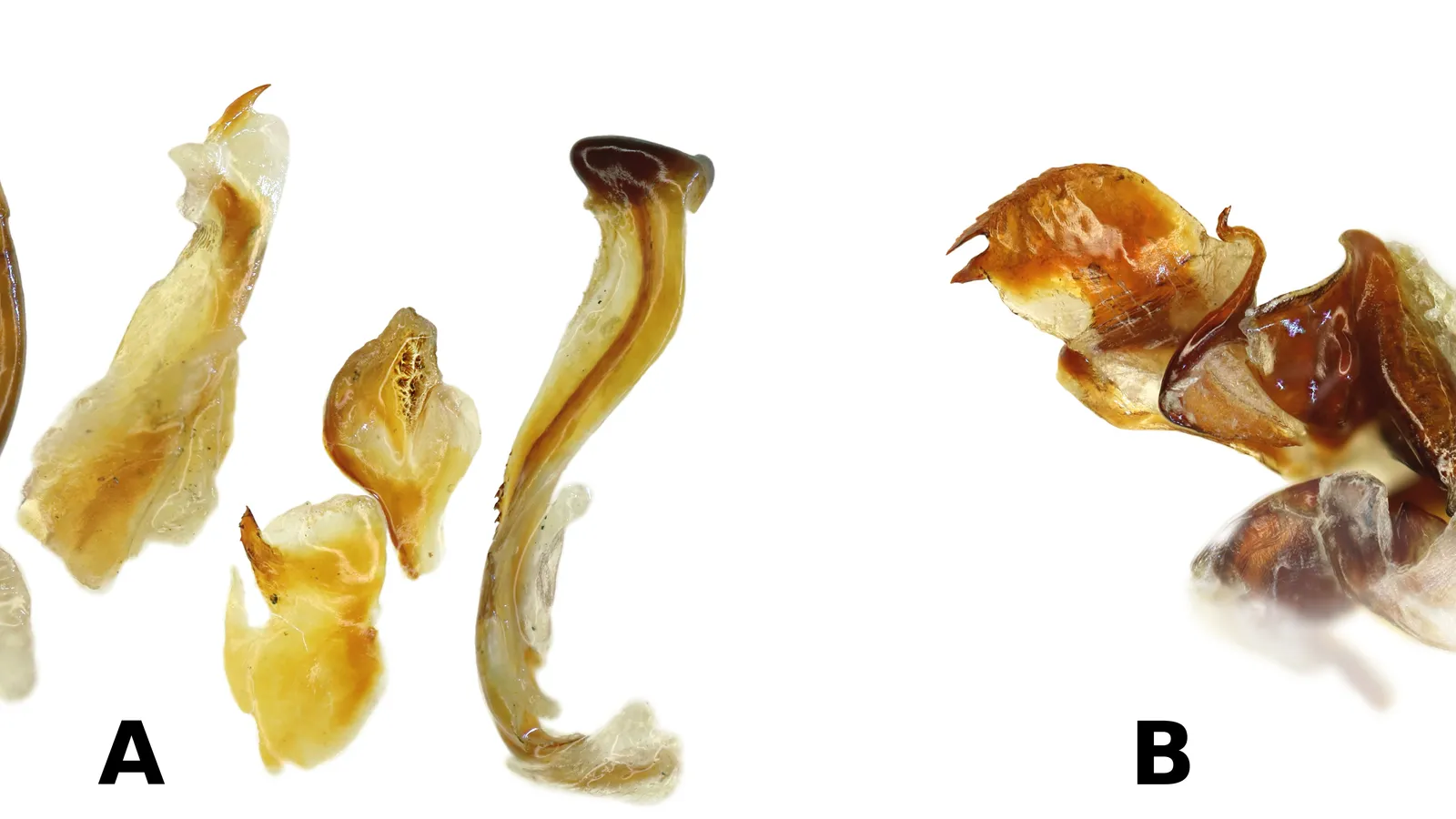
Phallomeres (male gonapophyses): chitinous, asymmetrical structures around the gonopore that form the external genitalia. The figure labels a right, a left and a ventral phallomere, plus the pseudopenis and titillator.
Anal styles and anal cerci: males have a pair of short, thread-like anal styles that females lack; both sexes have a pair of anal cerci on segment 10.
To compare with humans, see our male reproductive system labelled diagram; only the cockroach packs sperm into spermatophores.
What does the mushroom gland do in a cockroach?
NCERT's one-line answer is that it "functions as an accessory reproductive gland". Research looks closer. A 1974 paper by Rita G. Adiyodi and Kenoth G. Adiyodi examined the ultrastructure of the utriculi majores in the mushroom-shaped male accessory gland of Periplaneta americana under the electron microscope.
Why does a cockroach need such a gland? A 2025 PLOS ONE study of a cockroach male reproductive gland explains that in a spermatophore, sperm are packed together with secretions from the male accessory sex glands before transfer to the female. The same study notes that the conglobate gland, also called the phallic gland, is specific to male cockroaches and is involved in spermatophore formation. In the German cockroach, which that study mainly examined, the mushroom-shaped body is a group of about 200 utricles arranged like a pompom.
In Mizunami, Weibrecht and Strausfeld's 1998 paper, cockroaches with lesions in selected areas of both mushroom bodies could no longer find a hidden target but could still find a visible one.
How is the spermatophore formed and transferred?
Put the earlier NCERT text and the 2025 PLOS ONE study together and you get a five-step story you can write in an exam.
Testes produce sperm, which pass down each vas deferens.
Sperm collect in the seminal vesicles and are glued into bundles.
Accessory gland secretions are packed with the sperm, forming the spermatophore.
The ejaculatory duct opens at the male gonopore, which the phallomeres surround.
Spermatophores are discharged during copulation. In the female, a pair of spermathecae in segment 6 open into the genital chamber.
After fertilisation, the eggs are encased in capsules called oothecae. NCERT says a female produces 9 to 10 oothecae on average, each with 14 to 16 eggs. For more numbers like these, see our list of cockroach organ numbers in NCERT.
How do you avoid the common mistakes?
Many slips come from mixing up similar names. Before a test, check yourself against this list, drawn from the earlier NCERT text.
Seminal vesicles store sperm; testes make them.
Testes sit in segments 4 to 6; the mushroom gland in segments 6 and 7.
The phallic gland is a gland; phallomeres are hard external plates.
Phallomeres are asymmetrical: label left, right and ventral separately.
Anal styles belong to males only; anal cerci to both sexes.
If a term still feels shaky, the Fermi Concept Library gives every biology concept its own lesson. If you want to work through a diagram, Fermi's AI tutor draws the figure and checks your understanding as it goes. For more practice, try our structural organisation in animals diagram questions.