On this page
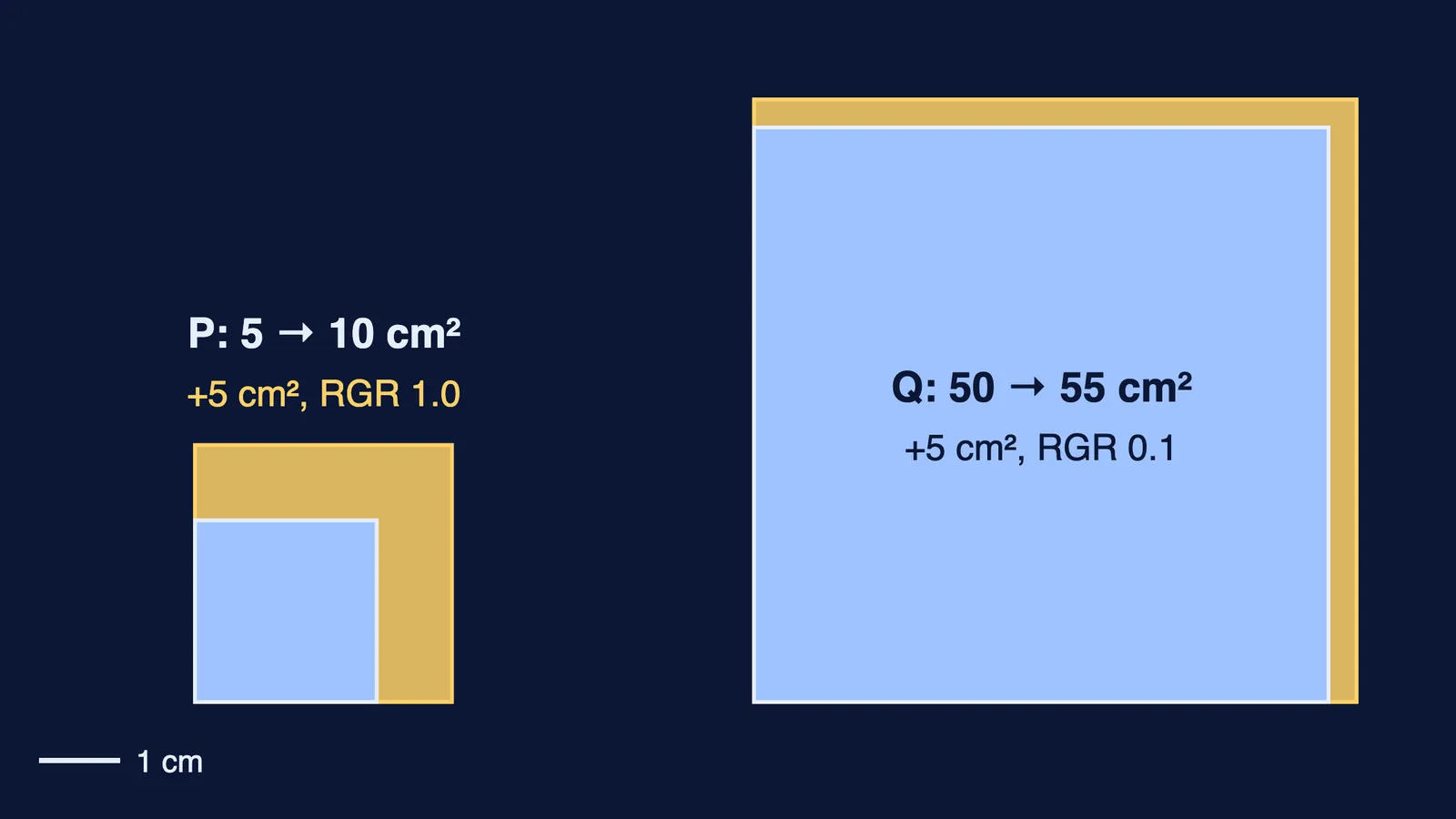
Every statement below stays inside the NCERT Class 11 Biology chapter Plant Growth and Development (Reprint 2026-27), which is Chapter 13 of the CBSE 2026-27 Class XI Biology curriculum. The items are original practice, not taken from any exam paper. The two leaves in the diagram above are the ones in Q6.
How do you answer assertion-reason questions on plant growth?
Judge A on its own, then R on its own. Only if both are true, read "A because R" aloud and ask whether R is the cause NCERT gives. In this chapter most traps are true facts about the right hormone attached to the wrong effect. Our assertion-reason question strategy explains the method in more detail.
Assertion-reason keys:
(A) Both A and R are true and R is the correct explanation of A.
(B) Both A and R are true but R is NOT the correct explanation of A.
(C) A is true but R is false.
(D) A is false but R is true.
Statement I / Statement II keys:
(A) Both statements are correct.
(B) Both statements are incorrect.
(C) Statement I is correct, Statement II is incorrect.
(D) Statement I is incorrect, Statement II is correct.
Plant growth assertion-reason questions with answers
Q1 (easy). Assertion (A): The expansion of a leaf counts as growth. Reason (R): A permanent increase in size that cannot be reversed counts as growth, whether it is in a whole organ, part of an organ or one cell.
Answer: (A). Both are true, and NCERT applies exactly this definition to call leaf expansion growth.
Trap: thinking growth must mean more cells; an increase in size is enough.
Q2 (easy). Assertion (A): Ethylene is used to synchronise fruit-set in pineapples. Reason (R): Ethylene raises the rate of respiration in ripening fruits.
Answer: (B). Both are true NCERT facts. R is about ripening (the respiratory climacteric), not about getting fruits to set together, so it does not explain A.
Trap: linking anything about ethylene and fruit to ripening.
Q3 (medium). Assertion (A): Cells in the zone of elongation become more vacuolated, enlarge and lay down new cell wall. Reason (R): The zone of elongation lies distal to the meristematic zone, between the meristem and the root tip.
Answer: (C). A is true. R is false: the elongation zone is proximal to the meristem, just next to it and away from the tip; the meristem is at the apex.
Trap: mixing up proximal and distal.
Q4 (medium). Assertion (A): In arithmetic growth, both daughter cells of every mitotic division keep dividing. Reason (R): Arithmetic growth, such as a root elongating at a constant rate, gives a straight line when length is plotted against time.
Answer: (D). A is false: in arithmetic growth only one daughter cell keeps dividing while the other differentiates. Both progeny dividing is geometric growth. R is true (Lt = L0 + rt).
Trap: swapping the arithmetic and geometric descriptions.
Q5 (hard). Assertion (A): In deep-water rice, ethylene keeps the leaves and the upper shoot above the water level. Reason (R): Ethylene promotes root growth and root hair formation.
Answer: (B). Both are true. The cause NCERT gives for A is that ethylene promotes rapid internode and petiole elongation; extra root hairs increase absorption surface and do not lift the shoot.
Trap: ticking (A) because both sentences are about ethylene helping the plant.
Q6 (hard). Assertion (A): Leaf P grows from 5 cm² to 10 cm² and leaf Q from 50 cm² to 55 cm² in the same time, so P has the higher relative growth rate. Reason (R): Relative growth rate is growth per unit time expressed on a common basis, such as per unit of the initial parameter.
Answer: (A). Both gain 5 cm², so their absolute growth rates are equal. Per unit initial area, P grows 5/5 = 1.0 and Q grows 5/50 = 0.1, and R is the definition that makes this comparison.
Trap: answering "equal" by comparing absolute gains.
Statement I and Statement II questions on plant growth
Q7 (easy). Statement I: Indole butyric acid (IBA), like IAA, is an auxin obtained from plants. Statement II: NAA and 2,4-D are natural auxins found in plants.
Answer: (C). I is true. II is false: NCERT lists NAA and 2,4-D as synthetic auxins.
Trap: assuming every named auxin is natural.
Q8 (medium). Statement I: Kinetin was first isolated from coconut milk. Statement II: Zeatin, a natural cytokinin, was obtained from maize (corn) kernels and coconut milk.
Answer: (D). I is false: kinetin came from autoclaved herring sperm DNA and does not occur naturally in plants. II is true.
Trap: pinning coconut milk on kinetin because Skoog's callus medium used it.
Q9 (medium). Statement I: Cork cambium forming from fully differentiated parenchyma cells is an example of dedifferentiation. Statement II: The cells this cambium produces, which lose the ability to divide and mature for specific functions, are redifferentiated.
Answer: (A). Both match NCERT: living differentiated cells regain the power to divide (dedifferentiation), and their products mature again (redifferentiation).
Trap: calling cork cambium a primary meristem.
Q10 (hard). Statement I: Ethylene is made in large amounts mainly by young, rapidly dividing tissues. Statement II: Gibberellins hasten senescence, so fruits sprayed with them must be picked early.
Answer: (B). I is false: ethylene comes mainly from tissues undergoing senescence and from ripening fruits (cytokinins are made where cells divide fast). II is false: gibberellins delay senescence, which lets fruits stay on the tree longer.
Trap: two plausible swaps in one question.
How should you use this set?
Cover the answers and do all ten in one sitting.
For each miss, write the trap in one line in your own words.
Make a five-column table (auxin, gibberellin, cytokinin, ethylene, ABA) and fill in every effect from Q2, Q5, Q7, Q8 and Q10 from memory.
If two hormones keep blurring together, the Fermi Concept Library covers every concept in physics, chemistry, biology, mathematics and computing, each with its own lesson and its place in the map.
For the whole chapter, from growth rates to all five PGRs, see our Plant Growth and Development Class 11 guide, and for more mixed practice, our plant physiology practice questions with solutions.