On this page
Chapter 12 of Kaushal Vikas, NCERT's new Class 9 skill education book (0916, First Edition, April 2026), is titled Additional Vocations. Chapters 4 and 8 use the same title; this is the Unit III one, Work in Human Services.
What is Additional Vocations in Class 9 Kaushal Vikas Unit III?
The book's preface sets out seven vocations per unit, and schools are encouraged to choose one. Chapter 9 (Personal and Lifestyle Services) is compulsory. Chapters 10 and 11 work through healthcare and tourism in detail. Chapter 12 gives shorter guidelines for five more: hospitality, event management, interior design, data-based services and public information services.
Each whole unit gets about 36 hours (44 periods), with about 32 periods for vocation-specific work.
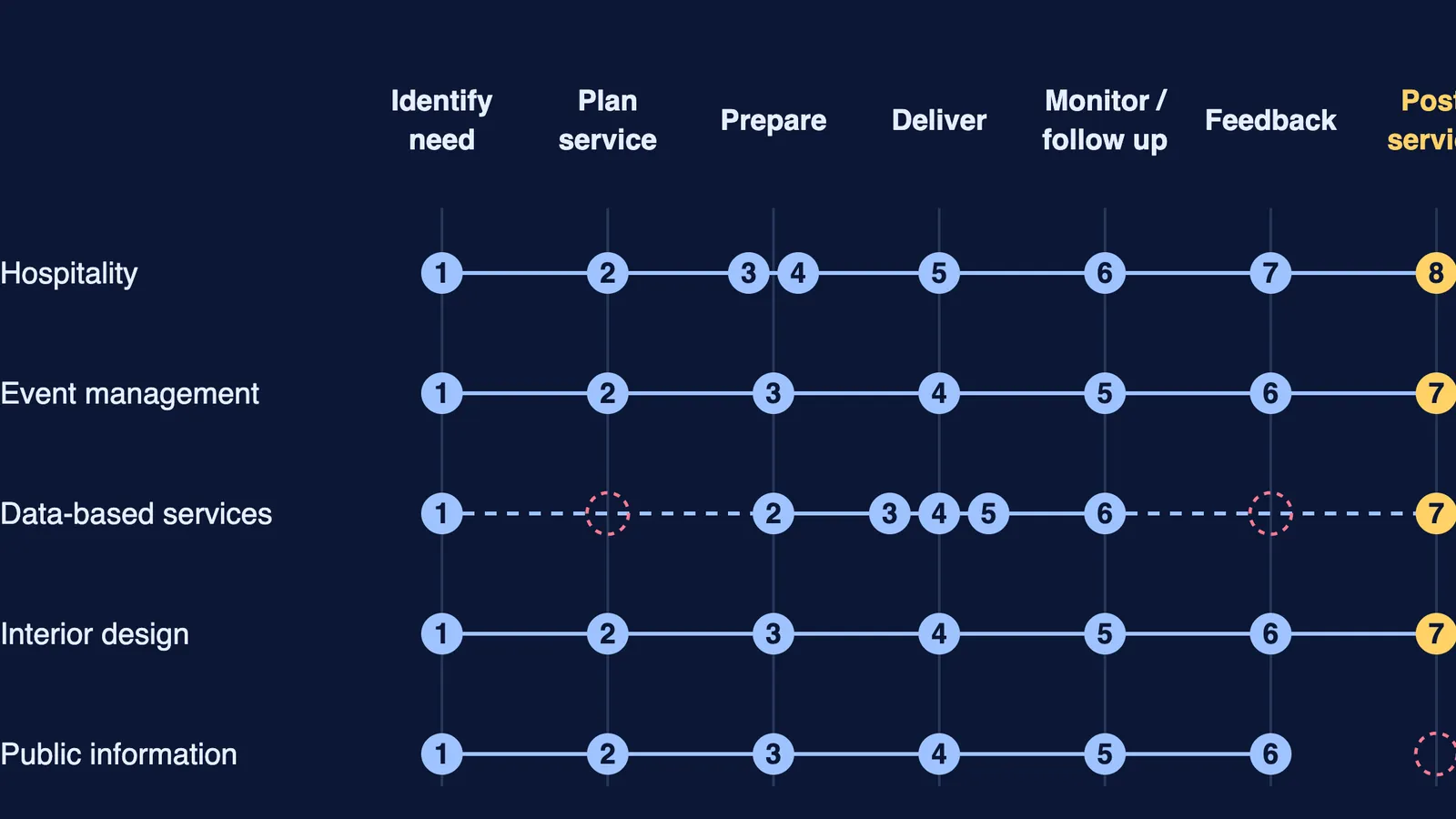
Each vocation gets keywords, a materials list, quality and safety parameters, and numbered key steps, lined up in the diagram above. Hospitality has eight steps, public information six, the rest seven.
How is Kaushal Vikas assessed in 2026-27?
It is assessed in school; neither CBSE document describes a board exam. CBSE's Kaushal Vikas assessment guidelines for 2026-27 set five modes: paper-pencil test 40%, demonstration and viva 20%, site visit report 10%, portfolio 20% and teachers' observations 10%.
The 40-mark test has Section A objective questions (8 marks), Section B short answers (12), Section C scenario or case questions (16) and Section D one reflective or decision-making question (4). These figures cover the whole subject, all three units; none is set for this chapter.
The 2026-27 curriculum suggests 10 hours of introductory themes and 26 hours of vocation-specific themes for Work in Human Services, including a site visit, a process chart, needs surveys, costing and confidentiality.
What does each human-services vocation involve?
From the NCERT chapter, in our words:
Hospitality: making visitors feel welcome, comfortable and safe. Etiquette means respectful greeting, tone and listening. Roles include greeters, guides, queue managers and record-keepers. Rehearse handling a lost guest or a cup shortage.
Event management: planning and running a gathering with a purpose. Programme flow is the order of activities; logistics covers materials, equipment, people and time. Hold a rehearsal, and keep exits and walkways clear.
Data-based services: collecting and studying information to support decisions. Pick a real problem such as water use or screen time, take consent, record answers unchanged, then chart and discuss them.
Interior design: making an indoor space comfortable, useful, safe and pleasant. Talk to the users, measure the room, draw a top-view floor plan, build a cardboard model and keep a project journal.
Public information services: helping people find information, fill in forms and track requests, through places like Common Service Centres, e-Seva Kendras and help desks. A grievance is a complaint asking an authority to act. Use only official websites and centres, and do not share anyone's documents or OTPs with unauthorised people.
How do you cost a service and read survey data?
The curriculum asks you to keep costing records, including people's time. Our numbers below are made up; your teacher will give local prices.
A hospitality desk for a parent meeting expects 200 guests:
Drinking water, 4 cans of 20 litres at ₹40 each = ₹160
Placards, 8 at ₹5 each = ₹40
Waste bags, 1 pack = ₹50
Sanitiser, 1 bottle = ₹90
Total = 160 + 40 + 50 + 90 = ₹340, or ₹340 ÷ 200 = ₹1.70 per guest. The water gives 80 litres ÷ 200 = 400 mL per guest. Six volunteers working 3 hours each give 18 person-hours; record them too.
For a data-based service, suppose 40 classmates (made-up numbers) answer a screen-time survey: under 1 hour 6, 1 to 2 hours 14, 2 to 3 hours 12, over 3 hours 8. That is 15%, 35%, 30% and 20%, so half the group (20 of 40) reports 2 hours or more.
Practice questions for Additional Vocations (Unit III)
Our own questions; mark labels are our suggestion.
In event management, what does logistics cover? (1 mark)
Put these interior design steps in order: make a cardboard model, measure the room, talk to the users. (1 mark)
Give two safety parameters for data-based services and explain why each matters. (2 marks)
At a school exhibition, guests crowd the entrance and the water runs out. Using the hospitality steps, say what you would change and what you would record. (4 marks)
Cost a water point for 150 guests using the prices in our example. How many 20-litre cans give at least 400 mL per guest? (3 marks)
Which vocation suits your school best? Give one local need and one safety point. (4 marks)
Related reading: hospitality management in Class 12 Home Science, event management as a career after 12th, and interior design courses after 12th.
Not sure which vocation to revise first? Fermi's AI tutor works out what you already know and builds a plan for the session.