On this page
Event management is one of the few careers you can try out before you pay a single rupee in fees. Every school annual day and college fest needs people to book venues, chase vendors and keep a programme on time. This guide covers what the formal routes give you, what the first job actually looks like, and how to test the field first.
Is event management a good career after 12th in India?
The industry is growing. In the FICCI-EY media and entertainment report, the organised live events segment grew 44% in 2025, fuelled by higher spending on ticketed events, weddings, government events and religious gatherings, according to EY's press release on the report.
Growth does not mean the job is glamorous. The national Event Planner / Event Manager qualification pack, written by the Media & Entertainment Skills Council, describes the role as making sure an event goes to plan: identifying suppliers, making sure every partner knows what is expected of them, checking performers are booked and on schedule, working within the budget, and making sure the event meets health, safety and sustainability concerns. Its listed tasks include sourcing venues, arranging catering, organising clean-up and handling crowd or registration problems when a vendor fails to deliver.
If you enjoy lists, phone calls and fixing problems at 11 pm, that will sound good. If you mainly like the stage, it will not.
Degree or diploma: which route counts for more?
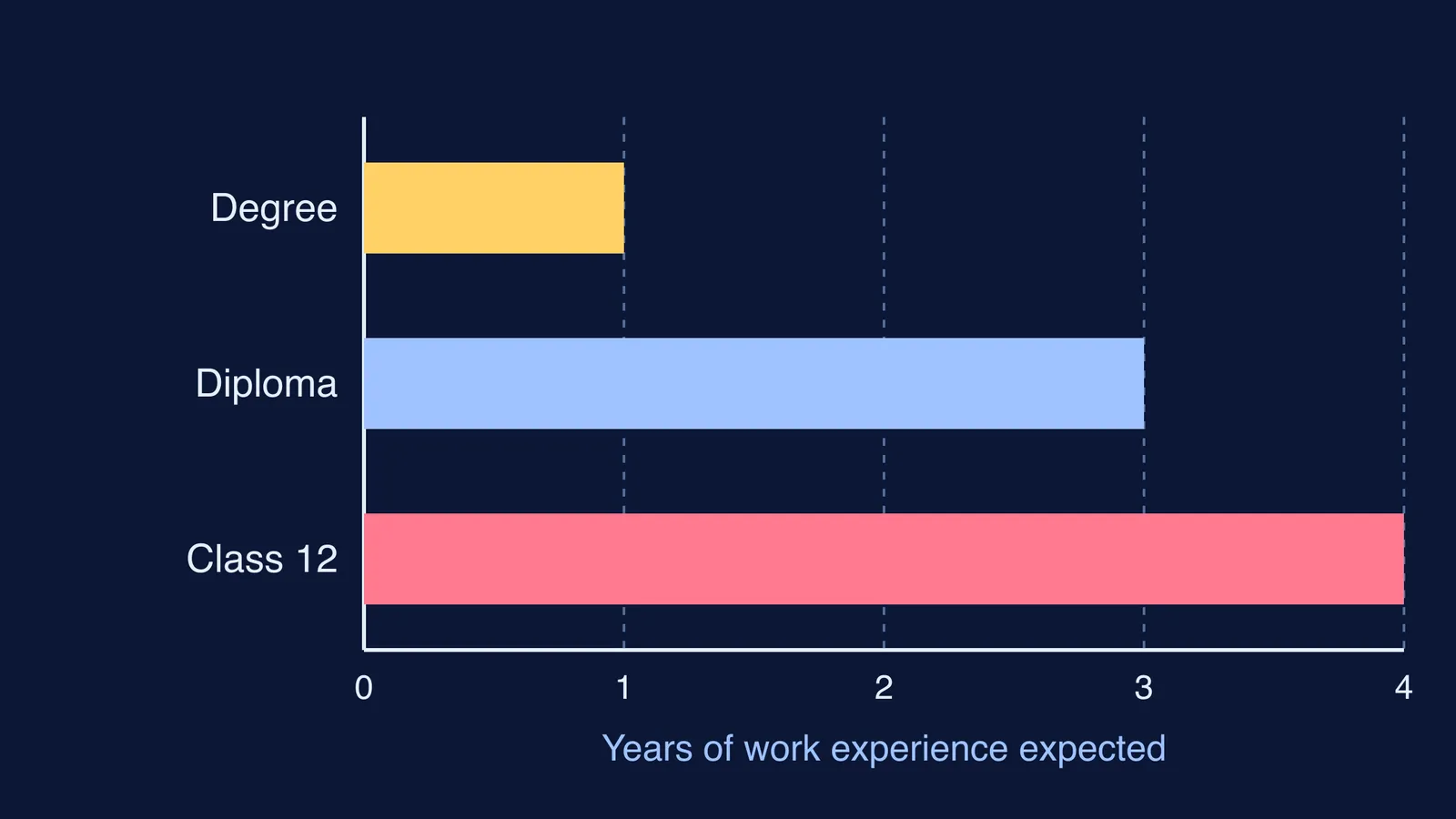
The same qualification pack lists the minimum qualification and experience for an event manager as a graduate with 1 year of experience, or a Class 12 pass with 4 years, or a diploma holder with 3 years (MESC, MES/Q0209). It also gives a minimum job entry age of 21.
In practice, this means:
A degree (a BBA or BA with event management, or any degree plus fest and internship work) needs the fewest years of work before the manager level.
A diploma is shorter and cheaper, but the standard asks for more years on the job.
Going straight to work after 12th is possible, but the standard lists four years of experience for the manager level.
Check one thing before you pay any fee. The UGC's FAQ page says a statutory university can award the degrees specified under Section 22 of the UGC Act, and it lists the kinds of institutions that award degrees: central, state, private and deemed universities, and institutions of national importance. Many "event academies" are private institutes outside that list. Their diploma may still teach you useful skills, but it is a certificate from that institute, not a university degree. Ask the institute in writing which university awards the qualification.
What jobs and pay can you expect at the start?
Early roles are usually on the ground, with titles such as event coordinator, operations executive, vendor or hospitality coordinator, or registration and guest management. The work matches the tasks in the qualification pack, done for someone more senior. Expect long days around the event, and weekend and festival-season work.
The salary site PayScale shows an average total pay of about ₹3.4 lakh a year for event managers with under a year of experience, based on 40 salaries people reported themselves. That is a small sample, so treat it as a rough guide; individual offers vary. If it is an unpaid "internship", check it against these red flags for unpaid internships.
How can you test event management with student fests first?
Here is a plan that fits around Class 12 or your first year of college:
Month 1: volunteer for one school or college event. Our guide on how to organise a school event as a student breaks it into a 6-week plan you can follow.
Month 2: ask for one job you can own, such as vendor quotes, the run sheet or registrations.
Month 3: join a fest organising committee. Weigh the time cost first with this guide on whether to join the fest organising committee.
After the event: write down the budget you handled, the vendors you dealt with and one problem you fixed. That page becomes your first CV line and your answer in an admission interview.
Then score yourself honestly. Did you like the phone calls and the waiting, not just the event day? Did you stay calm when a vendor was late? Would you sign up for the next event? Three yes answers is a good sign to choose a course. Mostly no answers have saved you a year of fees.
What to say to your parents
A short script: "Before we pay for a course, I'll work on two events this year and show you what I did. If I still want it, we'll pick a course from a UGC-recognised university." A plan with a test built in answers most worries about stability.
If Class 12 exams are taking all your time right now, Fermi's AI tutor can work out what you already know and build a plan for each study session, so you sit down to a clear next step and keep some time free for your first event.