On this page
Your child has finished Class 10, or is about to, and says they would rather do an ITI course or a polytechnic diploma than Class 11. The official rules keep more doors open than many families expect. Here is how each route works and how to decide together.
What is the difference between ITI, polytechnic and Class 11?
All three start after Class 10.
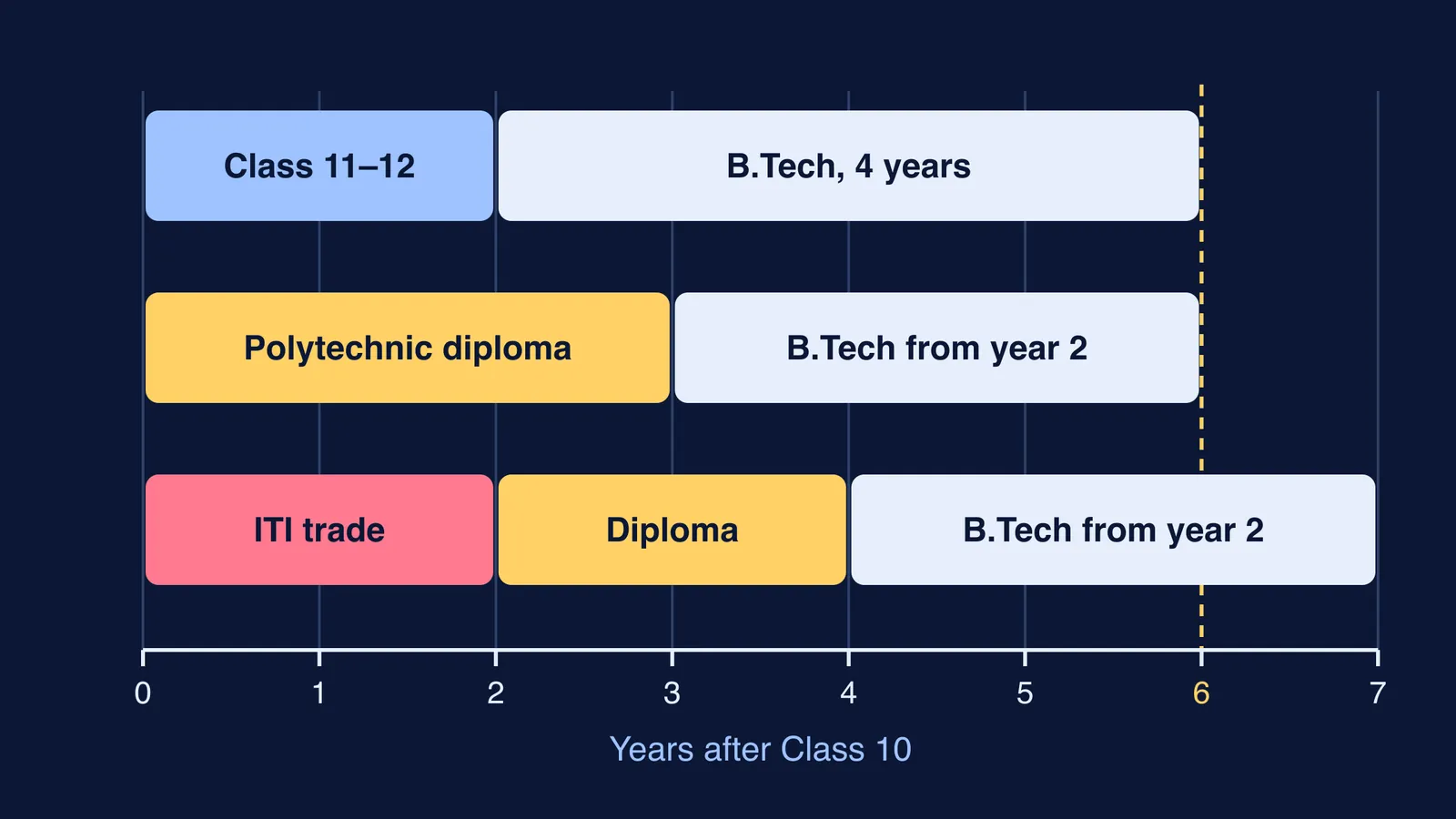
ITI (Industrial Training Institute): training in one trade under the Craftsmen Training Scheme. Trades last one or two years, and some admit students after Class 8 or Class 10, according to the DGT and NIOS FAQ for ITI learners.
Polytechnic diploma: a diploma in engineering and technology lasts three years and needs a Class 10 pass, according to AICTE's Approval Process Handbook 2024-27 (Annexure 8).
Class 11 and 12: two years of school subjects, and the usual road to entrance exams such as JEE Main and NEET-UG.
Can my child still get a degree after ITI or polytechnic?
Yes. There are three official routes, all set out in AICTE's Approval Process Handbook 2024-27 and the NIOS-DGT scheme FAQ.
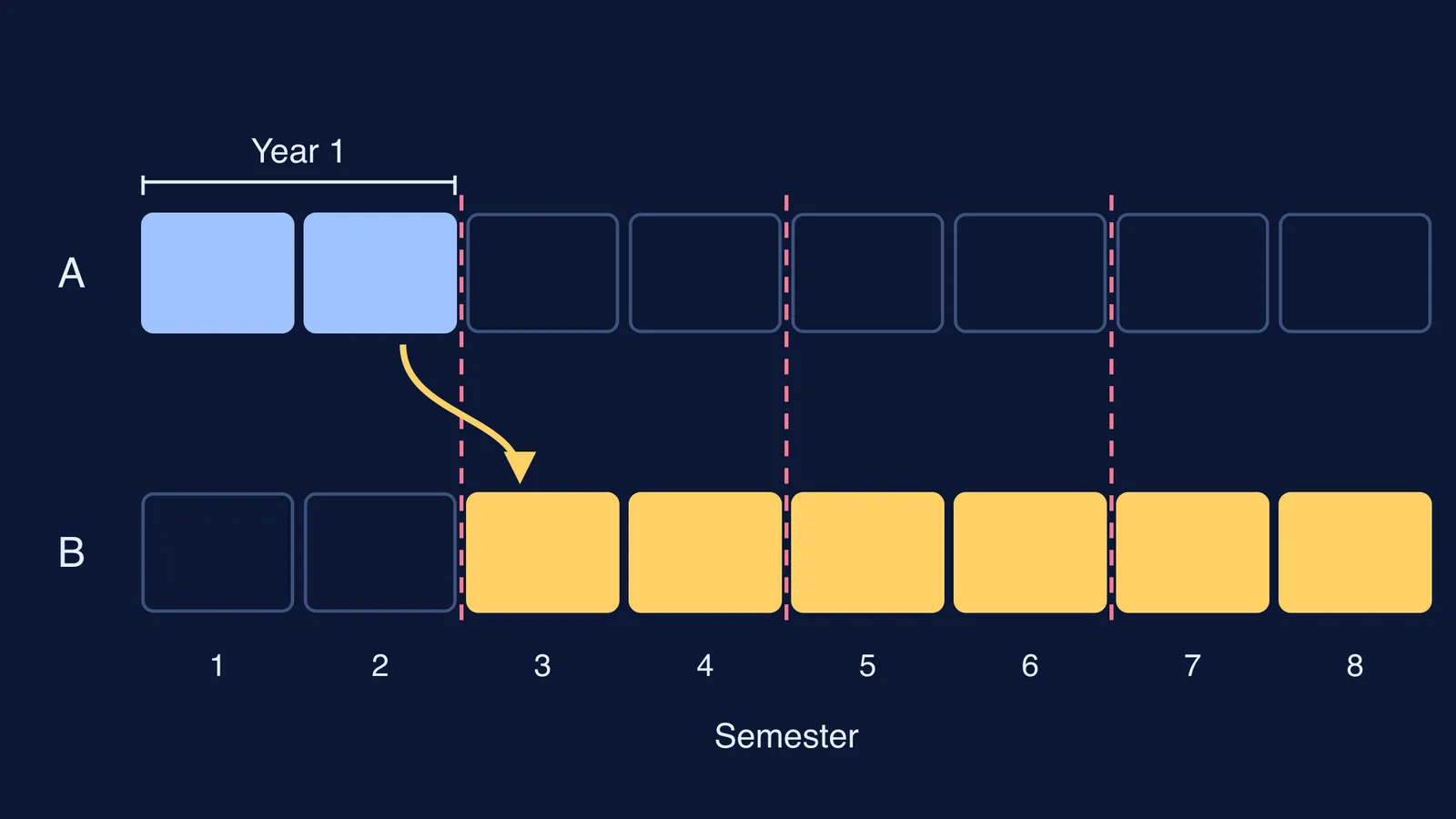
Diploma to B.Tech: a diploma holder with at least 45% marks (40% for reserved categories) can join a B.Tech in the second year, which then takes three years. Colleges can add lateral-entry seats of up to 10% of their approved intake, plus any first-year seats left empty.
ITI to diploma: a student with Class 10 and a two-year ITI can join a diploma in its second year, in any branch of engineering. Bridge courses are offered in subjects such as mathematics, physics and engineering drawing.
ITI to a Class 10 or 12 certificate: under the NIOS-DGT scheme, ITI trade subjects count towards an NIOS certificate, so a learner studies only one or two new subjects, one of them a language. Not every ITI is an NIOS study centre yet, so ask. An NIOS Class 12 certificate can be used to apply for degrees and for exams such as JEE, NEET and CUET, but only if the subjects meet each exam's rules.
More on route 1 in our guide to lateral entry into B.Tech after a diploma.
AICTE's Tuition Fee Waiver scheme waives the tuition fee (not other fees) on diploma courses for students whose parents earn no more than Rs 8 lakh a year, on up to 5% of each course's approved intake, according to the same AICTE handbook. We have a separate post on scholarships for diploma students.
How do we decide between ITI, polytechnic and Class 11?
Work through these questions with your child.
What do they enjoy? Building, repairing and seeing things work points one way. Reading, writing and abstract problems point another.
Is there a goal that needs Class 12 subjects? If the dream is medicine, Class 11 with biology is the direct road.
Is this a choice, or an escape? A diploma still has maths. If the real problem is one bad year, fix the gap first.
How good is the institute? Visit the workshop, ask where last year's students went, and check that the course is approved.
What happens if it does not work out? Agree a review point, such as the end of the first year.
A worked example. Arjun passed Class 10 with middling marks, spends weekends fixing motors and struggles with algebra. His parents wanted Class 11 with maths and science. Together they chose a three-year electrical diploma at an approved government polytechnic, with one target: finish at or above the AICTE lateral-entry cut-off of 45%, so the B.Tech route stays open. For the algebra, the Fermi Concept Library has a lesson on every concept in mathematics and physics, so he can fill old gaps before the maths gets harder.
How do I answer relatives who say ITI is for weak students?
You do not need to win the argument, only to give a calm answer. Try one of these:
"She has not stopped studying. A diploma is three years of engineering, and diploma holders can join B.Tech in the second year."
"We read the rules ourselves before deciding. If he wants a degree later, there is a route."
"We would rather she finish something she enjoys than struggle through something she dreads."
Both facts in the first answer are in AICTE's Approval Process Handbook.
Have these conversations away from your child where you can. If the pressure leaves your child withdrawn or very low for weeks, talk to a school counsellor or a doctor, or call the government's Tele MANAS helpline on 14416.
What should you do this week?
Write down your child's long-term goal and which route reaches it.
List two or three approved polytechnics or ITIs near you and visit them together.
Ask each one about workshops, results and where students go next.
Agree a review date and write it down.
For a sense of what the work looks like day to day, read how to talk to working professionals about careers.