

On this page
If you are in Class 12 science and keep redrawing your bedroom layout in the back of your notebook, interior design is a real option. Science students have two main routes into it: a design degree, or B.Arch. They differ in entry rules, exams, course length and the title you end up with.
What does an interior design course actually teach?
The National Institute of Design (NID) describes its Furniture and Interior Design discipline as the shaping of "living, working and interaction environments" at human scale. Its students learn through "detailed material study, hand-digital drawings and physical modelling", with hands-on prototyping.
CEPT University's Bachelor of Interior Design shows what a full curriculum looks like. Over five years it covers design studios, technical and freehand drawing, workshops, field trips and case studies, ending in a research thesis after nine semesters. CEPT says admissions to this programme have been closed since 2023, so treat it as an example, not an option.
Expect to spend your days measuring, drawing to scale, building models and defending your choices in studio reviews.
Interior design vs architecture: what is the difference?
Architecture designs the whole building. Interior design works inside it, on rooms, furniture, light and materials. In India the difference is also legal.
The Council of Architecture is a statutory body set up under the Architects Act, 1972, and anyone using the title "Architect" must be registered with it, according to the NATA 2026 information brochure. The same brochure states that falsely claiming to be an architect is a criminal offence under the Act. An interior design degree does not give you that title.
Here is how the two routes compare, using the same brochure and the NID admissions handbook 2027-28:
Who can apply: B.Arch needs Class 12 with Physics and Mathematics as compulsory subjects and at least 45% aggregate. NID accepts Class 12 in any stream (Science, Arts, Commerce, Humanities).
Length: B.Arch is five years. NID Ahmedabad now offers Furniture and Interior Design inside a five-and-a-half-year integrated M.Des of eleven semesters.
Entrance: NATA 2026 had a 90-minute, 80-mark drawing and composition test on paper plus a 120-mark computer-based test. NID's Design Aptitude Test (DAT) has a pen-and-paper Prelims and a Mains with a Studio Sensitivity Test and an In-Person Sensitivity Test.
Read our NATA explainer and our look at whether B.Arch is a good career choice.
Can I do interior design after 12th science?
Yes. NID accepts PCM or PCB, though B.Arch needs maths. Seats are scarce. The NID handbook lists 9 seats in Furniture and Interior Design at Ahmedabad and 13 at NID Haryana. Apply to more than one place and keep a second route ready.
Your science still helps: scale drawings use ratio and similar triangles, and lighting a room uses what you know about light. If one of those ideas feels shaky, the Fermi Concept Library gives every concept in physics and mathematics its own lesson, so you can revise just that idea.
Do you need a portfolio for interior design admission?
For NATA, your drawing is tested in the exam hall. The NATA 2026 brochure splits its drawing test into composition and colour (25 marks), black-and-white sketching (25 marks) and a 3D composition (30 marks). NID's handbook says DAT Prelims questions may involve text and visuals, and the Mains includes a studio test. A steady drawing habit is the best preparation.
Some colleges do ask for a portfolio. If yours does, our guide to building a design college portfolio of 12 to 15 pieces walks you through it. These three practice pieces help:
Measure your own room and draw its plan to a scale of 1:50.
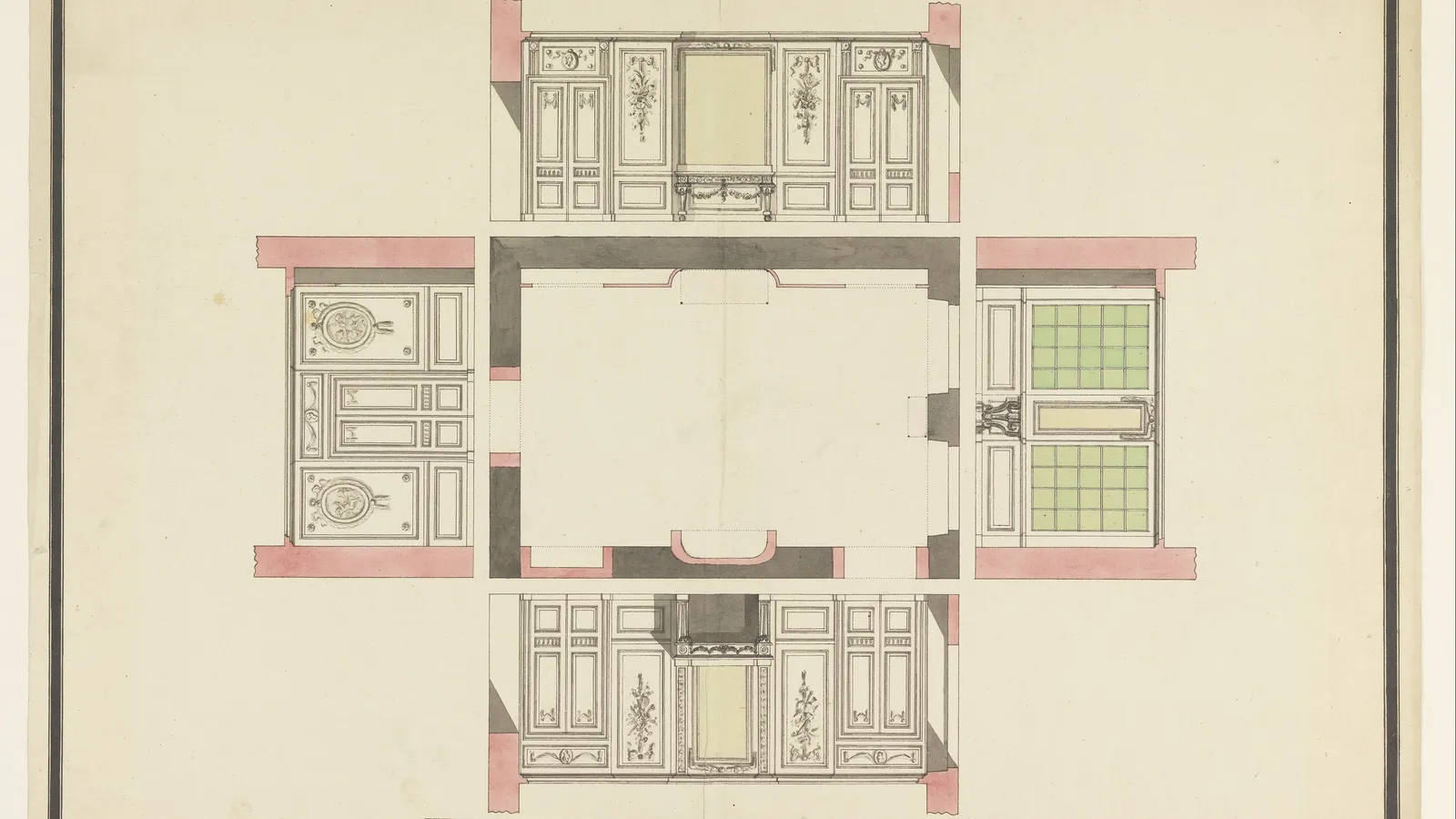
Draw the room's four walls "unfolded" around that plan, like the drawing at the top of this page.
Build a cardboard model of one corner, including one piece of furniture.
A plan from now to the NID DAT Prelims
The NID handbook gives two dates: applications close at 11:59 pm on 30 November 2026, and DAT Prelims is on Sunday, 20 December 2026. Check the official handbook and the NID admissions site for updates before you apply.
This week: read the handbook's eligibility section with a parent, including the age limits for your category.
By 25 November: submit the application, to leave days to spare.
Every day until Prelims: 30 minutes of sketching from life, such as a chair, a corner or your family at dinner.
Twice a week: one timed practice piece from the three above.
Keep board preparation steady. NID requires you to pass Class 12 in the first attempt, and admission is cancelled if you have a compartment.
If you are juggling boards and design practice and don't know where to start, Fermi's AI tutor can work out what you already know and build a plan for the session.
For architecture, check nata.in for the 2027 dates. In 2026, Phase 1 tests ran from 4 April to 13 June, according to the NATA 2026 brochure.


