On this page
Personal and Lifestyle Services is Chapter 9 of Kaushal Vikas, the NCERT Class 9 skill education textbook (book code 0916, First Edition, April 2026). It opens Unit III, Work in Human Services, and is mandatory whichever vocation your group picks. Despite the title, it covers ideas shared by all work that serves people, not grooming or beauty.
What does Personal and Lifestyle Services cover in Class 9?
It builds on sevā, meaning selfless service, and sahabhāgitā, meaning working together. It sorts services into three kinds:
Informal: everyday help at home or in the neighbourhood.
Voluntary: organised so many people benefit, without being a job.
Professional: offered by trained people such as nurses, drivers or cooks.
"Professional" describes only how work is organised; every kind of service deserves equal dignity. The book cites the Economic Survey 2024-25: services contribute nearly 55 per cent of India's Gross Value Added and employ 30 per cent of the workforce (NCERT chapter).
Value chain: a cup of tea gains value as you add a smile, hygiene, seating, choice and pleasant surroundings. Each step adds value, not just the task.
What is service orientation?
Service orientation means putting people's needs first and serving with care. The book names four qualities:
User at the centre: ask who you serve and what they need. Its flood relief camp is planned around what displaced families need.
Fair and ethical decisions: keep token order, allow agreed exceptions such as reserved seats for elders, protect privacy, and share no data or photos without permission.
Contribution to society: small acts build a kinder community, and many professionals kept serving through the COVID-19 pandemic.
Organisation and teamwork: a "chain of service" links staff, so a poor handover (waiter to kitchen, one nurse's shift to the next) harms the user.
For serving people with disabilities respectfully, see our Class 9 disability etiquettes guide.
How do you create a good service environment?
The book splits it into three parts:
Physical: clean, ventilated, well arranged, with toilets, drinking water and a first-aid kit.
Social: the provider's attitude, attire and communication.
Safety: the "Three Cs" of cleanliness, care and caution, plus trust that users are heard and their information stays private.
A consent form is the agreement between provider and user. The book's sample lists the service, people involved, purpose, quality and safety steps, a disclaimer on limits, and signatures. Consent must be informed and willing, and can be withdrawn at any time.
What are the service quality criteria?
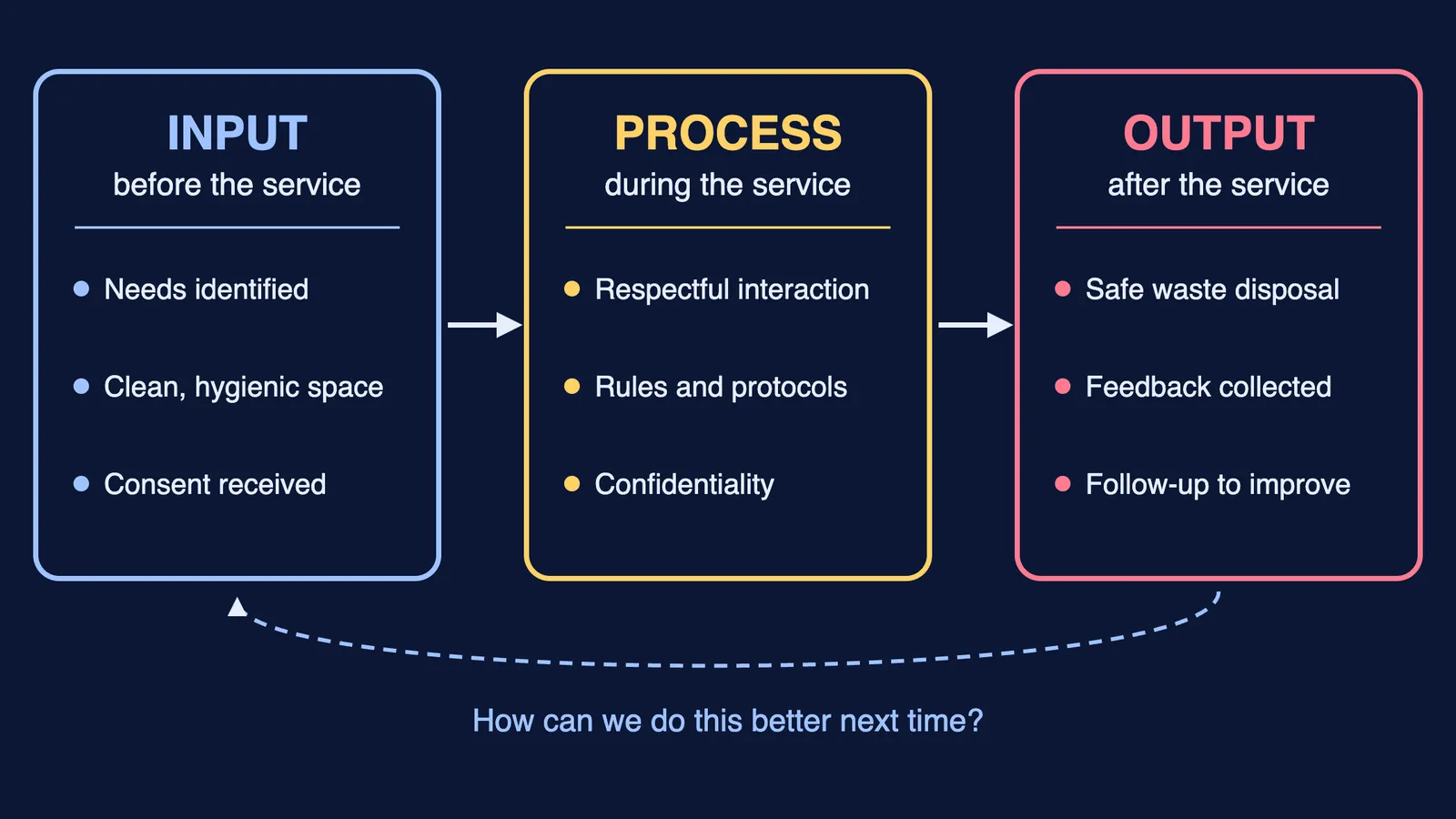
Table 9.1 sorts quality into three stages, shown in the diagram above:
Input (before): needs identified, space clean, tools ready, checklist made, consent taken.
Process (during): smooth teamwork, respectful interaction, rules followed, safe practice including cyber safety, active listening, confidentiality.
Output (after): clear the space, dispose of waste safely, collect feedback, act on it.
The chapter then asks you to map time, space, an expert and materials before choosing a vocation from Chapters 10 to 12 or another human service.
Worked example: plan a help desk in three stages
Our own scenario: your group of 5 runs a help desk at a school book fair, expecting 120 visitors over 3 hours.
Load: 120 ÷ 3 = 40 visitors an hour. With 2 counters, that is 20 per counter, or one every 3 minutes.
Roles: 2 at counters, 1 guiding the queue, 1 on cleaning, 1 on feedback. If a visit takes 2 minutes, each counter is busy 40 minutes an hour, leaving 20 spare.
Rotation: swap roles every 45 minutes, giving 4 slots in 180 minutes.
Output: if 30 visitors return a feedback slip, that is 25 per cent; read every slip at your review.
How is Kaushal Vikas assessed in Class 9?
Kaushal Vikas is assessed in school. The CBSE assessment guidelines for 2026-27 set paper-pencil test 40 per cent, demonstration and oral presentation or viva voce 20 per cent, site visit report or observation notes 10 per cent, portfolio 20 per cent and teachers' observations 10 per cent. The 40-mark test has objective (8), short answer (12), scenario- or case-based (16) and reflective or decision-making (4) sections, for the whole subject; no chapter has its own marks (see internal assessment marks and projects).
The CBSE 2026-27 curriculum does not name the textbook; this chapter maps to its "Introduction to Vocational Area" theme for Work in Human Services (suggested 10 hours).
Practice questions (mark labels are our suggestion):
Classify as informal, voluntary or professional: a PHC nurse, a neighbour fetching medicine, a clean-up drive. (1 mark)
Give two ways a tea stall could add value without raising its price. (2 marks)
Midway through your event the token printer stops and visitors crowd the counter. Which service-orientation quality is at risk, and what backup plan could your team have prepared? (4 marks)
Write three headings for a consent form for a class survey, and explain why consent can be withdrawn. (3 marks)
Planning a service project and unsure where to begin? Fermi's AI tutor works out what you already know and builds a plan for the session.