On this page
Pepsin, the protein-cutting enzyme of the stomach, is built for acid. Once food passes into the duodenum, the acid is neutralised, pepsin goes quiet, and trypsin and the other pancreatic enzymes start work. It all comes down to pH.
Why does pepsin stop working in the small intestine?
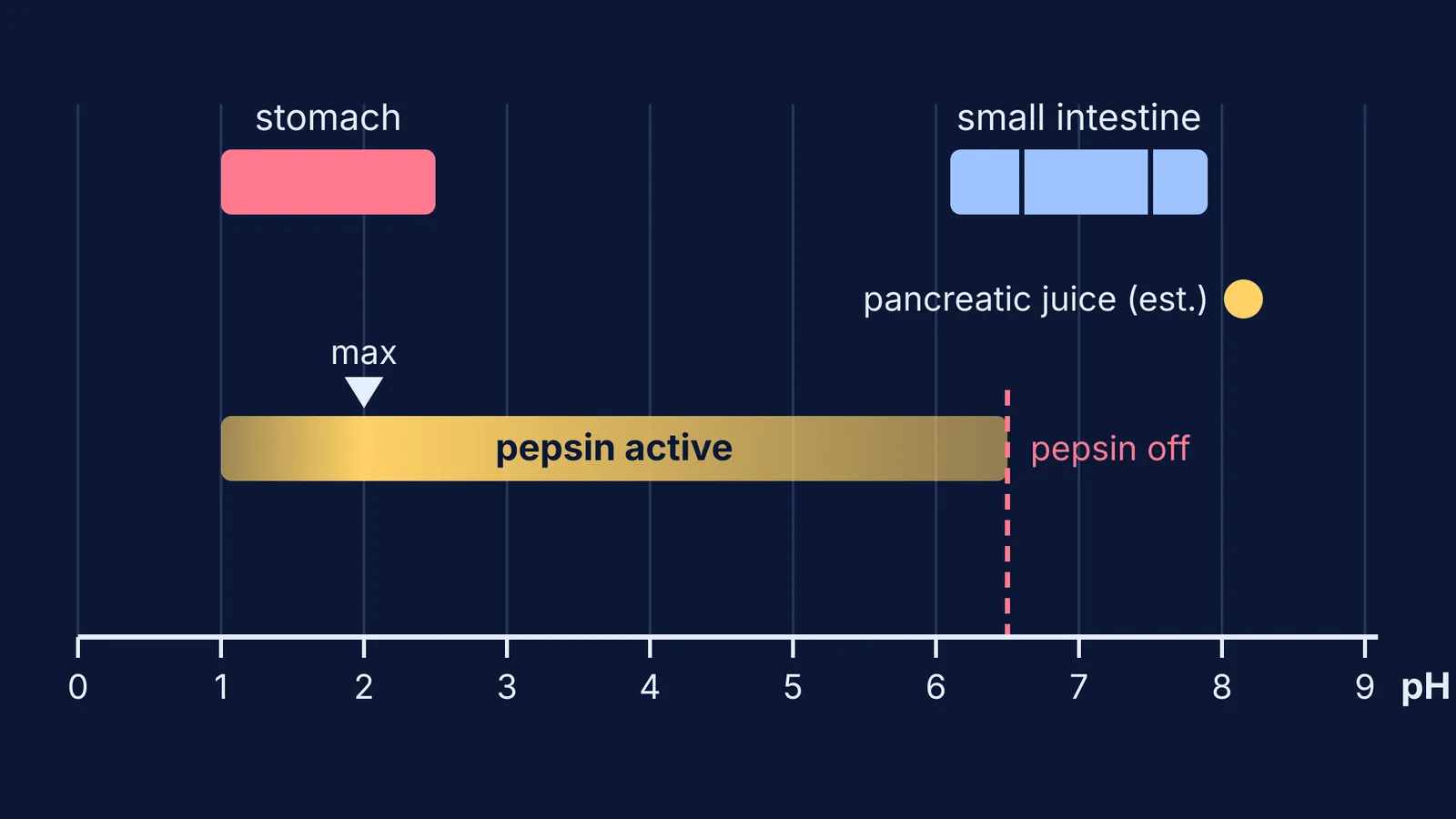
Pepsin needs acid twice. First, it is secreted as inactive pepsinogen, and stomach acid switches it on. OpenStax Anatomy and Physiology states that HCl is necessary for the conversion of pepsinogen to pepsin, and that HCl keeps stomach contents at pH 1.5 to 3.5. Which cells make the acid and which make the enzyme is covered in our post on gastric gland cells and what they secrete.
Second, pepsin only works when the pH stays low. In a 2007 laboratory study of human pepsin, Johnston and colleagues in The Laryngoscope found the enzyme had maximum activity at pH 2.0 and was inactive at pH 6.5 or above.
Why does pH matter so much? An enzyme holds its substrate partly through charged side chains. LibreTexts' chapter on pH and enzyme kinetics explains that when the pH shifts, groups such as -COO⁻ and -NH₃⁺ gain or lose a hydrogen ion, so the ionic bonds that hold the substrate cannot form. At very high or very low pH the enzyme can lose its shape altogether.
One detail examiners like: inactive is not the same as destroyed. The same 2007 study found that pepsin kept at pH 7.0 for 24 hours still had 79% of its original activity once it was acidified again.
What is the pH of the duodenum, really?
A common shorthand is "stomach pH 2, intestine pH 8". The measured numbers differ. In a 1988 study in Gut by Evans and colleagues, 66 healthy people swallowed pH-sensing radio capsules. Gastric pH ranged from 1.0 to 2.5, the mean pH in the proximal small intestine was 6.6 over the first hour there, and the mean in the terminal ileum was 7.5.
So the upper small intestine is close to neutral, not pH 8. A value of about 8 fits pancreatic juice better. Pancreapedia's review of pancreatic bicarbonate secretion reports that bicarbonate in human pancreatic juice after a meal is higher than 140 mM, against about 25 mM in plasma at pH 7.4, and that this bicarbonate neutralises gastric acid in the duodenum.
Mixed with acidic chyme, that alkaline juice helps explain the mean of 6.6 that Evans measured: right around pepsin's 6.5 cut-off, and far closer to the pancreatic enzymes' optima than to pepsin's.
How does trypsin take over?
Trypsin is also made as an inactive precursor, trypsinogen. OpenStax's chapter on chemical digestion lists enteropeptidase (enterokinase) from the small intestine as the enzyme that converts trypsinogen into trypsin. So acid turns pepsin on in the stomach, and an intestinal enzyme turns trypsin on only once food has reached the small intestine. Our post on why digestive enzymes are made inactive explains why the body plays it this safe.
Which digestive enzyme works at which pH?
Here is the list to memorise, with optimum pH values from LibreTexts' table of enzyme pH optima:
Pepsin (stomach): pH 1.5 to 1.6
Pancreatic amylase (small intestine): pH 6.7 to 7.0
Trypsin (small intestine): pH 7.8 to 8.7
Pancreatic lipase (small intestine): pH 8.0
Sources quote slightly different optima (the 2007 human pepsin study measured its peak at 2.0), so learn the pattern rather than a single decimal: pepsin is the acid-lover, and the pancreatic trio work from neutral to mildly alkaline. If the shape of an activity-versus-pH curve trips you up, see our guide to reading the enzyme activity vs pH graph.
How do you answer this in an exam?
Use a three-step answer:
The optimum: pepsin works in strong acid, with maximum activity near pH 2 (Johnston et al., 2007).
The change: bicarbonate in pancreatic juice neutralises the acidic chyme in the duodenum, raising the pH to near neutral.
The consequence: at pH 6.5 and above pepsin is inactive, while trypsin, switched on by enterokinase, and the other pancreatic enzymes work at this higher pH.
Watch for two traps. First, write "inactive" rather than "destroyed" unless the question gives you a reason; in the lab, pepsin held at pH 7 recovered most of its activity when acidified again. Second, do not swap the activators: HCl activates pepsinogen, enterokinase activates trypsinogen.
To practise questions like these with the working shown, the Fermi Problem Library has worked problems with a step-by-step solver that explains the reasoning rather than printing an answer. If pH itself still feels shaky, the Fermi Concept Library covers every concept in physics, chemistry, biology, mathematics and computing, each with its own lesson.
Next time pepsin and the small intestine turn up in the same question, picture the pH ruler: 2 on one side, 6.5 in the middle, 8 on the other.