On this page
Chapter 20 of *Khel Praveen*, the new NCERT Physical Education and Well-being book for Class 9, is a short tour of six outdoor games: hockey, basketball, cricket, archery, softball and tennis. It is mostly history, with a few notes on skills and match format. Here is how to revise it and reuse it in your sports file.
What does Outdoor Sports Class 9 cover?
The chapter sits in Unit 5, Sports, of the NCERT Khel Praveen unit PDF (first edition, April 2026). It runs from page 147 to 152. It gives no full rules, court sizes or safety steps; the book's prelims say a QR code explains the skills.
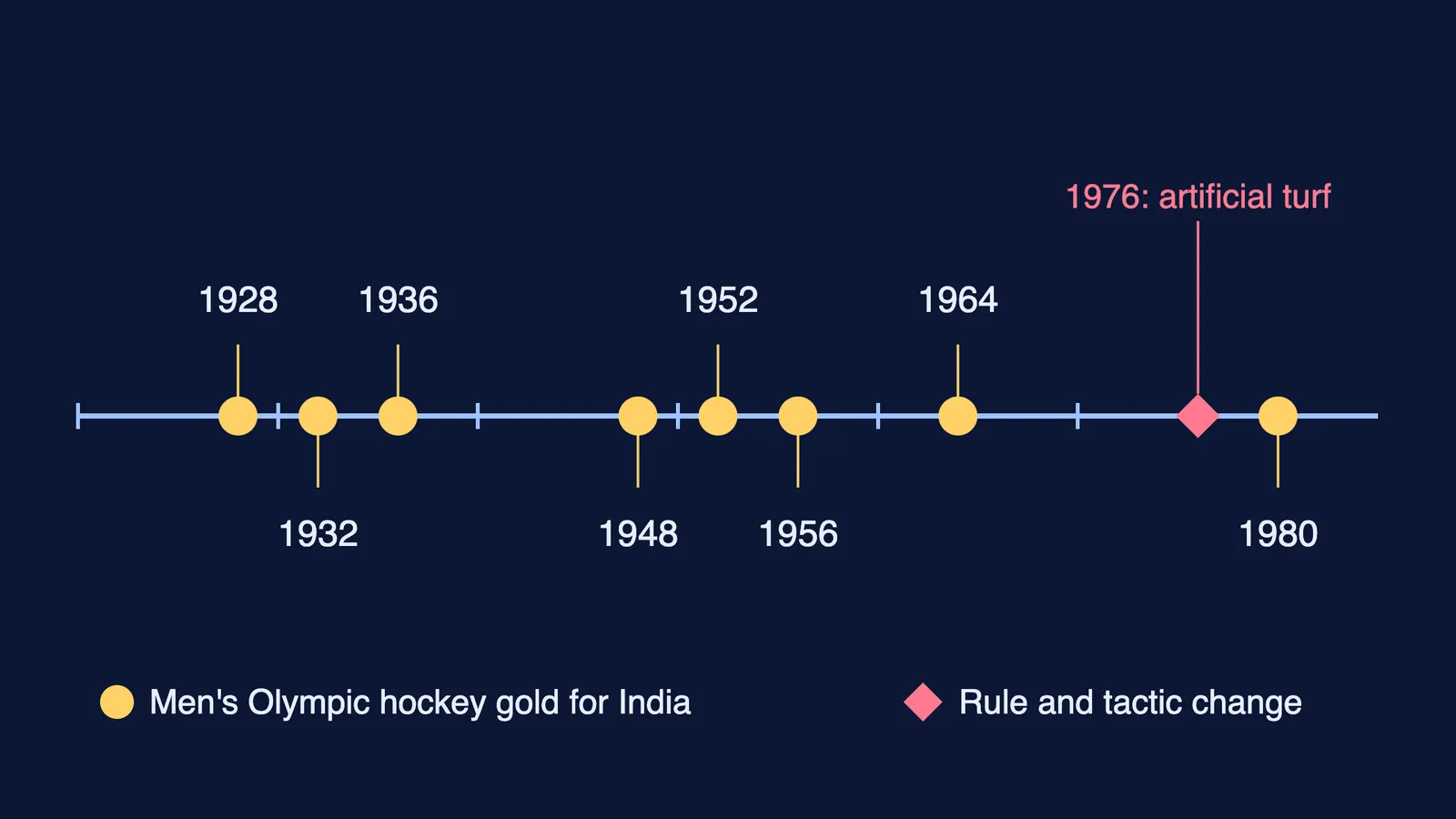
Hockey: the first club was formed in Kolkata in 1885, and the International Hockey Federation was set up in Paris on 7 January 1924. Artificial turf was first used at the 1976 Montreal Olympics, which changed tactics and led to rule changes.
Basketball: invented by Dr James Naismith in 1891 at Springfield College, Massachusetts. The book dates his 13 rules to 1894 and says they still underpin the game. The YMCA in Kolkata brought the game to India, and the Basketball Federation of India dates from 1950. Basic skills: dribbling, passing, receiving, shooting.
Cricket: one side bats to score runs while the other bowls and fields to get batters out. The first One Day International was in 1971, the first limited-over World Cup in 1975, and India's first official Test was against England in 1932. The Ranji Trophy remembers Prince Ranjit Singh of Nawanagar.
Archery: first in the Olympics in 1900, then 1904, 1908 and 1920, and back from 1972 after a 52-year gap. World Archery, once called FITA, has 156 national federations and other member bodies.
Softball: began indoors in Chicago on Thanksgiving Day, 1887, with George Hancock; the name "softball" dates from 1926. Women's softball was in the Olympics in 1996, 2000, 2004, 2008 and 2020.
Tennis: singles (two players) or doubles (four) on a court split by a net. Shots: groundstrokes, volleys, overheads. The four Grand Slams are the Australian Open (hard), French Open (clay), Wimbledon (grass) and US Open (hard).
How many marks is this chapter worth?
Your school assesses this subject; there is no board exam. The CBSE Grade 9 curriculum for 2026-27 gives 100 marks: 20 theory and 80 practical. Theory is 2 marks for every unit across 8 units (16 marks) plus a 4-mark viva. That 2 marks belongs to the whole unit; there is no separate figure for this chapter.
The curriculum numbers units differently from the book. Its Unit 8, Sports, has 40 hours, all practical, and lists hockey, basketball, cricket and archery among its sports. Tennis and softball are in the book but not in that list.
Worked example: a basketball match clock
The book's table gives four 10-minute quarters, a 2-minute rest after quarters 1 and 3, and a 15-minute half-time.
Playing time: 4 × 10 = 40 minutes.
Breaks: 2 + 15 + 2 = 19 minutes.
Clock time from tip-off to the final whistle: 40 + 19 = 59 minutes, before any extra time.
The table has an extra-time column but no length for it.
How does this chapter help your sports file?
The 80 practical marks include a 30-mark file on one game, covering:
history of the game (200 words)
five terms, five fundamental skills and five rules
the ground, court or field specification
three common injuries
five Indian players or awardees
three national or international tournaments
The chapter helps with history, skills and tournaments. For rules, field sizes and injuries, ask your PE teacher or use the QR content. This is a study summary, not medical advice.
Practice questions (mark labels are our suggestion)
(1 mark) In which year was artificial turf first used at the Olympics?
(1 mark) Name the four basic basketball skills the chapter lists.
(2 marks) In cricket, what is the batting side trying to do, and what is the fielding side trying to do?
(2 marks) For how many years was archery missing from the Olympics, and in which years did that absence begin and end?
(2 marks) Match each Grand Slam to its surface.
(3 marks) A school match keeps the book's quarter and rest times but shortens half-time to 10 minutes. How long is it from tip-off to the final whistle, without extra time? Show your steps.
Answers to 1 and 6: 1976; 40 + 2 + 10 + 2 = 54 minutes.
Want to see where your PE theory stands before a unit test? Fermi's AI tutor works out what you already know and builds a plan for the session.
Read next: our Olympism guide for Class 11, knockout and league fixtures in Class 12 and whether Class 9 marks matter.