On this page
Board questions on this chapter test one skill: can you say who wrote a text, for whom, and whether people lived by its rules?
What does Kinship, Caste and Class cover in Class 12?
It is Theme 3 of NCERT's Themes in Indian History Part I, subtitled Early Societies (c. 600 BCE-600 CE). It uses the Mahabharata, Sanskrit rule books, Buddhist and Tamil works and inscriptions to study families, varna, jati and wealth.
In the CBSE History curriculum for 2026-27, Themes 1 to 4 of Part I together carry 25 of the 80 theory marks; there is no separate figure for this chapter. Its learning outcomes stress the social norms in ancient texts and how historians study the Mahabharata.
The 2026-27 sample paper draws on this chapter twice: a 1-mark question on who excavated Hastinapura, and a 4-mark source-based question split 1 + 1 + 2 in the marking scheme.
What were the rules of kinship and marriage?
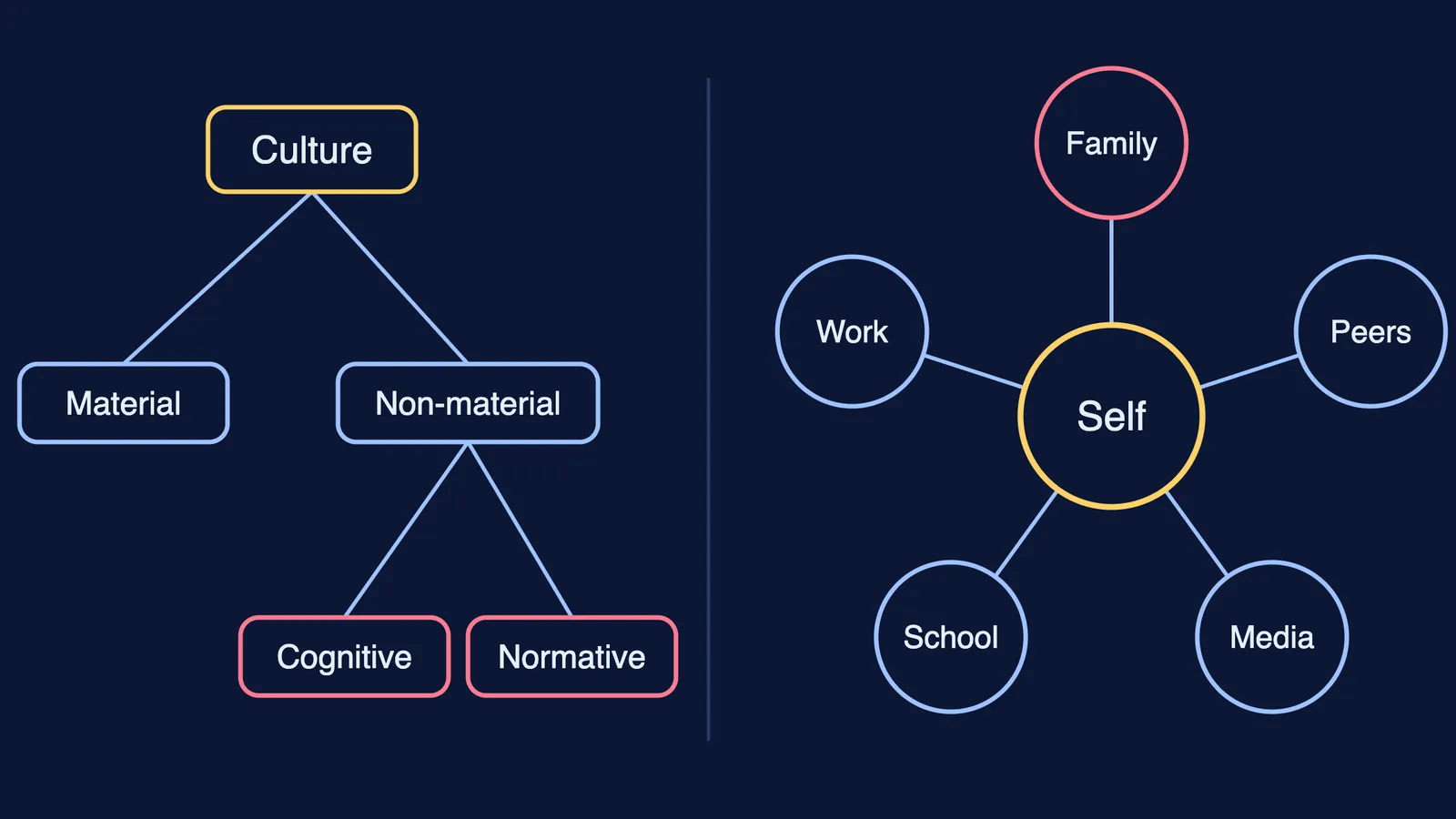
The NCERT chapter defines the key terms. Kula means family, jnati the wider network of kin, and vamsha a lineage. Patriliny is descent traced from father to son; matriliny traces it through the mother. Exogamy is marriage outside a unit; endogamy is marriage within it.
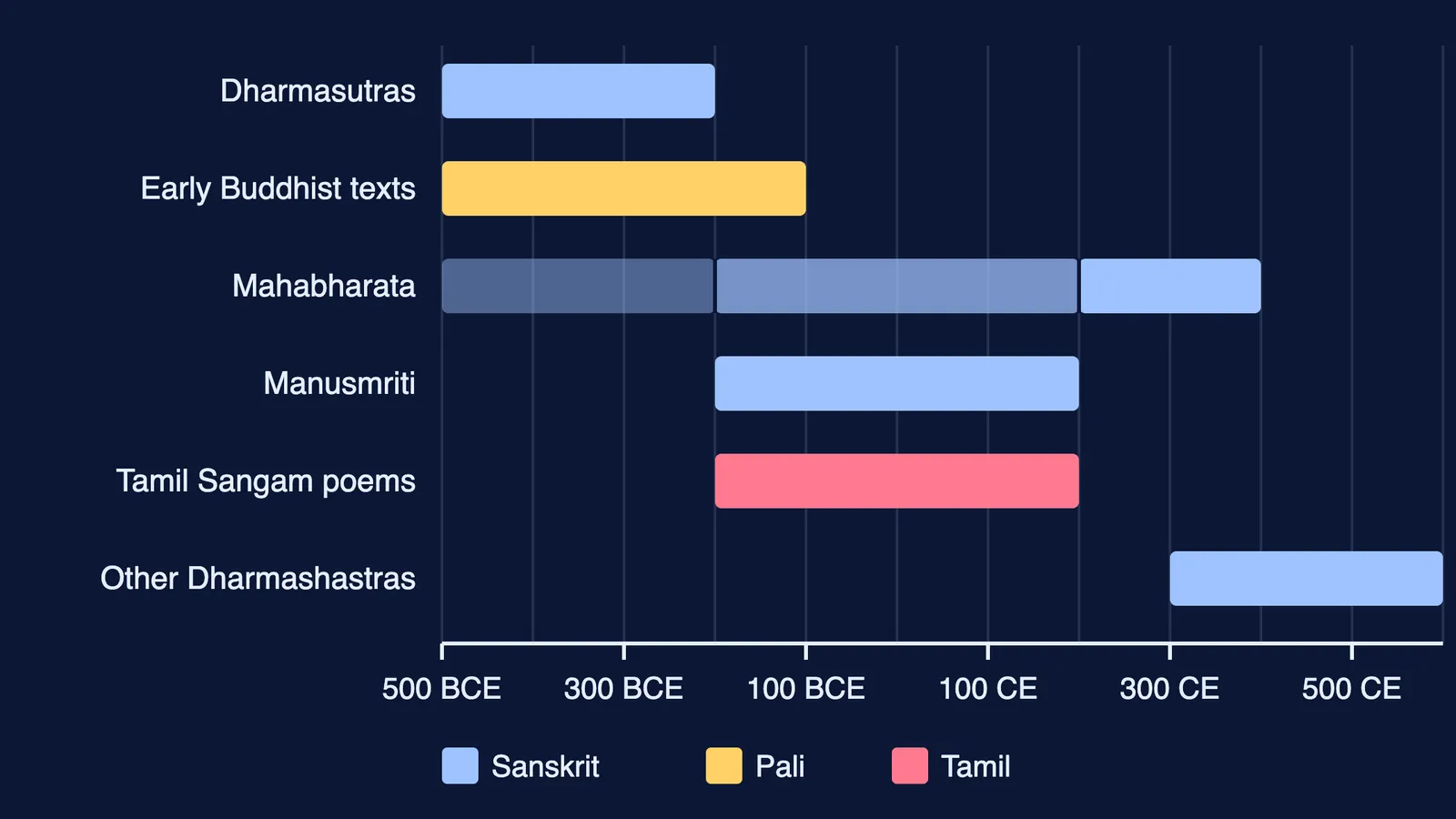
The epic reinforced patriliny; Brahmanical texts recommended exogamy. From c. 500 BCE, norms were compiled in the Dharmasutras and Dharmashastras, and the Manusmriti was put together in c. 200 BCE-200 CE. Two gotra rules mattered most: a woman took her husband's gotra at marriage, and people of the same gotra could not marry.
Inscriptions let historians test these rules. Several Satavahana queens kept names from their fathers' gotras, such as Gotama and Vasistha, and some shared a gotra. Kings were named after their mothers (Gotami-puta means son of Gotami), yet succession stayed generally patrilineal.
How does NCERT explain varna, jati and class?
The NCERT text describes caste as a set of social categories arranged in a hierarchy, an order laid down in the Dharmasutras and Dharmashastras. There, varnas were defined by qualifications, occupations and professions, in line with abilities and interests. It adds that other sources, such as the Bhagavad Gita, suggest the fourfold order rested on guna (qualities) and karma (actions) and was not a rigid order fixed by birth.
Practice was more complicated. The Shastras said only Kshatriyas could be kings, yet the Shungas and Kanvas were Brahmanas. Varnas were fixed at four, but jatis kept multiplying as new groups and occupations appeared. A c. fifth-century Mandasor inscription records a guild of silk weavers who migrated from Lata and built a sun temple.
NCERT describes groups treated as outside the four varnas and classed as "untouchables". Those who handled corpses and dead animals, called chandalas, were ranked lowest of all. Class enters through property. Smriti texts let women keep stridhana, gifts received at marriage, but the evidence suggests men generally controlled land, cattle and money. Buddhists did not accept claims to status based on birth, and Tamil Sangam poems show that those who controlled resources were expected to share them.
Why do historians read the Mahabharata critically?
The NCERT chapter dates its composition over about 1,000 years from c. 500 BCE, growing from perhaps under 10,000 verses to about 100,000.
Charioteer-bards called sutas probably composed the original story; from the fifth century BCE Brahmanas began writing it down.
Between c. 200 BCE and 200 CE, Krishna came to be identified with Vishnu.
In c. 200-400 CE, long didactic sections similar to the Manusmriti were added.
The Critical Edition, begun in 1919 under V.S. Sukthankar, compared manuscripts from across the subcontinent; it ran to over 13,000 pages, more than half recording regional variations, and took 47 years. In 1951-52, B.B. Lal excavated a village called Hastinapura in Meerut, but whether it was the epic's city remains open.
How do you answer a source-based question from this chapter?
Four steps for any extract:
Who is speaking, and to whom? A lawgiver, a bard or a king's inscription.
What does it say? One line, in your own words.
Rule or practice? Is it a prescription or a description?
What else would you check? Name a second kind of source.
Worked example: the list of Satavahana kings' names (Source 4). Step 1: inscriptions of a ruling family. Step 2: each king is named as the son of his mother, and names such as Gotami and Vasithi come from gotras. Step 3: this records practice; the queens' gotra names run against the rule that wives adopt the husband's gotra. Step 4: check succession, which stayed generally patrilineal.
Practice questions (our own):
(1 mark) Which term means a lineage in Sanskrit texts?
(3 marks) Explain how inscriptions help historians test the gotra rules in Brahmanical texts.
(8 marks) "A normative text tells us what its authors wanted, not always what people did." Examine with three examples from the chapter.
For exam technique, read how to answer case-based questions in CBSE board exams, then revise the chapter before this one, Kings, Farmers and Towns.
If you also take science subjects, Fermi's AI tutor works out what you already know and builds a plan for the session.