On this page
The CBSE 2026-27 curriculum gives Unit 5, Concept of Human Rights, 10 of the 80 theory marks. The 10 marks are shared with Chapter 5(B), so 5(A) has no separate figure. The text is the CBSE Legal Studies Class XII book (2023). The curriculum lists the National Human Rights Commission under 5(B), so this guide covers 5(A) only.
What are human rights, and how do they differ from Fundamental Rights?
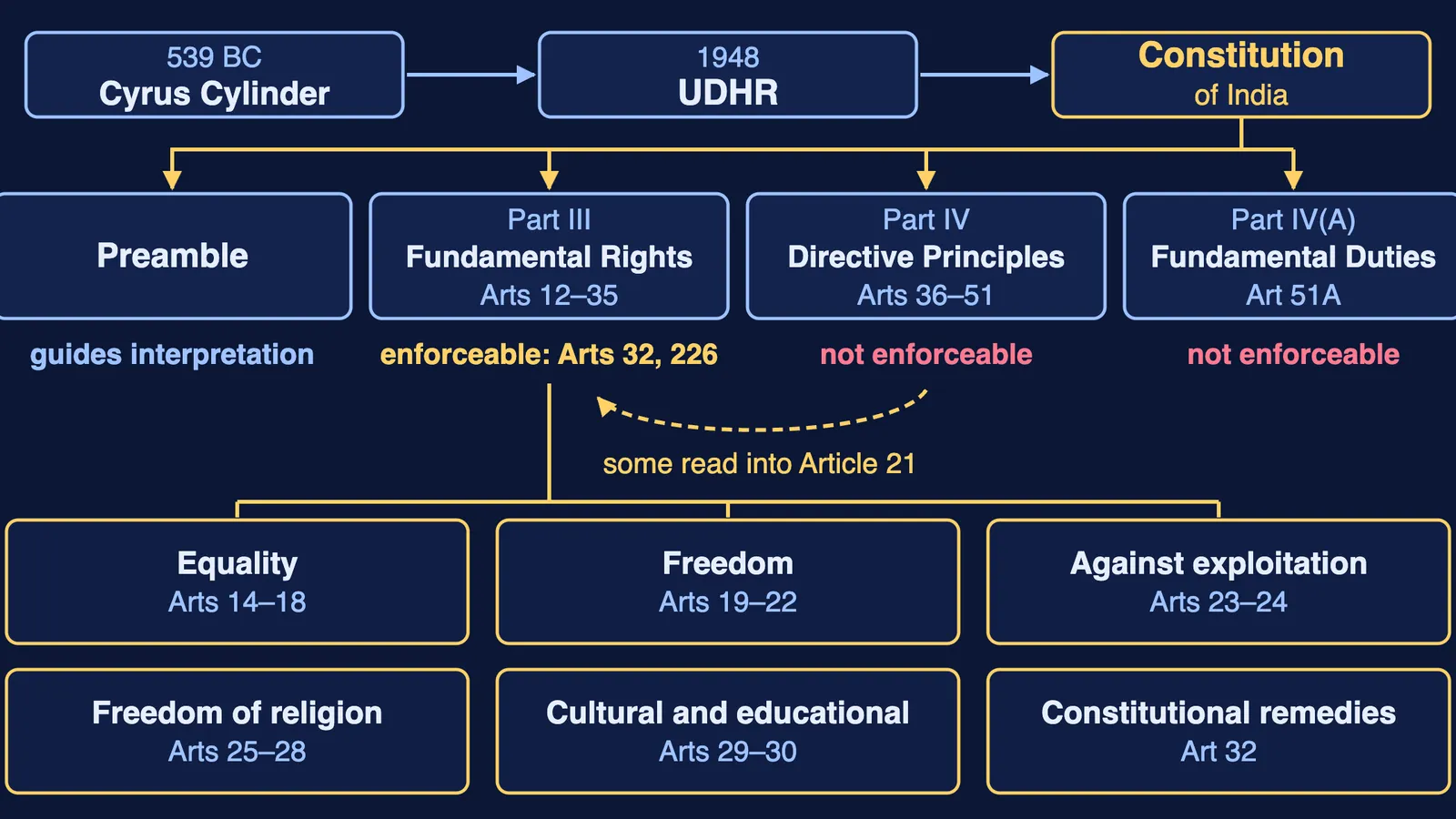
The book starts in 539 BC, when Cyrus the Great conquered Babylon, and calls the Cyrus Cylinder the first human rights declaration. The UN General Assembly adopted the Universal Declaration of Human Rights (UDHR) in December 1948.
Learn these definitions:
Right: a moral or legal entitlement, a justified claim on others.
Human rights: rights we hold because we are human, not granted by any state; universal and inalienable.
Fundamental Rights: basic rights of a country's citizens, written into its Constitution and enforceable in court.
The key difference: Fundamental Rights are country-specific; human rights are universal. The book also says over 90 percent of the Sustainable Development Goals relate to human rights obligations, such as No Poverty and Gender Equality.
Where does the Indian Constitution protect human rights?
The book names four parts (see the diagram):
Preamble: states the aims and helps courts interpret unclear provisions.
Part III, Fundamental Rights (Articles 12-35): mostly civil and political, enforceable in court.
Part IV, Directive Principles (Articles 36-51): mostly economic and social goals guiding policy, not enforceable.
Part IV(A), Fundamental Duties (Article 51A): standards for citizens, also not enforceable.
Article 12 defines "State" for Part III, and Article 13 stops the State from making laws that take away Fundamental Rights.
Which Fundamental Rights does Chapter 5(A) cover?
The book groups them into six:
Equality (Articles 14-18): Article 14 allows reasonable classification; Article 15 bars discrimination, including in public places; Article 16 covers public employment and allows reservation; Article 17 abolishes untouchability; Article 18 abolishes non-military, non-academic titles.
Freedom (Articles 19-22): six freedoms under Article 19, each subject to listed reasonable restrictions. Article 20 protects accused persons: no conviction under a law made later, no double punishment, no forced self-incrimination. Article 21 protects life and personal liberty for everyone. Article 21A (86th Amendment, 2002) makes education free and compulsory for ages six to fourteen, backed by the RTE Act, 2009. Article 22 requires grounds for arrest, a lawyer of one's choice, and production before a magistrate within 24 hours, not counting travel time.
Against exploitation (Articles 23-24): bans trafficking, begar and forced labour, and children under fourteen in factories, mines and hazardous work.
Freedom of religion (Articles 25-28): subject to public order, morality and health; no religious instruction in institutions wholly funded by the State.
Cultural and educational (Articles 29-30): minorities may conserve their culture and run their own educational institutions.
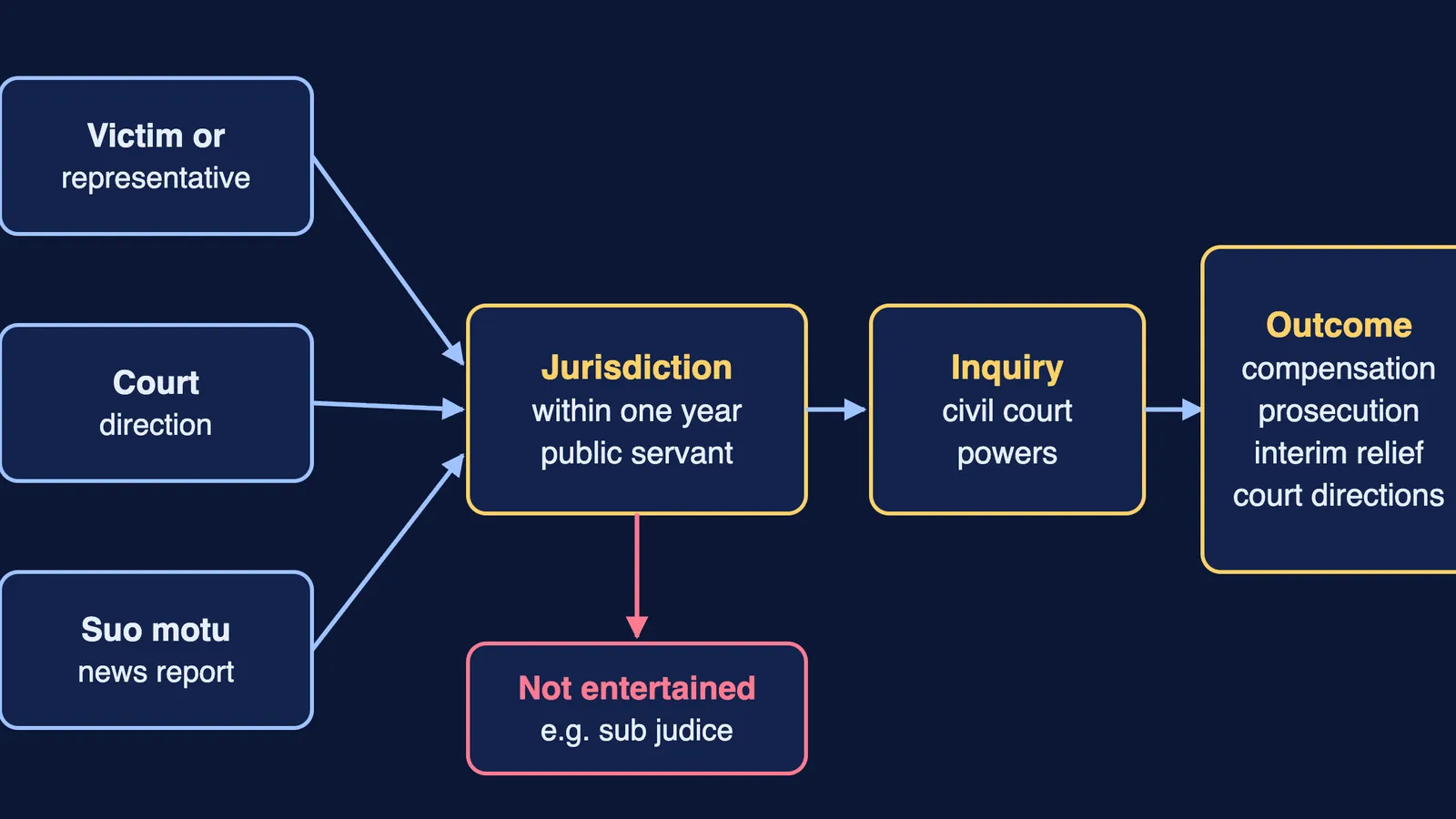
Constitutional remedies (Article 32): go straight to the Supreme Court; Article 226 lets High Courts act too. Through Public Interest Litigation, letters can be turned into petitions, and courts can also act on newspaper reports.
Sources: the gazette notification and a PIB release.
How do Directive Principles and Fundamental Duties fit in?
The book shows the Supreme Court reading some Directive Principles into Article 21. In the Mohini Jain case, it held that the right to education flows from the right to life. In Olga Tellis v. Bombay Municipal Corporation (the Pavement Dwellers Case), it held that livelihood is part of Article 21 and that authorities must offer slum dwellers an alternative before demolition. Fundamental Duties, such as protecting the environment, are not enforceable either.
Practice questions in the 2026-27 pattern
The 2026-27 sample paper uses 1-mark MCQs and assertion-reason items, plus 2, 3 and 5-mark answers. Our own questions:
(1 mark) Ravi is arrested at 9:00 am Thursday; reaching the nearest magistrate takes 3 hours. The latest time he must be produced is (a) 9:00 pm Thursday (b) 9:00 am Friday (c) 12:00 noon Friday (d) 9:00 am Saturday
(1 mark) Assertion: a citizen cannot go to court to enforce a Directive Principle. Reason: Directive Principles are aspirational goals for the State to reach over time.
(2 marks) Meena, aged eight, has never attended school. Name the Article and the Act giving her a right to education.
(3 marks) Explain, with the Olga Tellis case, how a Directive Principle came to be protected as part of the right to life.
(5 marks) Compare Fundamental Rights, Directive Principles and Fundamental Duties: their Part of the Constitution, enforceability and one example each.
Answers: 1 is (c), as travel time is excluded; in 2, both are true and the reason explains the assertion.
See also our Class 11 guide to rights in the Indian Constitution, the Class 12 guide to alternative dispute resolution, and what Legal Studies covers.
This is a study summary, not legal advice.
Planning tonight's revision? Fermi's AI tutor works out what you already know and builds a plan for the session.