On this page
This is a set of 10 new assertion-reason and Statement I/II questions on Morphology of Flowering Plants, written for this post, not taken from NCERT, exemplar or past papers. Every fact is checked against Chapter 5 of the NCERT Class 11 Biology book, Reprint 2026-27, and the chapter sits in Biology Unit 2 of the NEET (UG)-2026 syllabus published by the National Medical Commission.
How do you answer assertion-reason questions in morphology?
Judge each statement on its own first, then ask one question: does R give the direct reason for A that NCERT gives? Two true facts about one flower are often unrelated. Our step-by-step strategy for assertion-reason questions explains this check in more detail.
Use these keys for every assertion-reason item:
(A) Both A and R are true and R is the correct explanation of A.
(B) Both A and R are true but R is NOT the correct explanation of A.
(C) A is true but R is false.
(D) A is false but R is true.
Use these keys for every statement pair:
(A) Both statements are correct.
(B) Both statements are incorrect.
(C) Statement I is correct, Statement II is incorrect.
(D) Statement I is incorrect, Statement II is correct.
Assertion-reason questions: roots to seeds
Q1 (easy). Assertion (A): A wheat plant has a bunch of roots arising from the base of its stem. Reason (R): In monocotyledonous plants, the primary root is short-lived.
Answer: (A). Both are true. Because the primary root of a monocot dies early, it is replaced by many roots from the stem base, forming the fibrous root system NCERT shows in wheat. Trap: calling these roots "secondary roots"; secondary roots are branches of a surviving primary root, as in mustard.
Q2 (easy). Assertion (A): Guava shows opposite phyllotaxy. Reason (R): In opposite phyllotaxy, a single leaf arises at each node, alternating from side to side.
Answer: (C). A is true: guava, like Calotropis, has a pair of leaves at each node lying opposite each other. R describes alternate phyllotaxy (china rose, mustard, sunflower). Trap: reading "opposite" as "on opposite sides of the stem at successive nodes".
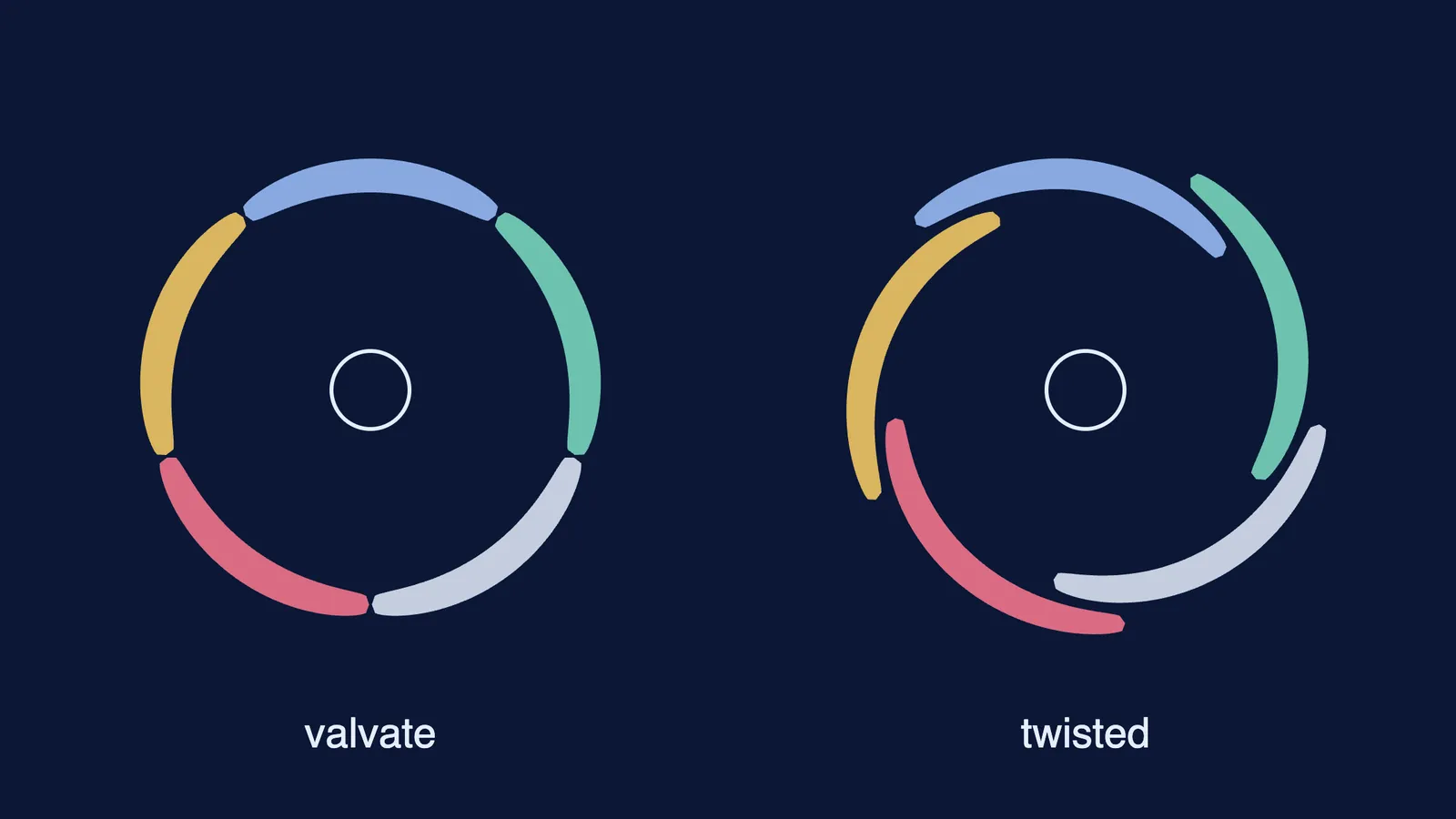
Q3 (medium). Assertion (A): The stamens of china rose are monoadelphous. Reason (R): The petals of china rose show twisted aestivation.
Answer: (B). Both are true: the stamens form one bundle and each petal overlaps the next in one direction. But aestivation is about petals in the bud; it says nothing about how stamens are joined. Trap: picking (A) because both facts belong to the same flower.
Q4 (medium). Assertion (A): The floral formula of lily uses P instead of K and C. Reason (R): In lily, the calyx and corolla are not distinct and are together called the perianth.
Answer: (A). Both are true, and R is exactly why the symbol P (perianth) replaces K and C. Trap: thinking lily lacks sepals; the outer whorls are present but cannot be told apart.
Q5 (hard). Assertion (A): A coconut is not a drupe. Reason (R): A drupe develops from a monocarpellary superior ovary and is one-seeded.
Answer: (D). R is NCERT's description of a drupe, and NCERT names coconut as one, so A is false. Trap: assuming every drupe must have a fleshy, edible mesocarp like mango.
Q6 (hard). Assertion (A): Castor seeds are endospermic. Reason (R): Endosperm is formed as a result of double fertilisation.
Answer: (B). Both are true, but R cannot explain A: endosperm also forms after double fertilisation in bean, gram and pea, yet their mature seeds have none left. A seed is endospermic because the endosperm persists as a food store. Trap: treating "how endosperm forms" as "why it stays".
Statement I and Statement II questions: flowers and floral formula
Q7 (medium). Statement I: The stamens of pea are diadelphous. Statement II: The ovules of pea are attached to a central axis in a multilocular ovary.
Answer: (C). Pea stamens form two bundles, so I is correct. Pea has marginal placentation, with ovules in two rows on a ridge along the ventral suture; II describes axile placentation (china rose, tomato, lemon). Trap: confusing a pea pod's line of seeds with a central axis.
Q8 (medium). Statement I: The brinjal flower is epigynous. Statement II: The stamens of brinjal are epipetalous.
Answer: (D). Brinjal is hypogynous with a superior ovary, so I is incorrect; its stamens are attached to the petals, so II is correct. Trap: mixing up the two "epi-" words: one is ovary position, the other stamen attachment.
Q9 (hard). Statement I: In a floral formula, adhesion between floral parts is shown by a line drawn above their symbols. Statement II: In a floral diagram, a dot at the top marks the position of the mother axis.
Answer: (A). Both match NCERT's conventions: fusion is shown by brackets, adhesion by a line above the symbols, and the mother axis by a dot at the top of the diagram. Trap: confusing the adhesion line with the line that marks a superior or inferior ovary, which sits on the G symbol alone.
Q10 (hard). Statement I: Sunflower and marigold show free central placentation. Statement II: In free central placentation, ovules are borne on a central axis that is joined to the ovary wall by septa.
Answer: (B). Sunflower and marigold have basal placentation, a single ovule on a placenta at the base of the ovary, so I is incorrect. Free central placentation (Dianthus, Primrose) has a central axis with septa absent, so II is incorrect too. Trap: spotting one error and choosing (C) or (D) without checking the other.
How should you use this set?
Cover each answer and judge each statement on its own first.
For every A-R pair you marked "both true", write one line saying why R does or does not cause A.
Log the trap that caught you; most errors in this chapter are a right term with the wrong example.
Redo the items you missed after three days, without looking at the explanations.
If a term like placentation or aestivation still feels shaky, the Fermi Concept Library covers every concept in biology, each with its own lesson. For a full revision plan, read our guide on how to prepare Morphology of Flowering Plants for NEET, then try the solved morphology practice questions for NEET.