

On this page
These 10 original questions cover Body Fluids and Circulation, Chapter 15 of NCERT Class 11 Biology. Six are assertion-reason items and four are Statement I/II pairs, easy to hard. Every statement was checked against the NCERT chapter (Reprint 2026-27) and stays inside the NMC's updated NEET (UG)-2026 syllabus. New to the unit? Start with our guide on how to prepare Human Physiology for NEET.
How do you answer assertion-reason and Statement I/II questions?
For assertion-reason items, run three checks in order:
Is the Assertion (A) true? Watch words like "all", "lower" and "end".
Is the Reason (R) true on its own?
If both are true, join them with "because": "A, because R". Pick (A) only if R is the direct cause NCERT gives for A.
Assertion-reason key, used for Q1 to Q6:
(A) Both A and R are true and R is the correct explanation of A.
(B) Both A and R are true but R is NOT the correct explanation of A.
(C) A is true but R is false.
(D) A is false but R is true.
Statement pair key, used for Q7 to Q10:
(A) Both statements are correct.
(B) Both statements are incorrect.
(C) Statement I is correct, Statement II is incorrect.
(D) Statement I is incorrect, Statement II is correct.
Assertion-reason questions: can you find the real cause?
All facts below are from the NCERT chapter.
Q1 (easy). Assertion (A): Blood from a group O donor can be given to a person of group A, B or AB. Reason (R): The RBCs of group O carry neither antigen A nor antigen B.
Answer: (A). Both are true, and R is the reason: with no A or B antigen on its RBCs, group O blood can go to any ABO group, as NCERT's table shows. Trap: group O plasma does carry anti-A and anti-B antibodies; mixing up antigens with antibodies makes R look false.
Q2 (easy). Assertion (A): The sino-atrial node (SAN) is called the pacemaker of the heart. Reason (R): The SAN lies in the lower left corner of the right atrium, close to the atrio-ventricular septum.
Answer: (C). A is true: the SAN generates the maximum number of action potentials, 70-75 per minute, so it sets the heart's rhythm. R is false: that position belongs to the atrio-ventricular node (AVN); the SAN is in the right upper corner. Trap: both nodes are in the right atrium.
Q3 (medium). Assertion (A): The left atrium receives oxygenated blood. Reason (R): The left ventricle pumps blood into the aorta.
Answer: (B). Both are true, but R is about blood leaving the heart. The left atrium gets oxygenated blood because the pulmonary veins bring it back from the lungs. Trap: both sentences are about the left side of the heart.
Q4 (medium). Assertion (A): Tissue fluid has a lower concentration of minerals than plasma. Reason (R): As blood passes through tissue capillaries, the larger proteins and most of the formed elements stay inside the vessels.
Answer: (D). A is false: NCERT says interstitial fluid has the same mineral distribution as plasma. R is true. Trap: stretching "proteins stay back" to everything.
Q5 (medium). Assertion (A): Parasympathetic neural signals reduce cardiac output. Reason (R): Parasympathetic signals decrease the rate of heartbeat and the speed of conduction of the action potential.
Answer: (A). Both are true, and R explains A: cardiac output is stroke volume multiplied by heart rate, so a slower rate lowers it, as NCERT states. Trap: "the heart is myogenic" makes students think nerves cannot change it, yet the medulla moderates it through the autonomic nervous system.
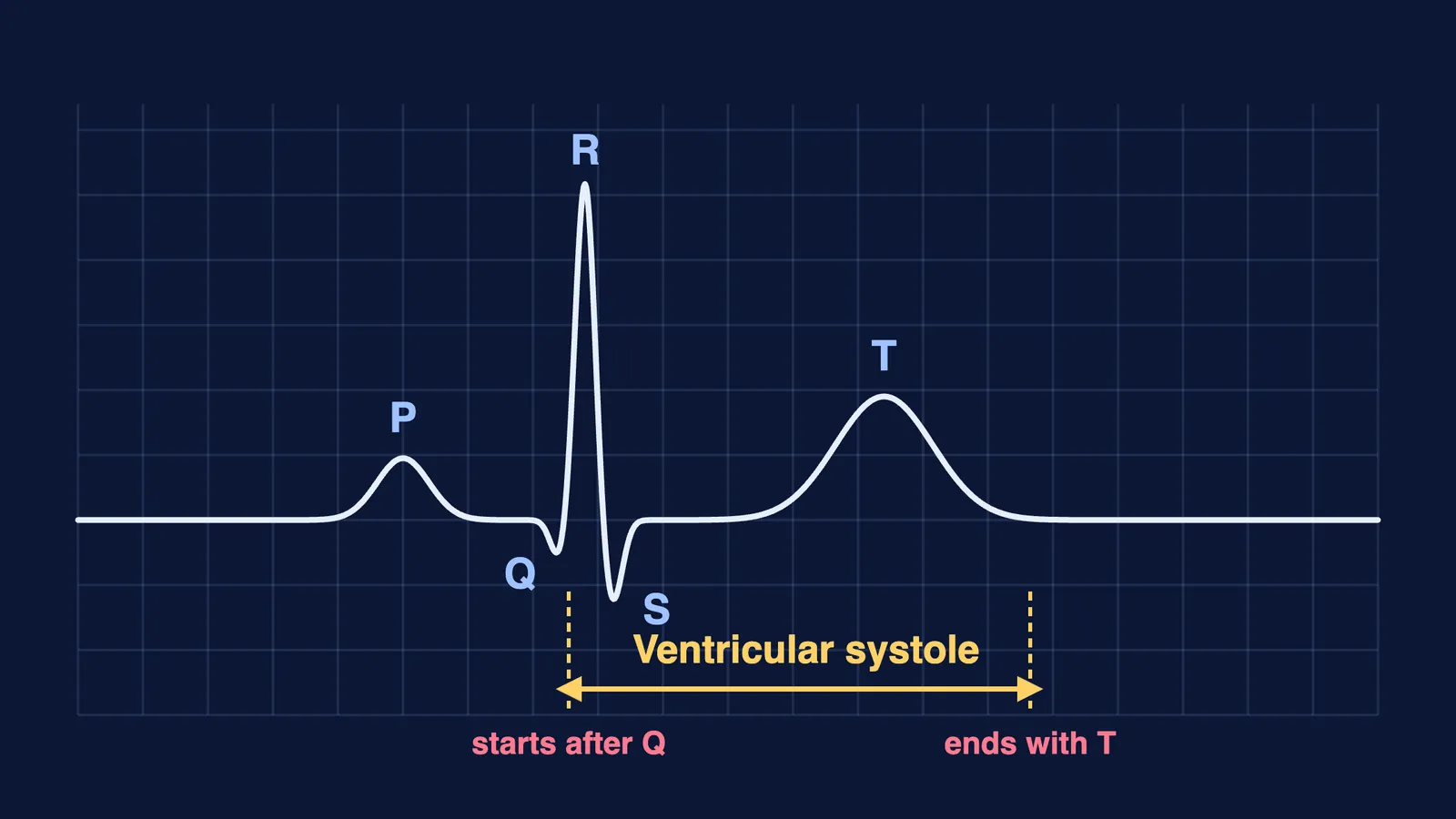
Q6 (hard). Assertion (A): On a standard ECG, the end of the T-wave marks the end of ventricular systole. Reason (R): The QRS complex represents depolarisation of the ventricles, which initiates ventricular contraction.
Answer: (B). Both are true, but R explains when systole starts (shortly after Q), not when it ends. The end is tied to the T-wave, which represents ventricular repolarisation. Trap: any true fact about systole looks like a reason; check it explains the same event.
Statement I and Statement II questions: which half is wrong?
These also follow the NCERT chapter.
Q7 (easy). Statement I: Basophils are the most abundant leucocytes. Statement II: Monocytes are granulocytes.
Answer: (B). Neutrophils are the most abundant WBCs (60-65 per cent) and basophils the least (0.5-1 per cent). Monocytes and lymphocytes are agranulocytes. Trap: learning WBC names without their order.
Q8 (medium). Statement I: Every reptile has a heart with a single ventricle. Statement II: In fishes, the heart pumps out deoxygenated blood, which is oxygenated by the gills.
Answer: (D). Statement I is incorrect because of one exception: crocodiles, like birds and mammals, have a four-chambered heart with two ventricles. Statement II is correct. Trap: the word "every" hides the crocodile exception.
Q9 (medium). Statement I: Fats are absorbed through lymph in the lacteals of the intestinal villi. Statement II: Lymph is a colourless fluid containing specialised lymphocytes responsible for the body's immune responses.
Answer: (A). Both match NCERT; lymph also carries nutrients and hormones. Trap: seeing lymph only as an immune fluid.
Q10 (hard). Statement I: With a stroke volume of 70 mL and a heart rate of 72 beats per minute, each ventricle pumps about 5 litres of blood per minute. Statement II: Cardiac output is the total volume of blood pumped by both ventricles together in one minute.
Answer: (C). Statement I is correct: 70 mL × 72 = 5,040 mL, close to NCERT's average cardiac output of 5,000 mL. Statement II is incorrect: NCERT defines cardiac output as the volume pumped out by each ventricle per minute. Trap: adding both ventricles to get 10 litres.
How should you use this set?
Cover each answer, mark your key, then check.
For every miss, write which check failed: A, R or the link between them.
Re-read that NCERT paragraph and write one new statement on it.
Redo the missed items two days later.
To revise the chapter itself, use our Body Fluids and Circulation Class 11 notes. For the same method across subjects, see our assertion-reason question strategy.
When a miss comes from a gap in understanding rather than a slip, the Fermi Concept Library covers every concept in biology, each with its own lesson and its place in the map.


