On this page
Chapter 17 of Khel Praveen, NCERT's Class 9 Physical Education and Well-being book (First Edition, April 2026) argues that ageing changes the body, but staying active keeps people strong, sharp and independent for longer. Here is what it covers, how it is assessed and how to revise it.
Where does Age is Just a Number fit in the 2026-27 syllabus?
The CBSE Physical Education and Well-being curriculum for Grade 9 (2026-27) gives the subject 100 marks: 20 for theory and 80 for practical work. Theory is split as 2 marks for each of 8 units (16 marks), plus a 4-mark viva.
The curriculum calls this unit Unit 5, Sports for All (6 hours: 3 theory, 3 practical), while the book prints it as Unit 4. Its 2 marks are shared across all six chapters of the unit, from Sports and Inclusivity to this one, so no single chapter has its own mark figure. PE is assessed by your school, not in a board exam.
The curriculum's topic list for this unit names the master athlete, community sports, the Khelo India movement and Fit India. In the book, the master-athlete idea lives in this chapter through Fauja Singh. Within this unit, Khelo India gets only short mentions in Chapters 12 and 16, and Fit India is not described in the book text, so check with your teacher how much detail they expect. For inclusion at the next level, see our guide to physical education and sports for CWSN in Class 11.
Who was Fauja Singh, and why does the chapter start with him?
The chapter opens with Fauja Singh, a British Sikh runner of Indian origin. Key facts from the book:
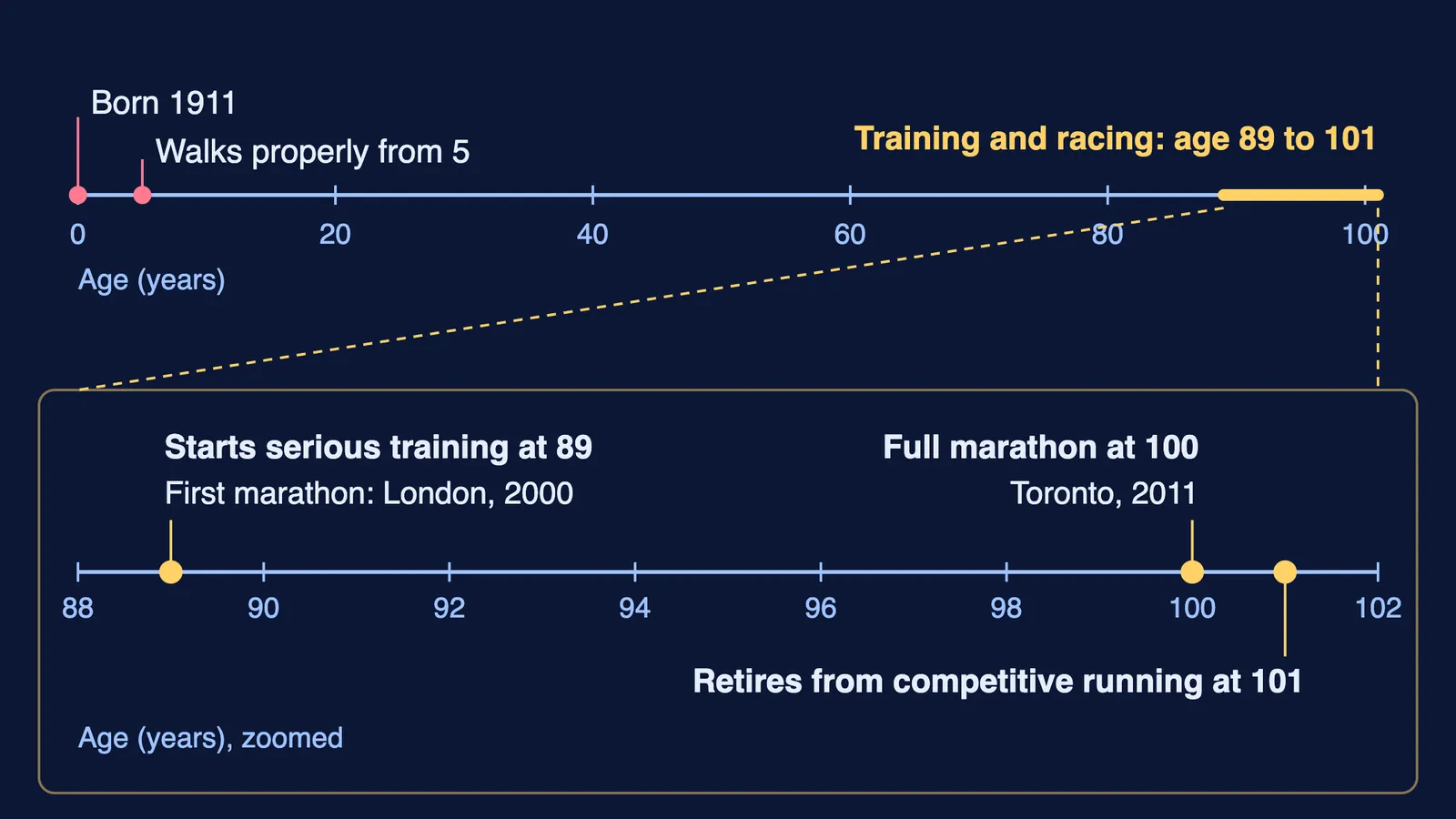
He was born on 1 April 1911 at Beas Pind village in Jalandhar, Punjab.
He was a frail child who only walked properly from age five, and he farmed for most of his early life.
He moved to England after losing his wife and son, and took up running to cope with grief.
He began serious training at 89 and finished his first marathon in London in 2000. His marathons took him to London, Toronto and New York.
In 2011, aged 100, he finished the Toronto Waterfront Marathon, which the book calls a first for a centenarian. He also set several world age-group records on the track.
Nicknamed the "Turbaned Tornado", he retired from competitive running at 101.
His story carries the chapter's message: age alone did not stop him.
What are the benefits of physical activity for older adults?
The book explains that as people age, strength, balance and energy can fall and some people move less, which can raise the risk of weak bones, obesity, diabetes and heart disease; regular activity can slow these changes. It adds that much of the decline people blame on ageing actually comes from inactive habits and illness. Activity does not have to be competitive; the chapter lists walking, swimming, yoga, cycling, gardening and light home exercise.
The six benefit headings to learn (Khel Praveen, Chapter 17):
Heart and circulation: better blood flow, blood pressure and cholesterol control, lower stroke risk.
Lungs: stronger breathing and fewer chest infections.
Diabetes: steadier blood sugar and better use of insulin.
Joints and bones: less stiffness, lower risk of arthritis and osteoporosis.
Falls: balance and strength work, such as the Otago Exercise Programme.
Mind: better mood and memory, and lower risk of dementia.
The chapter also defines healthy ageing as living actively, independently and meaningfully in later life, helped by a supportive environment.
What safety precautions does the chapter list?
The book says older adults should see a doctor before starting a new programme, especially with heart or joint problems. Its tips: build up slowly, warm up and cool down, drink water, use comfortable footwear, skip very heavy or high-impact exercise, and keep the habit regular.
How should you prepare? Practice questions
Start with the chapter's two activities: interview an older person about the sports they played, why they stopped and how they stay active now; then learn one of their childhood games and teach it to classmates.
Original practice questions (mark labels are our suggestion):
(1 mark) At what age did Fauja Singh finish the Toronto Waterfront Marathon? (a) 89 (b) 95 (c) 100 (d) 101. Answer: (c).
(1 mark) Name the programme the chapter links with preventing falls. Answer: the Otago Exercise Programme.
(2 marks) According to the chapter, what causes much of the decline usually blamed on age? Answer: an inactive lifestyle and medical conditions.
(2 marks) Your grandmother wants to start a morning walk. Give two precautions from the chapter. Sample answer: consult a doctor first, and start slowly, increasing gradually.
(Viva) Using Fauja Singh's life, explain the title "Age is Just a Number" in three sentences.
To link this with fitness testing, read our Class 11 guide to tests, measurements and evaluation.
Not sure where to begin your revision? Fermi's AI tutor works out what you already know and builds a plan for the session.