On this page
Counting questions punish one habit: writing a formula before deciding what is being counted. The eight original questions below run easy to hard; six are single-correct MCQs and two need a whole-number answer.
The JEE (Main) 2027 syllabus from NTA lists this unit as the fundamental principle of counting, permutations and combinations, the meaning of P(n, r) and C(n, r), and simple applications. Every question stays inside it.
How should you use this practice set?
Time yourself: about two minutes for each question.
Before you calculate, write one line saying whether order matters and what one "outcome" looks like.
Pick an answer, then read the solution and the trap. If you chose the trap option, note the mistake by name.
Redo the questions you missed two days later without looking.
In the JEE (Main) 2027 information bulletin, both MCQs and numerical-value questions carry +4 for a correct answer and −1 for a wrong one, so a guessed trap costs you five marks against a right answer.
If arrangement versus selection feels shaky, first read our guide on how to prepare permutations and combinations for JEE Main.
Easy: can you set up a count before computing it?
Q1 (easy). Using the digits 1, 2, 3, 5, 7 and 8, without repetition, how many four-digit even numbers can be formed?
(A) 120 (B) 180 (C) 240 (D) 360
Answer: (A). Fill the units place first: it must be 2 or 8, so 2 ways. The other three places take any 3 of the remaining 5 digits in order: 5 × 4 × 3 = 60. Total 2 × 60 = 120. Trap: (B) assumes half of all 360 arrangements are even, but only 2 of the 6 digits are even.
Q2 (easy). A school quiz team of 5 is chosen from 7 boys and 5 girls. In how many ways can the team have exactly 2 girls?
(A) 210 (B) 350 (C) 700 (D) 792
Answer: (B). Choose the girls and the boys separately and multiply: C(5, 2) × C(7, 3) = 10 × 35 = 350. Trap: (A) swaps the numbers and picks 2 boys and 3 girls; (D) is C(12, 5), any 5 students at all.
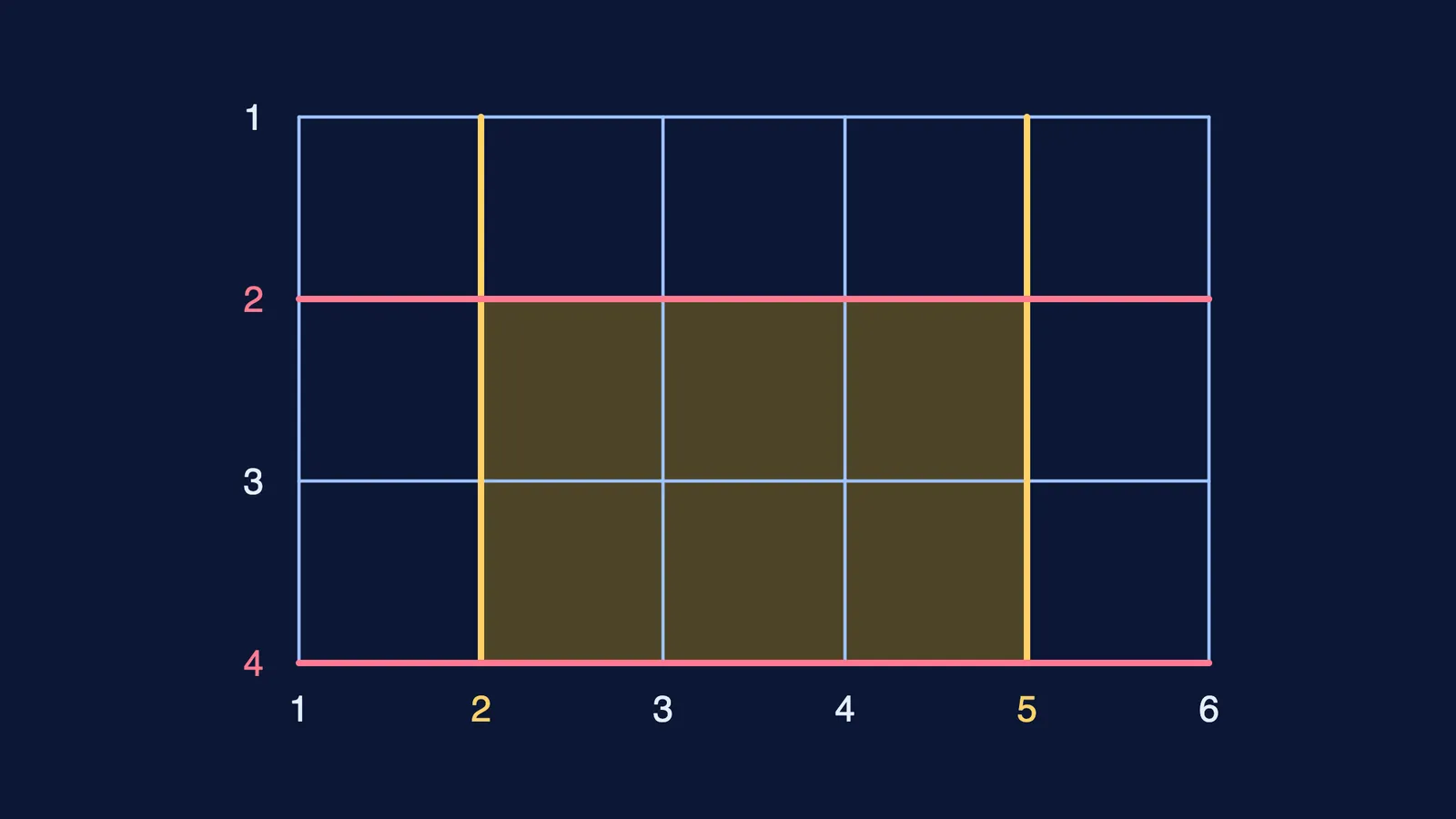
Q3 (easy, numerical value). A floor is tiled as a grid of 5 by 3 square tiles. How many rectangles (squares included) can be traced along the grid lines?
Answer: 90. A rectangle is fixed by choosing 2 of the 6 vertical lines and 2 of the 4 horizontal lines: C(6, 2) × C(4, 2) = 15 × 6 = 90. Trap: 30 comes from C(5, 2) × C(3, 2), counting tiles instead of lines.
Medium: do you know when to divide and when to subtract?
Q4 (medium). In how many arrangements of the letters of SIKKIM are the two I's not next to each other?
(A) 60 (B) 90 (C) 120 (D) 180
Answer: (C). All arrangements: 6!/(2! × 2!) = 180, since I and K each repeat. Glue the two I's into one block: the block, S, K, K and M give 5!/2! = 60. Not together: 180 − 60 = 120. Trap: (A) forgets the repeated K, takes "together" as 5! = 120 and gets 180 − 120 = 60.
Q5 (medium). Seven friends sit around a round table. In how many ways can they sit if Asha and Bilal must not sit next to each other?
(A) 240 (B) 480 (C) 600 (D) 3600
Answer: (B). Circular arrangements of 7 people: (7 − 1)! = 720. Asha and Bilal together: treat them as one unit, so 6 units give 5! = 120, times 2 for their order, which is 240. Not adjacent: 720 − 240 = 480. Trap: (C) forgets that the pair can swap seats and subtracts only 120.
Q6 (medium). In how many ways can 8 identical laddoos be shared among 3 children so that every child gets at least one?
(A) 21 (B) 28 (C) 45 (D) 56
Answer: (A). Line up the 8 laddoos; there are 7 gaps between them. Placing 2 dividers in 2 different gaps splits them into 3 non-empty groups: C(7, 2) = 21. Trap: (C) is C(10, 2), the count when a child may get none.
Hard: can you hold a long count together?
Q7 (hard). All arrangements of the letters of KERALA are listed in dictionary order. What is the rank of KERALA?
(A) 146 (B) 214 (C) 215 (D) 278
Answer: (C). Sorted letters: A, A, E, K, L, R. Count the words that come before KERALA, letter by letter.
Starting with A: the other five letters are all different, 5! = 120.
Starting with E: the rest contain two A's, 5!/2! = 60.
Starting KA: 4! = 24.
Starting KEA: 3! = 6. Starting KEL: the rest R, A, A give 3!/2! = 3.
KERA is forced next; KERAA comes before KERAL: 1 word.
Words before: 120 + 60 + 24 + 6 + 3 + 1 = 214, so the rank is 215. Trap: (B) stops at 214 and forgets to add 1 for the word itself; (D) never divides by 2! for the two A's.
Q8 (hard, numerical value). A row has 15 seats numbered 1 to 15. Four students must sit so that no two of them are in adjacent seats. How many sets of four seats are possible?
Answer: 495. Seat the 11 empty chairs first; they create 12 gaps (including both ends). Choose 4 gaps for the students: C(12, 4) = 495. Trap: 330 is C(11, 4), which ignores the two end gaps.
What should you practise next?
If you got Q4, Q5 or Q7 wrong, the issue is usually repeated objects or a forgotten swap, not arithmetic. Redo them by listing a small case by hand: four letters with one repeat, or four people at a round table. The Fermi Problem Library has worked problems with a step-by-step solver that explains the reasoning, which helps when you can see the answer but not why your method failed.
Next, try the binomial theorem: general term, middle term and coefficients, then test yourself with 8 JEE Main probability questions with solutions.