On this page
Microbes in Human Welfare is the eighth chapter of NCERT's Class 12 Biology book (2026-27 reprint). For NEET, the NMC's 2026 syllabus files it in Unit 8 of Biology, titled Biology and Human Welfare. The chapter is short, but its names look alike and its drugs act on very different targets, so a frequent slip is knowing the fact and still marking the wrong option.
Below are eight such slips. Each has the wrong belief in bold, why it tempts, what NCERT actually says (with the section number), a quick check, and a habit to fix it. If you have not yet covered the chapter once, begin with our NEET preparation guide for Microbes in Human Welfare.
Which look-alike names trip students up?
"Fleming's penicillin plate was growing Streptococcus."
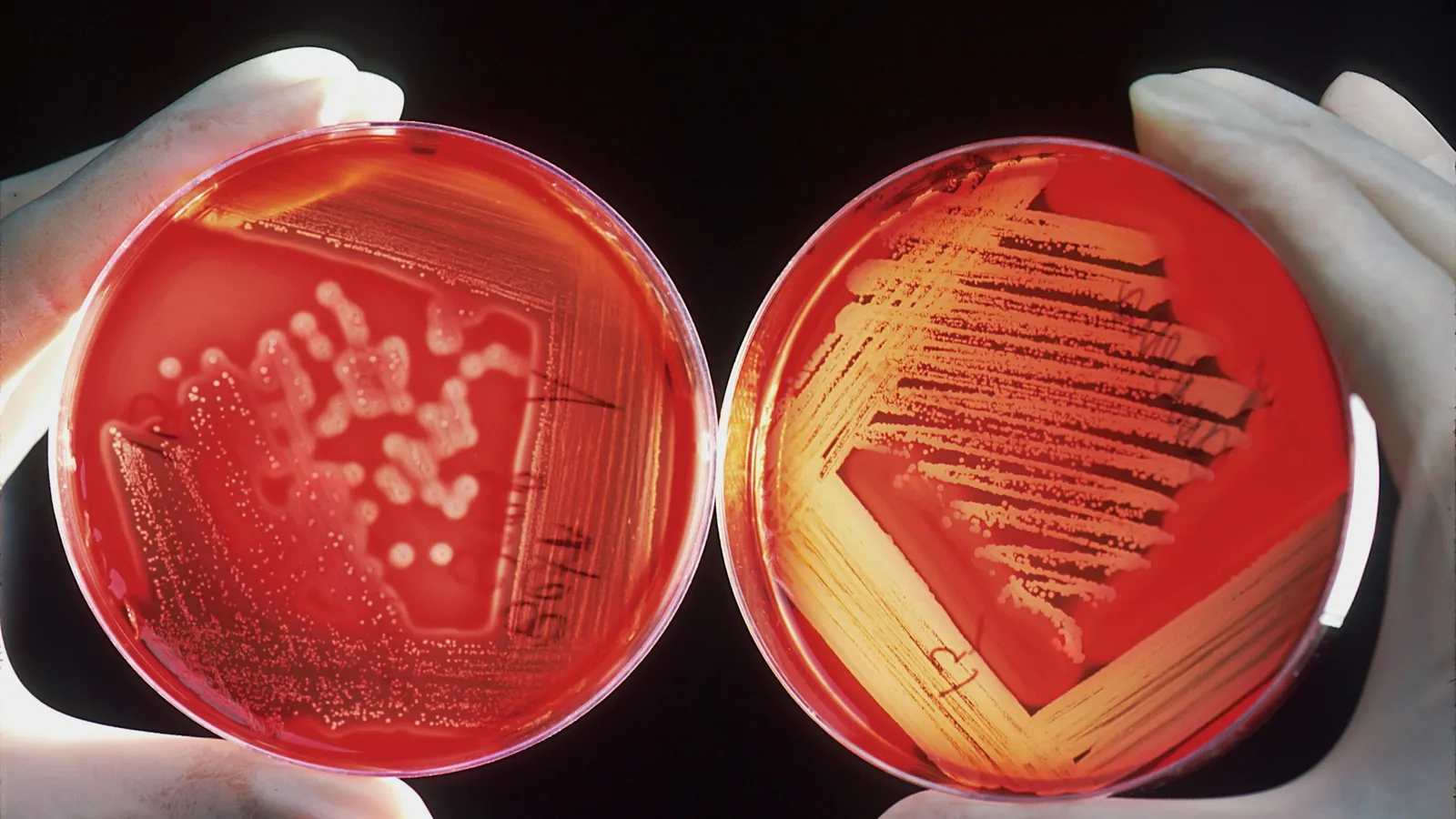
Why it tempts: Staph- and Strep- differ by a few letters, and Streptococcus turns up again a page later in the same industrial section. NCERT 8.2.2 says Fleming was working on Staphylococci when a mould on an unwashed plate stopped them from growing near it. Streptococcus is the bacterium NCERT 8.2.3 names as the producer of streptokinase.
Check: On Fleming's plate, which genus was held back, and which genus does NCERT give as the source of the clot buster?
Habit: Tag them by role: Staph was the bacterium on the plate, Strep is a producer.
"Clostridium butylicum must make butanol; it is in the name."
Why it tempts: species names read like product labels, and "butyl" sounds like an alcohol. NCERT 8.2.3 lists C. butylicum among the acid producers, as the bacterium behind butyric acid. The alcohol NCERT names in that section is ethanol, made commercially by the yeast Saccharomyces cerevisiae.
Check: In NCERT's list, is C. butylicum's product an acid or an alcohol, and which organism does NCERT give for commercial ethanol?
Habit: learn the product from the list, never from the spelling of the species name.
Is every medicine made by a microbe an antibiotic?
"Streptokinase, cyclosporin A and statins are antibiotics, because microbes make them."
Why it tempts: they come right after the antibiotics subsection, and "medicine from a microbe" feels like the whole definition. NCERT 8.2.2 defines antibiotics as chemicals made by some microbes that kill other, disease-causing microbes or slow their growth. Streptokinase, cyclosporin A and statins sit in a separate subsection, 8.2.3, on bioactive molecules, and NCERT gives each a job in the patient's body: removing clots, suppressing the immune response in organ-transplant patients, lowering blood cholesterol. None is described as killing or slowing another microbe.
Check: Sort penicillin, streptokinase, cyclosporin A and statins by what each acts on. Which one alone is aimed at another microbe?
Habit: before you call a drug an antibiotic, name its target.
"Statins work by clearing away cholesterol already in the blood."
Why it tempts: "cholesterol-lowering" sounds like scrubbing something out. NCERT 8.2.3 says statins, produced by the yeast Monascus purpureus, lower blood cholesterol by competitive inhibition of the enzyme that synthesises cholesterol. In plain words, they block the making step.
Check: Does a statin act on cholesterol molecules or on an enzyme, and what kind of inhibition does NCERT name?
Habit: for every drug in 8.2.3, write the target in one word.
"Streptokinase is given to stop clots from forming."
Why it tempts: drugs that touch blood clotting blur into one idea. NCERT 8.2.3 calls streptokinase a "clot buster": made by Streptococcus and modified by genetic engineering, it is used to clear clots out of blood vessels in people who have had a myocardial infarction.
Check: Fill the gap: a clot buster works on a clot that has ___ formed. And is the streptokinase NCERT describes used unmodified?
Habit: read "buster" literally: something already there gets broken up.
This is a study summary, not medical advice.
Which biocontrol agents in this chapter are not microbes?
"Ladybirds and dragonflies are microbial biocontrol agents."
Why it tempts: they appear in a microbes chapter, inside the biocontrol section, just before Bt. NCERT 8.5 brings them in as familiar insects that help get rid of pests: the ladybird beetle for aphids and dragonflies for mosquitoes. Only then does it introduce Bacillus thuringiensis as a microbial example, followed by the fungus Trichoderma and the baculoviruses.
Check: A stem wants the microbial agent NCERT describes for treating plant disease, not insect pests, and offers ladybird, dragonfly, Bacillus thuringiensis and Trichoderma. Which two go first, and which one is left as the answer?
Habit: when a stem says "microbial", strike out the insects first, then match the remaining agent to its target.
What do students get wrong inside the sewage plant?
"Flocs are clumps made only of bacteria."
Why it tempts: later lines speak of "bacterial flocs", so the fungi drop out of memory. NCERT 8.3 describes flocs as a mesh in which bacteria are bound up with fungal filaments. It also says that, in the sludge digesters, anaerobic bacteria break down both the fungi and the bacteria present in that sludge.
Check: The digesters break down two kinds of organisms from the sludge. Name both, and say where the second kind came from.
Habit: picture a floc as a net of fungal threads with bacteria caught in it.
"A sewage plant must add a bought culture of microbes to begin treatment."
Why it tempts: industrial products in 8.2 use chosen microbes grown in fermentors, so students assume the same here. NCERT 8.3 says treatment is carried out by heterotrophic microbes that are naturally present in the sewage. The only inoculum NCERT 8.3 mentions is a small part of the plant's own activated sludge, pumped back into the aeration tank.
Check: Where does the aeration tank's inoculum come from: a laboratory culture, or a tank inside the same plant?
Habit: in sewage questions, assume the microbes arrive with the sewage unless the stem says otherwise.
A 60-second self-check before you mark
Run these on every question from this chapter that names an organism or a drug, then test yourself with our eight graded NEET MCQs on Microbes in Human Welfare.
Which of these eight slips keeps catching you? Fermi's AI tutor works out what you already know and builds a plan for the session.