On this page
Your NCERT Class 11 Biology chapter on the animal kingdom lists the features of Class Mammalia in one paragraph, and one line reads: "External ears or pinnae are present" (NCERT Biology Class 11, Chapter 4, page 51). Straight after, the same passage gives examples that include the platypus, the common dolphin and the blue whale. None of those three has an external ear flap. This is not a mistake. It shows the difference between a feature most mammals have and one that makes an animal a mammal.
Why is a pinna listed as a mammal feature?
A pinna is the fleshy flap of the outer ear, the part you can hold between your fingers. The OpenStax Biology 2e textbook says that "mammals have movable eyelids and fleshy external ears (pinnae), quite unlike the naked external auditory openings of birds" (OpenStax Biology 2e, 29.6 Mammals).
It also does a real job. Hearing researchers Henry and Rickye Heffner explain that the directionality of the pinnae to high-frequency sounds lets an animal tell whether a sound source is in front or behind, and how high it is (Heffner and Heffner, Acoustics Today, 2016).
Which mammals do not have external ears?
Three groups are the examples worth knowing for school biology.
Whales and dolphins. "Like some pinnipeds, cetaceans have no external pinnae," says the DOSITS guide to hearing in cetaceans, where cetaceans means whales, dolphins and porpoises.
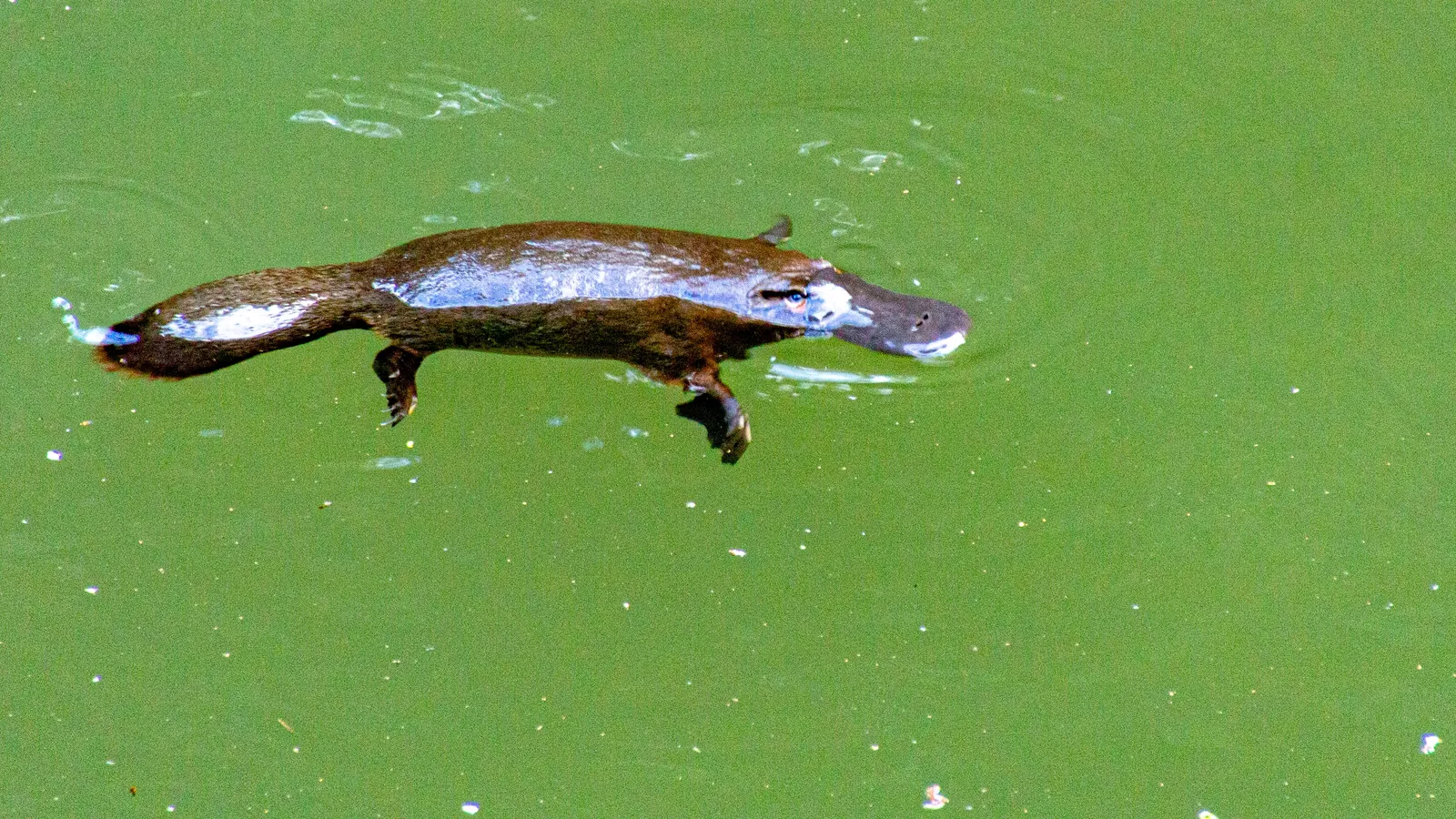
The platypus. Behind its bill are grooves that house the ear openings and the eyes, which close when the animal dives (Australian Museum). Our post on why the platypus and echidna are egg-laying mammals covers its other odd features.
True seals. Sea lions have small flaps for outer ears, while the "earless" or "true" seals lack external ears altogether and show only tiny holes on the sides of the head (NOAA Ocean Service).
Notice the pattern: all of them spend much of their lives in water. Marine mammals need a streamlined head for fast, easy movement through water, which external ears would impede (Woods Hole Oceanographic Institution).
How do whales and dolphins hear without a pinna?
In toothed whales, which include dolphins, the lower jaw is surrounded by fats that, along with a thin bony area called the pan bone, are thought to conduct sound to the middle ear (DOSITS). The same source says their ear canal is narrow and plugged with debris and dense wax. In baleen whales the narrow ear canal ends in a waxy cap, and the exact way they hear is still being researched.
The platypus closes its eyes, ears and nostrils when it forages underwater, and its main sense organ there is the bill, which carries pressure receptors and electro-receptors (Australian Museum).
Why are whales, dolphins and the platypus still mammals?
Because the pinna is a typical feature, not a defining one. NCERT's own chapter summary states: "The unique features of mammals are the presence of mammary glands and hairs on the skin" (NCERT Biology Class 11, Chapter 4, page 53). OpenStax adds two skeleton clues: the mammal lower jaw is a single bone, the dentary, and mammals carry extra middle-ear bones (malleus and incus), whereas in other vertebrates vibrations reach the inner ear through a single bone, the stapes (OpenStax Biology 2e).
Run the animals through those checks:
Dolphin: dolphins are born with about six light-coloured hairs along each side of the snout, which most lose soon after (CSIRO). Hair at some stage of life counts.
Platypus: its body is covered with dense waterproof fur, and after the eggs hatch the female secretes milk that the young suckle from two milk patches (Australian Museum).
Whales: NCERT lists Balaenoptera, the blue whale, among its mammal examples on the same page as the pinna line.
For the full list of features and where each exception fits, see characteristics of mammals: hair, milk and the egg-laying exceptions.
How should you answer pinna questions in an exam?
If the question asks which class has pinnae, answer Mammalia. NCERT lists it as a class feature.
If it asks for a mammal without pinnae, name a whale, dolphin or the platypus; all three appear in NCERT's list of mammal examples. True seals are a correct extra if you need a fourth.
If it asks whether an animal is a mammal, check hair and mammary glands, not the ear.
Worked example. Assertion: The dolphin is a mammal. Reason: Dolphins have external ears. The assertion is true and the reason is false, because dolphins have no pinnae; they are mammals because of hair at birth and mammary glands.
A two-mark answer you can adapt: "Pinnae are a common but not universal feature of mammals. Whales, dolphins and the platypus lack them, yet they are mammals because they have hair at some stage of life and mammary glands."
If animal kingdom features keep blurring together, the Fermi Concept Library gives every concept in biology its own lesson and its place in the map, so you can see how related features connect. Then try the same reasoning on another classic exception in why a whale is a mammal, not a fish.