On this page
Picture a plate of steamed rice, a bowl of dal and a spoon of ghee on top. Rice is mostly starch, dal brings protein (and some starch), and ghee is almost all fat. They arrive in one mouthful, yet the body starts on each at a different station. Follow this one plate down the gut and most "where does this enzyme act?" questions answer themselves.
Which is digested first: carbohydrate, protein or fat?
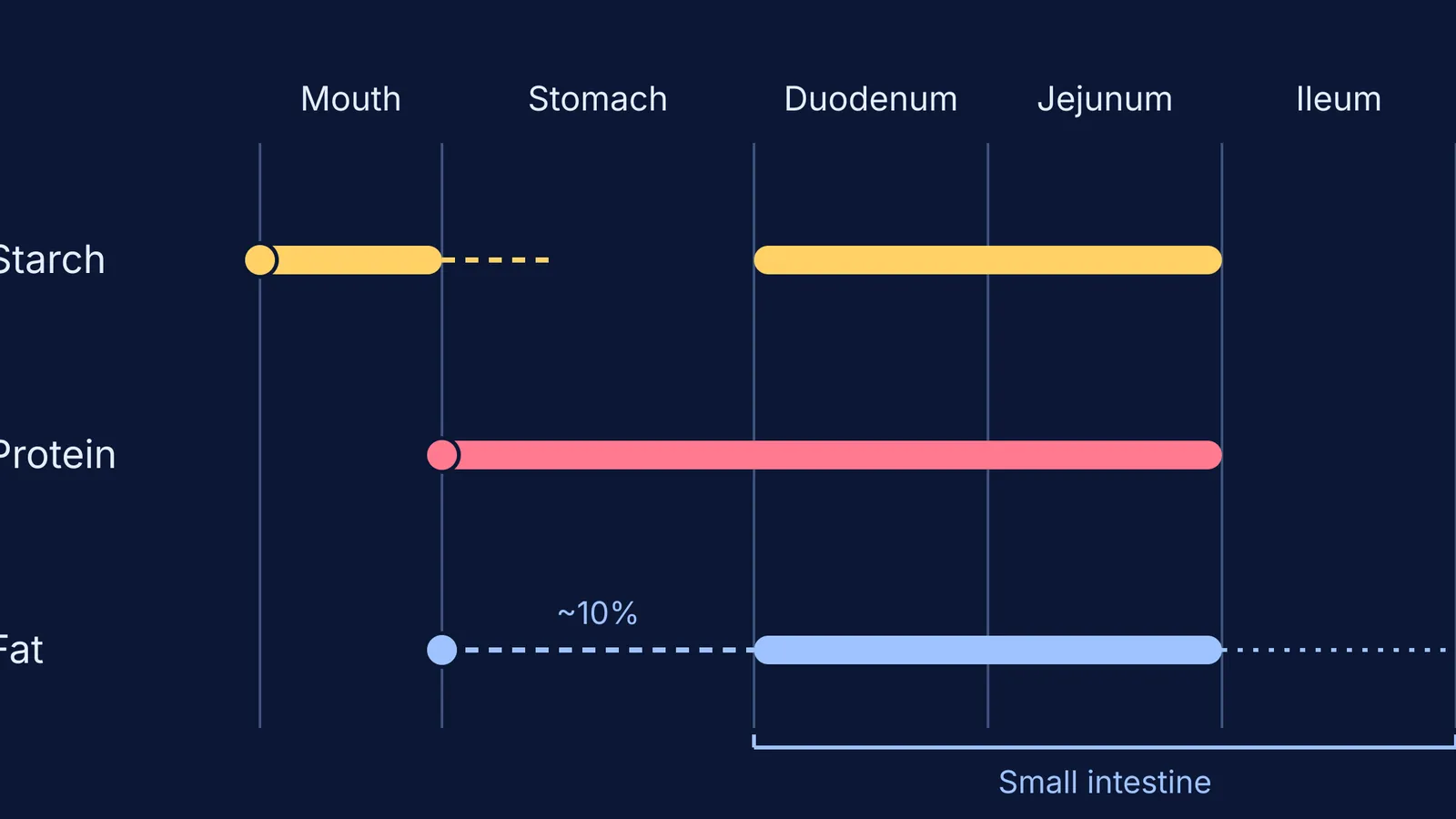
Carbohydrate comes first. NCERT's Class 10 chapter Life Processes says saliva contains salivary amylase, which breaks starch down into simple sugar.
Protein comes second, in the stomach. The same NCERT chapter says the gastric glands release hydrochloric acid, pepsin and mucus, and that the acid gives pepsin the acidic medium it needs. OpenStax's Anatomy and Physiology textbook puts it directly: "The breakdown of protein begins in the stomach through the actions of HCl and the enzyme pepsin."
Fat comes last, and the textbook line hides a small detail. Lingual lipase from the tongue's glands does not begin working until it is activated in the stomach, according to OpenStax. Carrière and colleagues (Gastroenterology, 1993)90908-u) gave healthy volunteers a liquid test meal and measured how much fat broke down in the stomach: about 10% of the fatty-acid chains in the meal's triglycerides. So most fat leaves the stomach still undigested.
How long does a meal stay in the stomach?
The stomach empties into the duodenum within 2 to 4 hours of a meal, according to OpenStax. It does this in small squirts of about 3 mL of chyme at a time. Stomach contents have a pH of 1.5 to 3.5. Salivary amylase keeps working inside the swallowed food until the acidic chyme mixes in and inactivates it.
Fat changes the timing. The same OpenStax page says meals with a high triglyceride content stay in the stomach longest, sometimes 6 hours or more. So a plate with plenty of ghee is likely to stay in the stomach longer.
Where does digestion of each nutrient end?
All three end in the small intestine. NCERT calls it "the site of the complete digestion of carbohydrates, proteins and fats" in Life Processes. The detail below follows OpenStax's closer look at chemical digestion.
Rice starch: pancreatic amylase does the "heavy lifting". Brush-border enzymes such as α-dextrinase and maltase then split the fragments into glucose.
Dal protein: trypsin, chymotrypsin, elastase and carboxypeptidase from the pancreas cut the polypeptides. Brush-border aminopeptidase and dipeptidase finish the job, leaving amino acids.
Ghee fat: bile salts break big globules into small ones. Pancreatic lipase then splits each triglyceride into two free fatty acids and a monoglyceride. Because the pancreas is the only consequential source of lipase, OpenStax says "virtually all lipid digestion occurs in the small intestine."
Most carbohydrates and proteins are absorbed in the jejunum. Bile salts are taken back up in the terminal ileum. It takes about 3 to 5 hours for all chyme to leave the small intestine. For enzyme-by-enzyme detail, see our guides to pancreatic juice and succus entericus enzymes and how bile emulsifies fat without being an enzyme.
The dal-rice-ghee timeline for revision
Times come from OpenStax and the fat fraction from Carrière and colleagues90908-u).
Mouth: salivary amylase starts on the starch. Protein and fat pass through unchanged.
Stomach, early: amylase carries on inside the swallowed food until acid reaches it.
Stomach (2 to 4 hours, longer with more fat): HCl and pepsin start on dal protein. Lipase splits roughly a tenth of the fat's fatty-acid chains.
Duodenum: bile emulsifies the ghee. Pancreatic amylase, trypsin and lipase all act at once.
Jejunum: brush-border enzymes finish starch into glucose and peptides into amino acids. Most absorption happens here.
Ileum: the last absorption, including bile salts, before the ileocaecal valve.
Watch for two traps. Lingual lipase only starts working in the stomach, so "fat digestion begins in the mouth" is shaky. And bile is not an enzyme: it emulsifies fat but does not break chemical bonds.
If one link in this chain is shaky, for example why pepsin needs acid, the Fermi Concept Library gives each biology concept its own lesson and shows its place in the map. Our Class 10 digestive enzymes guide makes a good second pass. If you are unsure where to begin, Fermi's AI tutor can work out what you already know and build a plan for the session.
Next time you eat dal-chawal, trace one mouthful through the six stations.