On this page
Chapter 8 of NCERT's Human Ecology and Family Sciences Part II (reprint 2026-27) is called Design for Fabric and Apparel. It shows how colour, texture, line and shape, combined by a set of principles, make a good garment.
What does the 2026-27 syllabus include?
The CBSE Home Science (064) curriculum for 2026-27 places this chapter in Unit IV, Fabric and Apparel, with two others: Fashion Design and Merchandising, and Care and Maintenance of Fabrics in Institutions. The unit carries 17 of the 70 theory marks, shared by all three chapters; CBSE prints no per-chapter figure.
It lists every section of the chapter, composition and careers included. In the practical exam, a tie and dye, batik or block printing sample is worth 4 of the 30 practical marks; the chapter's three practicals explain each technique. For the whole paper, see how to study Home Science for the Class 12 exam.
What is structural and applied design?
NCERT treats design as planning that makes an object both useful and pleasing.
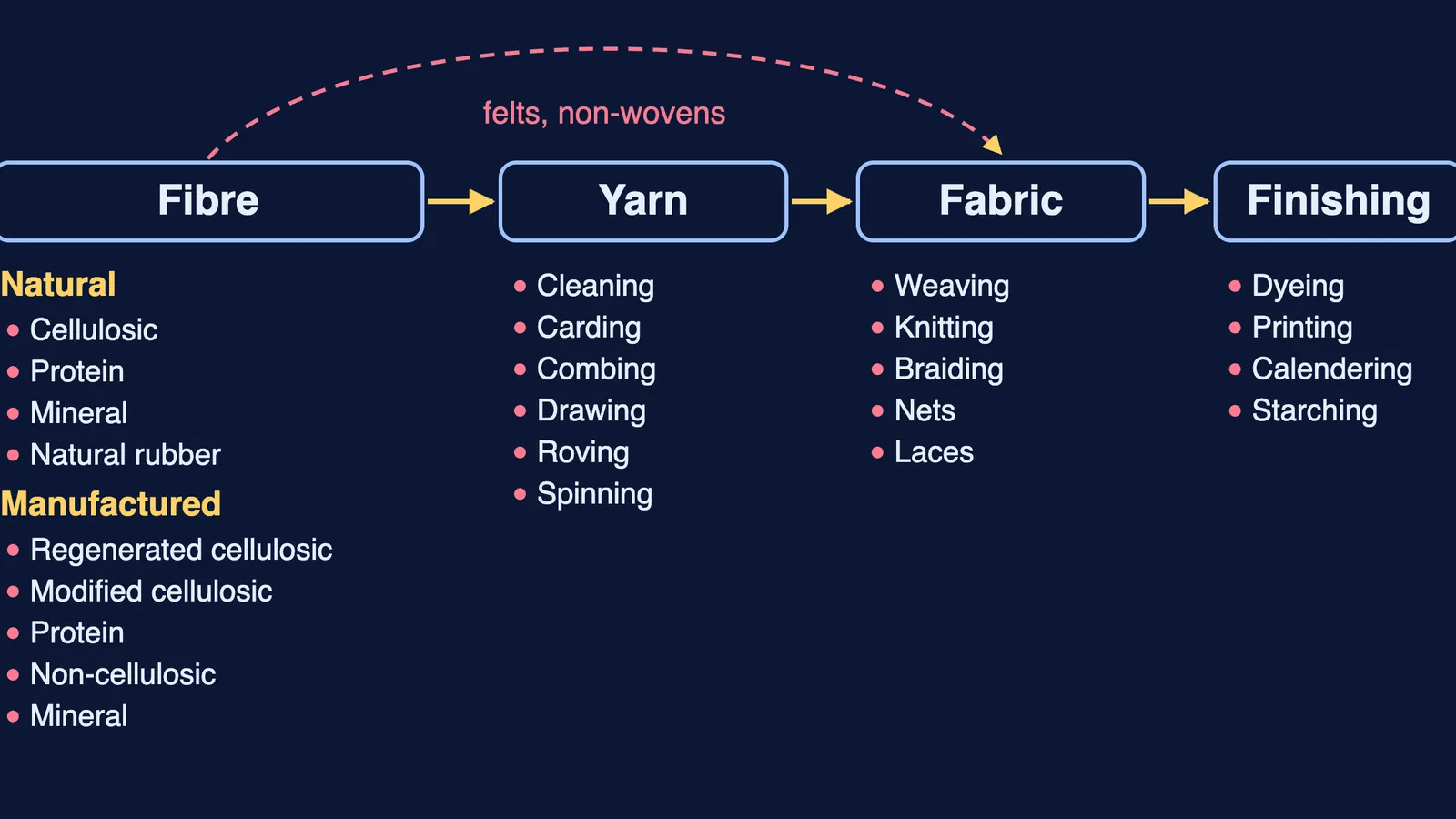
Structural design comes from the form itself: fibre, yarn, weave or knit in a fabric; the cut or silhouette in a dress.
Applied design is added on top: dyeing, printing, finishes and embroidery on fabric; trims and fasteners (notions) on garments.
Elements are the tools; principles are the rules for combining them.
What are the elements of design?
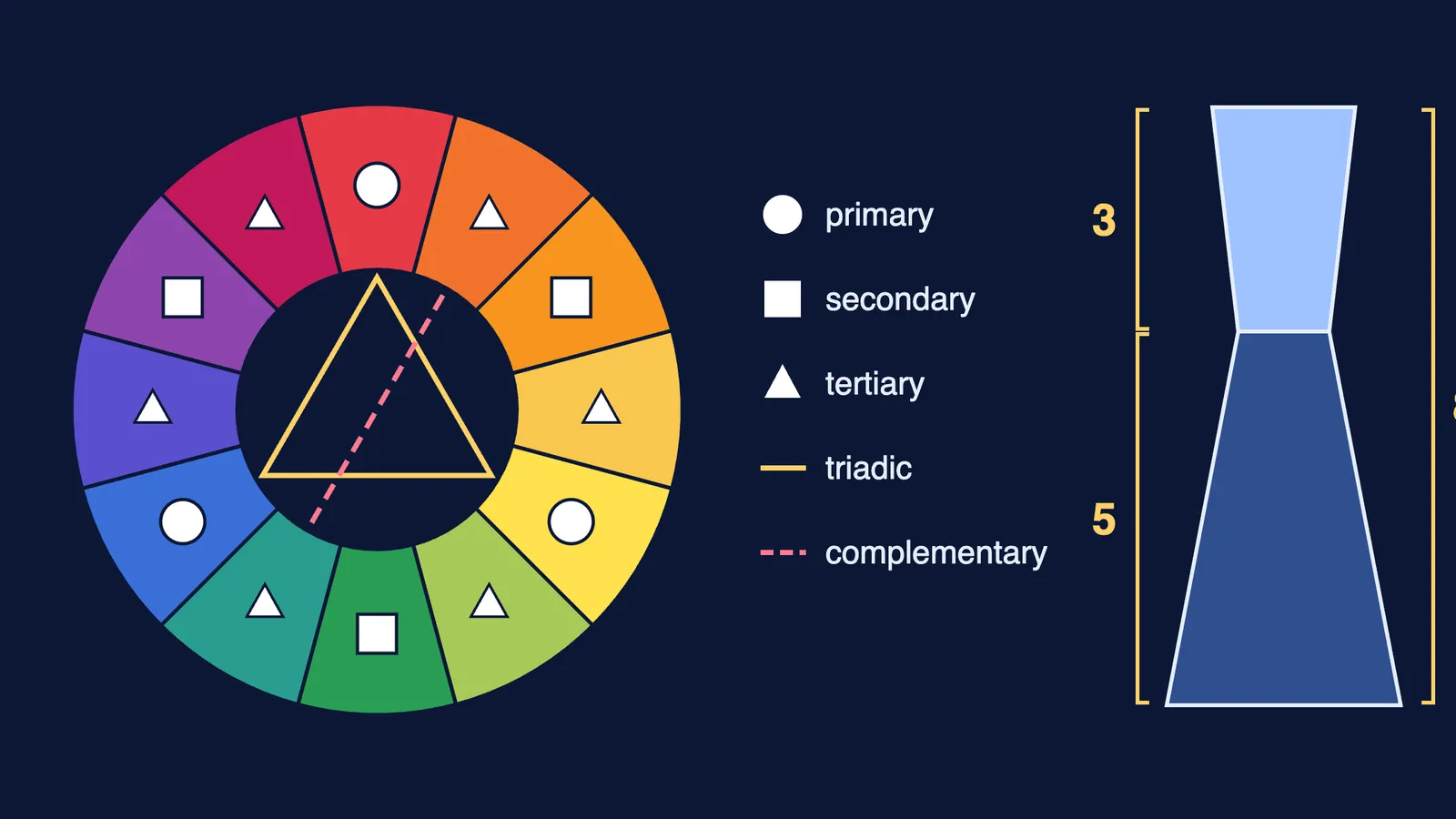
Colour has three dimensions: hue (its name), value (how light or dark) and intensity, or chroma (how bright or pure). On the Munsell wheel the primaries are red, yellow and blue; the secondaries orange, green and violet; and six tertiaries sit between them, such as yellow-green. Neutrals such as white, black and grey are achromatics.
The grey scale runs from 0 (black) to 10 (white), with 5 in the middle. A hue moved towards white is a tint; towards black, a shade.
Colour can enter as fibre (rare, as it costs most), as yarn (stripes, checks and, with tie-dyed yarns, ikat) or as fabric (the most common), where it can also come from printing, painting, embroidery or appliqué.
Schemes come in two families:
Related: monochromatic, achromatic, accented neutral, analogous
Contrasting: complementary, double complementary, split complementary, analogous complementary, triadic
Texture is how a material looks, behaves and feels, shaped by fibre, yarn, construction, finishes and surface ornamentation.
Line is straight or curved. Vertical lines add height, horizontal lines add width, diagonals feel lively.
Shapes are natural, stylised, geometric or abstract. Group shapes together and you have a pattern.
How do the principles of design work in a dress?
Proportion links each part to the whole, often through golden mean ratios such as 3:5:8 or 5:8:13. Worked example, our own numbers: a dress 104 cm from shoulder to hem, split 3:5: 104 ÷ 8 = 13 cm per part, so the bodice takes 3 × 13 = 39 cm and the skirt 5 × 13 = 65 cm. Equal horizontal divisions make the wearer look shorter and wider; unequal ones look slimmer.
Balance spreads visual weight evenly, side to side and top to bottom. It can be formal, informal or radial; formal (symmetrical) balance feels stable but can turn monotonous.
Emphasis is the focal point, often near the face, such as an embroidered yoke.
Rhythm moves the eye through repetition, gradual change in motif or button size, radiation (gathers spreading from a point) and parallel tucks or pleats.
Harmony means every part agrees; square pockets on a dress with a curved collar and hem break it.
Composition arranges elements in a flat or three-dimensional space using the two or three principles that suit the piece.
What careers does the chapter point to?
NCERT says the field is now wide enough to count as two specialisations. A fabric designer needs to know fibres, how they take dye, and design principles. Courses run from certificates to bachelor's degrees, and designers work for textile firms, fashion houses, agencies or freelance. See also what each BSc Home Science specialisation leads to.
Practice questions in the 2026-27 format
Our own questions, in the 2026-27 sample paper's mark types.
(1 mark) A navy kurta, sky-blue salwar and pale-blue dupatta form which scheme? (a) analogous (b) monochromatic (c) triadic (d) complementary
(1 mark) Ikat comes from colour added at which stage? (a) fibre (b) yarn (c) fabric (d) garment
(2 marks) Give one fabric example each of structural and applied design.
(3 marks) A 96 cm kurta needs a seam dividing it 3:5 from the shoulder. Where does it fall? Show your working.
(4 marks) Riya is short and slight. Suggest one choice each of line, texture, proportion and emphasis to help her look taller.
(5 marks, 2 + 3) I. Define two contrasting colour schemes. II. A plain frock looks flat. Suggest three changes that add rhythm, each by a different method.
Answers: 1 (b). 2 (b). 4: 96 ÷ 8 = 12 cm per part, so 36 cm from the shoulder, leaving 60 cm below.
Another chapter guide in this subject: Consumer Education and Protection.
Planning tonight's study session? Fermi's AI tutor works out what you already know and builds a plan for the session.