On this page
Turn a pack of ice cream or a bottle of sauce around and you may find "cellulose gum" or "sodium CMC" in the ingredients. It is sodium carboxymethyl cellulose: ordinary cellulose with some of its OH groups turned into –OCH₂COONa. The Bureau of Indian Standards specification, IS 5306:1996, says how much of that change is allowed, and it measures it with a perchloric acid titration and a short formula with two odd-looking numbers, 16.2 and 8.0. They are 162 and 80, the masses of a glucose unit and of one carboxymethyl swap.
What is sodium carboxymethyl cellulose, chemically?
Cellulose is a chain of β-D-glucose units joined by β-1,4 links. Each unit in the chain, called an anhydroglucose unit, is C₆H₁₀O₅ (molar mass 162.14) and has three free OH groups: on C-2, C-3 and C-6.
IS 5306 calls CMC the "sodium salt of a carboxymethyl ether of cellulose" and writes its formula as [C₆H₇O₂(OH)ₓ(OCH₂COONa)ᵧ]ₙ, with x + y = 3.00. Here y is the degree of substitution (DS): the average number of OH groups per glucose unit that carry a –CH₂COONa group.
DS can never exceed 3, because there are only three OH groups, but it can be a fraction such as 0.7, because it is an average over many units.
The standard's foreword gives 178.14 for a unit with DS 0.20 and 242.16 for a monosubstituted unit. You can check both: each substitution replaces H with CH₂COONa, which adds 80.02. So 162.14 + 0.20 × 80.02 = 178.14, and 162.14 + 80.02 = 242.16.
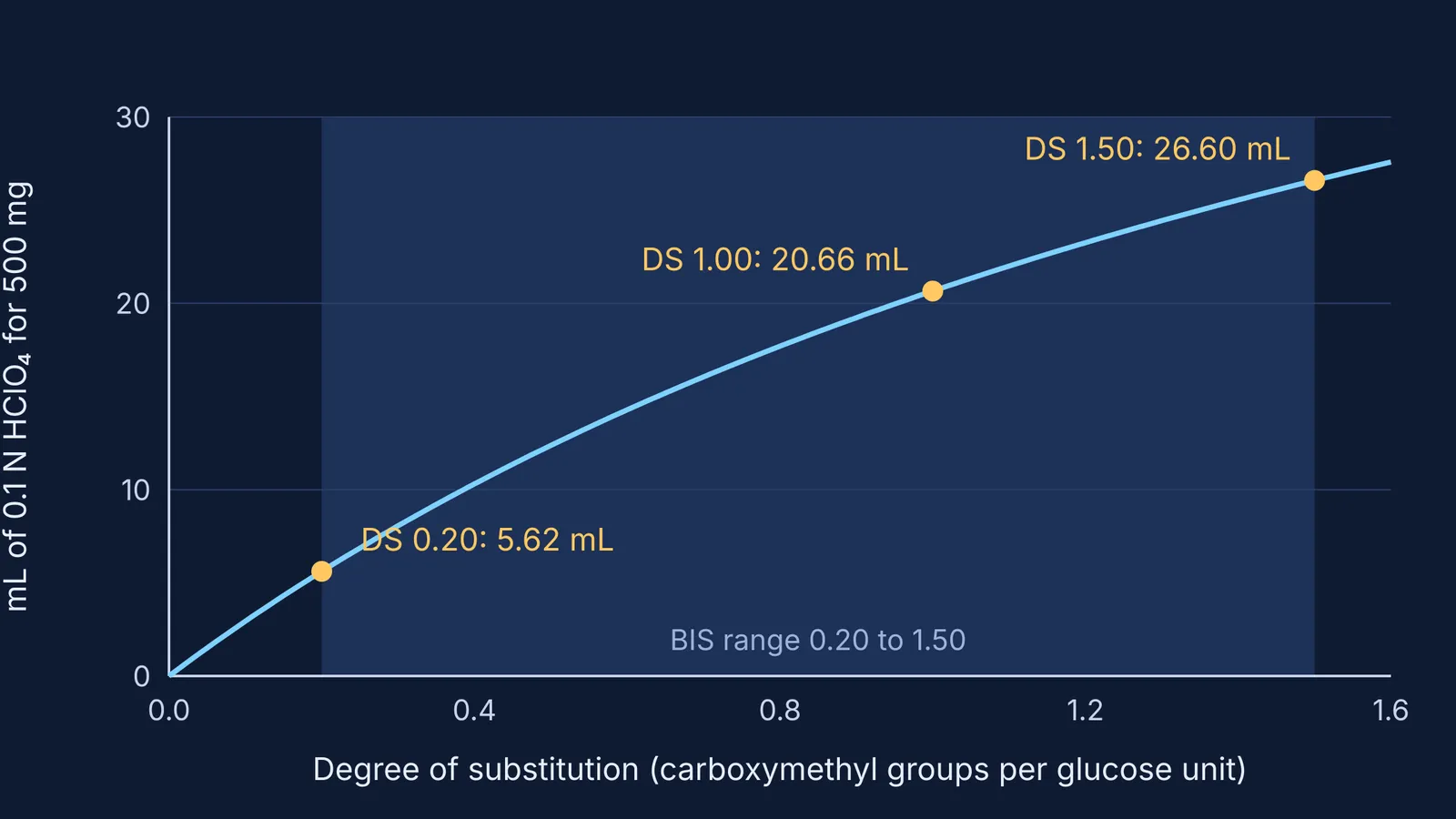
Table 1 asks for a DS of 0.20 to 1.50. The 1996 text said 0.20 to 1.00; Amendment No. 1 (2005) and Amendment No. 2 (2016) widened it.
How is the carboxymethyl group put on cellulose?
IS 5306 does not describe manufacture, so this part is general chemistry, not the standard. Cellulose is soaked in sodium hydroxide to give alkali cellulose, in which some OH groups are present as alkoxide. The alkoxide then attacks sodium chloroacetate in an SN2 reaction. That is a Williamson ether synthesis:
Cell–OH + NaOH + ClCH₂COONa → Cell–O–CH₂COONa + NaCl + H₂O
A side reaction uses up chloroacetate with hydroxide instead of cellulose:
ClCH₂COONa + NaOH → HOCH₂COONa + NaCl
Both equations balance in atoms and charge. The by-products, sodium chloride and sodium glycolate, are exactly the two impurities that BIS limits in Table 1: NaCl at most 0.4% and free glycolate at most 0.5% on the dry basis, together at most 0.5% (limits as amended in 2016). Purity, at least 99.5% on the dry basis, is found by subtracting those two from 100.
Each glucose unit keeps its five stereocentres (C-1 to C-5); the new –CH₂– carbon is not chiral, so none are added.
How does BIS measure the degree of substitution?
Annex B heats 500 mg of the sample with 80 mL of glacial acetic acid for 2 hours and titrates with 0.1 N perchloric acid, following the mV reading on a glass–calomel electrode. Each carboxylate takes one proton:
Cell–O–CH₂COO⁻Na⁺ + HClO₄ → Cell–O–CH₂COOH + NaClO₄
Why acetic acid and not water is the same story as in why MSG counts as two bases in the BIS perchloric acid titration, so it is not repeated here.
The calculation is printed as a stacked fraction. Checked against the page image of the standard, it reads:
DS = (16.2 A/M) ÷ (1.000 − 8.0 A/M) = 16.2A/(M − 8.0A)
where A is the mL of 0.1 N HClO₄ and M is the sample mass in mg.
Where do 16.2 and 8.0 come from?
Let n be the mmol of glucose units in the sample.
Carboxylate groups titrated: 0.1 × A mmol. Each unit carries DS of them on average, so 0.1A = n × DS.
Sample mass: M = n(162 + 80 × DS), using the rounded unit masses.
Put n = 0.1A/DS into step 2: M = 16.2A/DS + 8.0A.
Rearrange: DS = 16.2A/(M − 8.0A).
So 16.2 is 0.1 × 162 and 8.0 is 0.1 × 80. The formula is just mole concept with an unknown in the molar mass.
How do you calculate DS from a titration?
Question. A 500.0 mg sample of CMC needs 12.40 mL of 0.1 N HClO₄. Find the DS and the sodium content.
Plug in. 16.2 × 12.40 = 200.88. M − 8.0A = 500.0 − 99.2 = 400.8.
Divide. DS = 200.88/400.8 = 0.501.
Check by moles. Carboxylate = 1.240 mmol. Units = 1.240/0.501 = 2.474 mmol. Mass = 2.474 × (162 + 80 × 0.501) = 500.0 mg. It closes. With the exact masses 162.14 and 80.02 you get 500.4 mg, a 0.07% gap from BIS's rounding.
Sodium. Na% = 100 × 0.501 × 22.99/(162.14 + 0.501 × 80.02) ≈ 5.7%.
If you want to practise rearranging formulas like this, the Fermi Problem Library has a step-by-step solver that explains the reasoning at each stage.
How do the identification and impurity tests work?
Clause 4.1 dissolves the sample in warm water and runs tests you can explain from the syllabus.
Iodine gives no blue colour. This separates CMC from carboxymethyl starch. The blue comes from iodine inside the amylose helix of starch; cellulose's straight β-1,4 chains have no helix. More on that in why starch turns blue-black with iodine but cellulose does not.
Uranyl zinc acetate gives a yellow precipitate, the classic test for Na⁺.
Copper sulphate gives a blue precipitate, an insoluble copper salt of the carboxylate.
Boiling for 5 minutes leaves the solution clear, which separates it from methylcellulose.
Sodium chloride (Annex D) is titrated with 0.05 N AgNO₃ to a potentiometric end point. Each mmol of AgNO₃ means 58.44 mg of NaCl. For V mL of N normal silver nitrate, M g of sample and a% loss on drying, the dry-basis result is 584VN/[(100 − a)M]. The printed line can be read as 584VN(100 − a)/M, but a quick check shows (100 − a) must divide: with 5 g of sample, 8% loss and 2.0 mL of 0.05 N AgNO₃, dividing gives 0.127%, while multiplying gives over 1000%.
Free glycolate (Annex E) is measured as colour. CMC is precipitated with acetone and the filtrate is read at 540 nm after heating with naphthalenediol in sulphuric acid. The result is % sodium glycolate = a × 0.129/b, with a in mg of glycolic acid and b in g of dry sample. The 0.129 is (98.03/76.05) ÷ 10: convert glycolic acid to sodium glycolate, then mg per g into percent.
Where does this come up in JEE and NEET?
Biomolecules (Class 12): cellulose is β-glucose with 1,4 links and three free OH per unit; starch is α-1,4 and gives the iodine colour.
Haloalkanes and ethers: the Williamson synthesis, with a primary halide (chloroacetate) and an alkoxide.
Some Basic Concepts (Class 11): back-calculating a formula when the molar mass depends on the unknown.
To revise these structures, the Concept Library covers every concept in chemistry, physics and biology.
Quick checklist
DS = average –CH₂COONa groups per glucose unit; between 0 and 3, often fractional.
Unit mass = 162.14 + 80.02 × DS.
BIS titrates the carboxylate with 0.1 N HClO₄ in glacial acetic acid.
DS = 16.2A/(M − 8.0A), with A in mL and M in mg.
NaCl and sodium glycolate are the by-products of the Williamson step, and BIS limits both.
No blue with iodine means cellulose-based, not starch-based.