On this page
Chemical Coordination and Integration is Chapter 19 of the NCERT Class 11 Biology textbook (Reprint 2026-27). It runs in four sections: endocrine glands and hormones, the human endocrine system, hormones of the heart, kidney and gut, and how hormones act. The CBSE 2026-27 Class XI Biology syllabus lists the glands from hypothalamus to gonads, an "elementary idea" of hormone action, and seven disorders by name.
Below are its key terms, grouped as the chapter is, in our own words. For the full chapter walk-through, read our Chemical Coordination and Integration Class 11 guide to glands and hormones.
What are hormones and endocrine glands?
Endocrine gland: a gland with no duct that releases its product straight into the blood. Example: thyroid. Don't confuse with: exocrine gland, which empties through a duct, like a salivary gland.
Hormone: a non-nutrient chemical, made in trace amounts, that carries messages between cells. This wider definition includes hormones from tissues that are not glands.
Composite gland: one organ that works as both an exocrine and an endocrine gland. Example: pancreas, which makes digestive juice and also insulin.
Neurosecretory cells: nerve cells that make hormones. Example: the groups of cells (nuclei) in the hypothalamus.
Atrial natriuretic factor (ANF): a peptide hormone from the heart's atrial wall that widens blood vessels and so lowers blood pressure when it rises.
Erythropoietin: a peptide hormone from the juxtaglomerular cells of the kidney that drives red blood cell formation (erythropoiesis).
Gastrin, secretin, CCK and GIP: the four main gut hormones. Gastrin makes gastric glands release HCl and pepsinogen; secretin makes the pancreas release water and bicarbonate; CCK triggers pancreatic enzymes and bile; GIP slows gastric secretion and movement.
How do the hypothalamus and pituitary control other glands?
Releasing and inhibiting hormones: hypothalamic hormones that switch pituitary secretion on or off. Example: GnRH switches on gonadotrophins; somatostatin holds back growth hormone.
Portal circulation: the blood link that carries hypothalamic hormones to the anterior pituitary. Don't confuse with: the posterior pituitary, which the hypothalamus controls directly through nerves.
Adenohypophysis: the pituitary part made of the pars distalis (commonly called the anterior pituitary) and the pars intermedia. The pars distalis makes GH, PRL, TSH, ACTH, LH and FSH; the pars intermedia makes MSH.
Neurohypophysis (pars nervosa): the posterior pituitary. It stores and releases oxytocin and vasopressin, which the hypothalamus makes.
Gonadotrophins: LH and FSH, the pituitary hormones that act on the testis and ovary.
Vasopressin (ADH): makes kidney tubules take back water, so less is lost in urine. Without enough of it you get diabetes insipidus. Don't confuse with: diabetes mellitus, which is about blood sugar.
Gigantism, pituitary dwarfism, acromegaly: too much GH in childhood, too little GH, and too much GH in adults (mainly disfiguring the face).
Pineal, thyroid, parathyroid and thymus terms
Melatonin: the pineal hormone that keeps the body's 24-hour (diurnal) rhythm, such as the sleep-wake cycle.
Thyroxine (T4) and triiodothyronine (T3): iodine-containing hormones from thyroid follicles that set the basal metabolic rate.
Goitre: a swollen thyroid, commonly caused by too little iodine in the diet. Don't confuse with: exophthalmic goitre (Graves' disease), a form of hyperthyroidism with bulging eyes and weight loss.
Cretinism: stunted growth and poor mental development in a baby, linked to the mother's hypothyroidism during pregnancy.
Thyrocalcitonin (TCT): a thyroid protein hormone that lowers blood calcium. Don't confuse with: parathyroid hormone (PTH), which raises it by dissolving bone and absorbing more calcium in the kidney and gut. PTH is a hypercalcemic hormone.
Thymosins: thymus peptides that help T-lymphocytes mature and help antibody production. The thymus shrinks with age, so immunity weakens.
Adrenal, pancreas and gonad terms
Catecholamines: adrenaline and noradrenaline from the adrenal medulla, the "fight or flight" hormones. They raise heart rate, breathing rate and blood glucose.
Corticoids: the adrenal cortex hormones. Glucocorticoids (mainly cortisol) handle carbohydrate metabolism; mineralocorticoids (mainly aldosterone) handle water and salt by keeping Na+ and removing K+.
Addison's disease: weakness and fatigue from too little adrenal cortex hormone.
Islets of Langerhans: the endocrine part of the pancreas; a normal human pancreas holds about 1 to 2 million of them, according to the NCERT chapter.
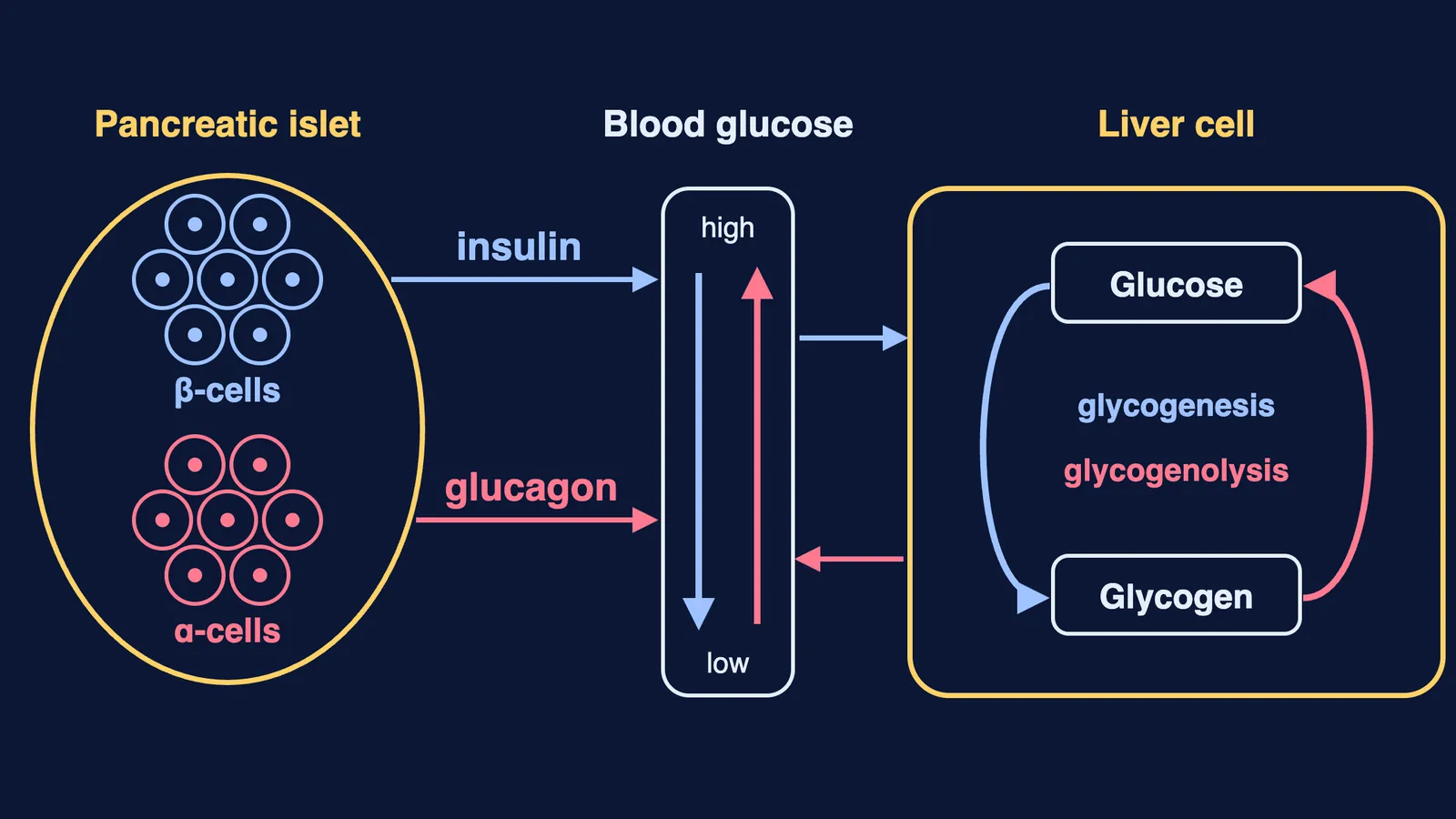
Insulin: made by β-cells; moves glucose into liver and fat cells and lowers blood sugar. A hypoglycemic hormone. Don't confuse with: glucagon, made by α-cells, which raises blood sugar (hyperglycemic).
Glycogenesis vs glycogenolysis vs gluconeogenesis: making glycogen from glucose (insulin), breaking glycogen into glucose (glucagon), and making new glucose from non-carbohydrate sources (glucagon, cortisol).
Diabetes mellitus: long-lasting high blood sugar, with glucose lost in urine and harmful ketone bodies formed.
Leydig (interstitial) cells: cells between the seminiferous tubules of the testis that make androgens, mainly testosterone.
Corpus luteum: the structure left by the ruptured follicle after ovulation; it mainly secretes progesterone, which supports pregnancy. Estrogen comes mainly from growing follicles.
How do hormones act on target cells?
Hormone receptor: a protein in the target tissue that binds only one hormone. Binding forms a hormone-receptor complex that changes the cell's chemistry.
Membrane-bound receptor: sits on the cell surface. Protein and peptide hormones such as FSH use it and usually stay outside the cell.
Second messenger: a molecule inside the cell, such as cyclic AMP, IP3 or Ca2+, that carries the signal after a hormone binds at the surface.
Intracellular (nuclear) receptor: sits inside the cell. Steroids and iodothyronines use it; the complex acts on genes. Don't confuse with: membrane-bound receptors, which work through second messengers.
How to learn these terms
Learn the opposite pairs together: insulin and glucagon, TCT and PTH, diabetes mellitus and diabetes insipidus, endocrine and exocrine.
Draw the pituitary with two routes from the hypothalamus: blood (portal circulation) to the front, nerves to the back.
Make a gland card: gland, hormone, target, effect, disorder. Fill it from memory, then check.
For hormone action, draw two cells side by side: one with a surface receptor and cAMP, one with a nuclear receptor acting on DNA.
If a term still feels slippery, the Fermi Concept Library covers every concept in biology, each with its own lesson and its place in the map. When you are ready to apply the terms, try our NEET post on chemical coordination glands, hormones and their actions.