On this page
Chapter 10 of NCERT's Human Ecology and Family Sciences Part II (reprint 2026-27) moves fabric care out of the home and into hospitals, hotels and commercial laundries.
What does the 2026-27 syllabus include?
The CBSE Home Science (064) curriculum for 2026-27 places this chapter in Unit IV, Fabric and Apparel, with two other chapters. Unit IV carries 17 of the 70 theory marks, shared by all three; CBSE prints no per-chapter figure. For the whole paper, read how to study Home Science for the Class 12 exam.
The curriculum lists washing, drying and ironing/pressing equipment, institutions, careers and scope. In the practical exam, removing one stain from white cotton cloth is worth 2 of the 30 practical marks.
CBSE's 2026-27 sample paper has a 1-mark MCQ and two 2-mark questions from this chapter.
What equipment does an institutional laundry use?
Fabric care has two aims: protect material from damage (and repair it), and keep its look by removing dirt and stains. NCERT groups equipment into three kinds.
Washing equipment. Machines load from the top or the front, and are fully automatic, semi-automatic (usually two tubs, refilled for each rinse) or manual (half or more of the work done by hand). All of them keep fabric moving through the wash solution, in one of three ways:
Agitation (top loading): bladed agitators rotate or oscillate and push water into the fabric.
Pulsation (top loading): a vertical pulsator moves up and down very fast.
Tumbling (front loading): a perforated horizontal drum lifts clothes and drops them, so clothes travel through water rather than water through clothes.
Water leaves by spinning (above 300 rpm), a bottom drain, or both together, which extracts best. Spin speed ranges from 333 to 1100 rpm; about 600–620 rpm is optimum, because spinning almost dry sets wrinkles.
Drying equipment. Driers circulate either cooler air fast, which keeps room humidity normal, or hotter air slowly, which leaves the exhaust air humid.
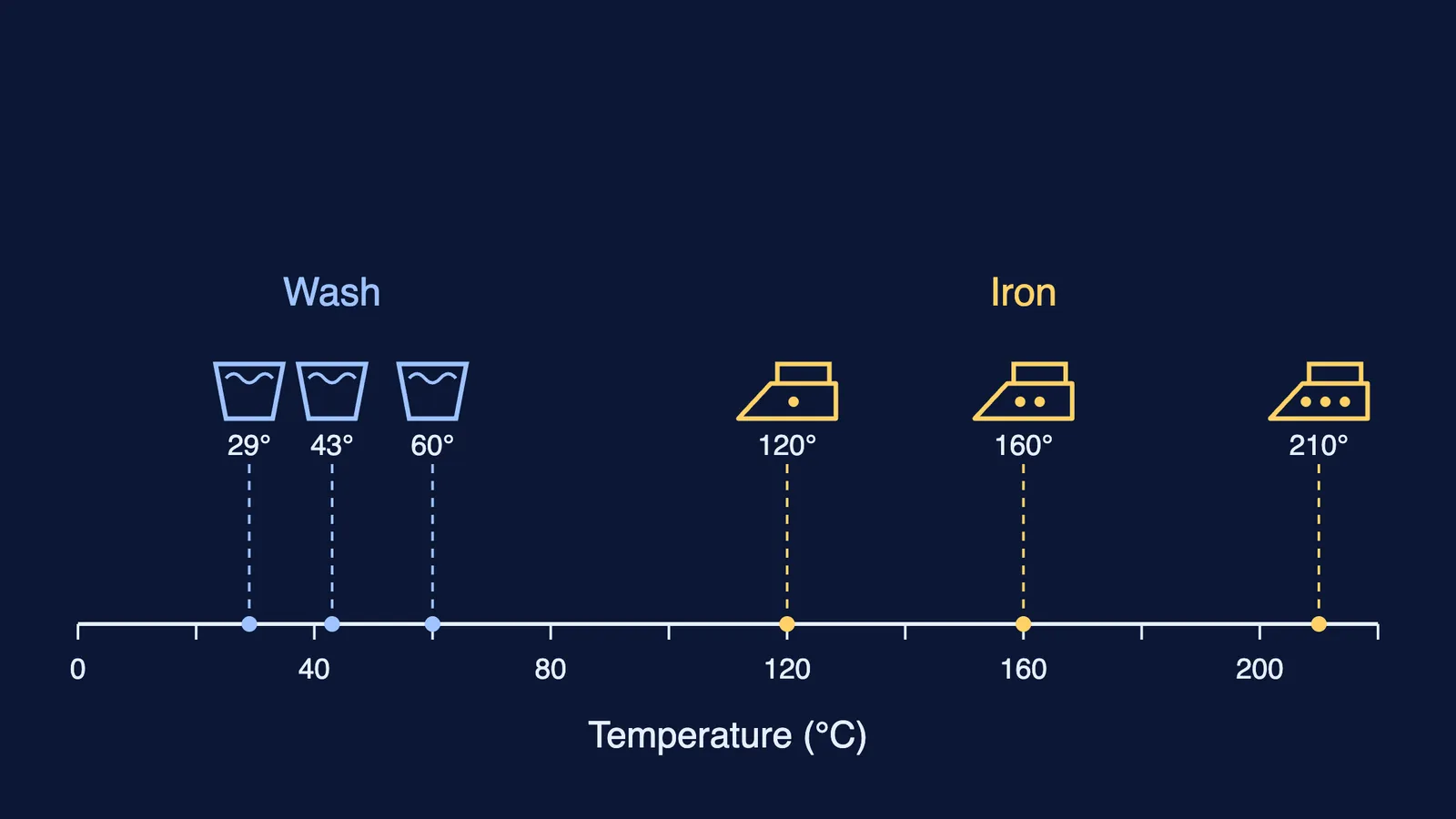
Ironing and pressing. Ironing smooths wrinkles; pressing puts creases in. Irons weigh 1.5–3.5 kg, usually with a thermostat; charcoal irons are still seen in India.
Commercial laundries scale this up: washers taking 100 kg or more a cycle against 5–10 kg at home, plus hydro-extractors, roller ironers and calendering machines.
How do hospital and hotel laundries differ?
Both run in-house laundries for linen and uniforms, with opposite priorities:
Hospitals: hygiene and disinfection come first. Linen is mostly cotton, dyed in wash-fast department colours; only blankets are wool. Starching and whitening are skipped, and disposables are burnt where infection is a risk.
Hotels: appearance comes first. Fibres vary, and starching, pressing and exact folding matter.
NCERT gives up to 400–500 rooms for big hotels and 1,800–2,000 beds or more for large hospitals, where operation theatre, maternity and labour room sheets may change five or more times a day.
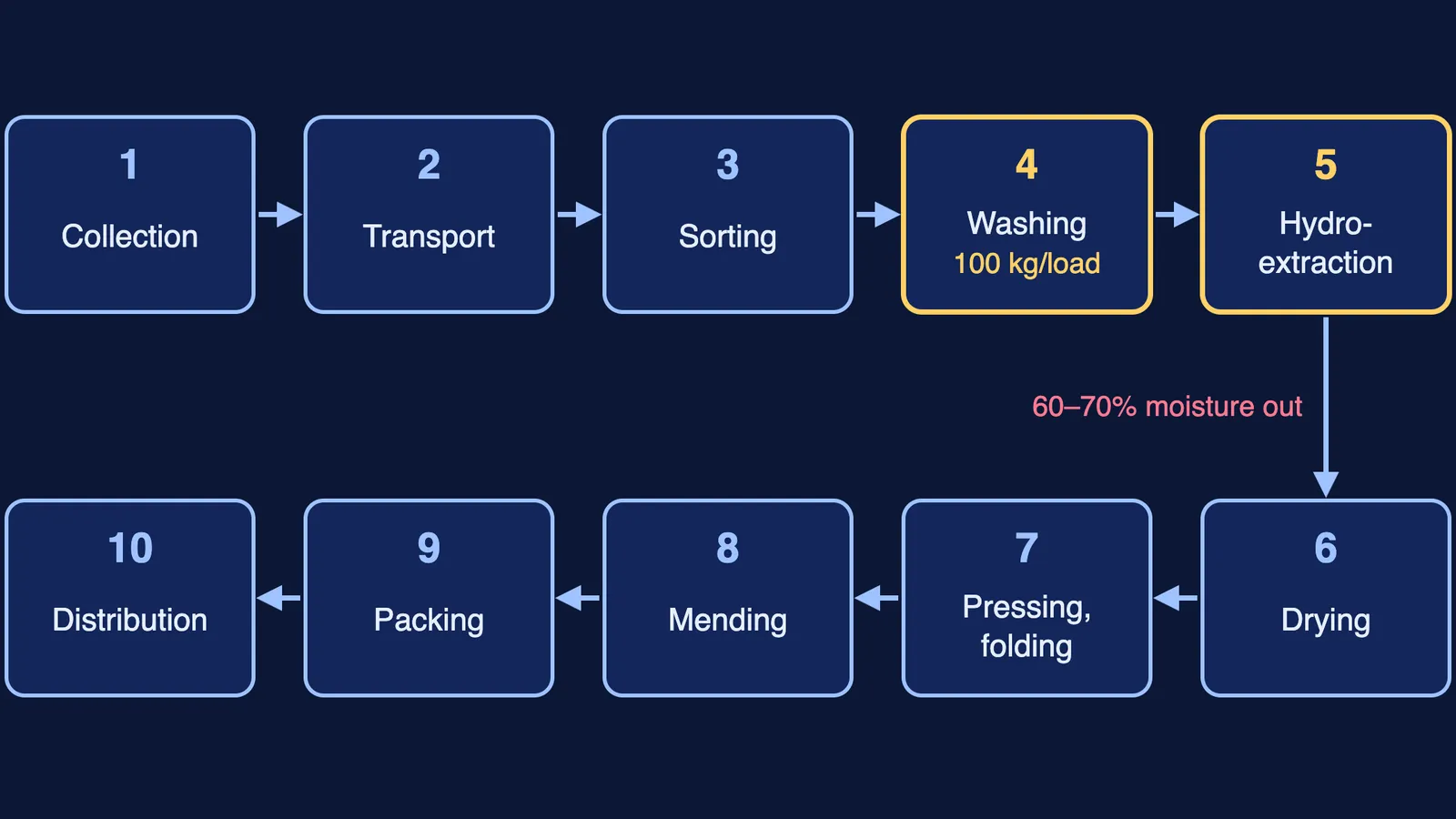
What are the 10 steps of a hospital laundry?
Collection from wards, OPD, OT and emergency
Transport to the laundry plant
Unloading and sorting (by soil level, patients', doctors', blankets)
Washing in 100 kg machines
Hydro-extraction, removing 60–70% of moisture
Drying
Ironing and pressing, then folding into stacks
Repairs, with unusable items condemned
Packing
Distribution
Worked example. The six-sets-per-bed minimum, the three pieces per set, the 100 kg load and the 60–70% figure are NCERT's; the 240 beds, 730 kg a day and 50 kg of water are our own assumptions. A 240-bed hospital needs 240 × 6 = 1,440 sets, or 1,440 × 3 = 4,320 pieces. At 730 kg of soiled linen a day, 730 ÷ 100 = 7.3, so it needs 8 loads in a 100 kg washer. If a washed load holds 50 kg of water, hydro-extraction takes out 30–35 kg, leaving 15–20 kg for the drier.
Practice questions in the 2026-27 format
Our own questions, in the sample paper's types.
(1 mark) Which washing method moves clothes through the water? (a) Agitation (b) Pulsation (c) Tumbling (d) Bottom drain
(2 marks) A semi-automatic machine needs more operator time than a fully automatic one. Give two reasons from the chapter.
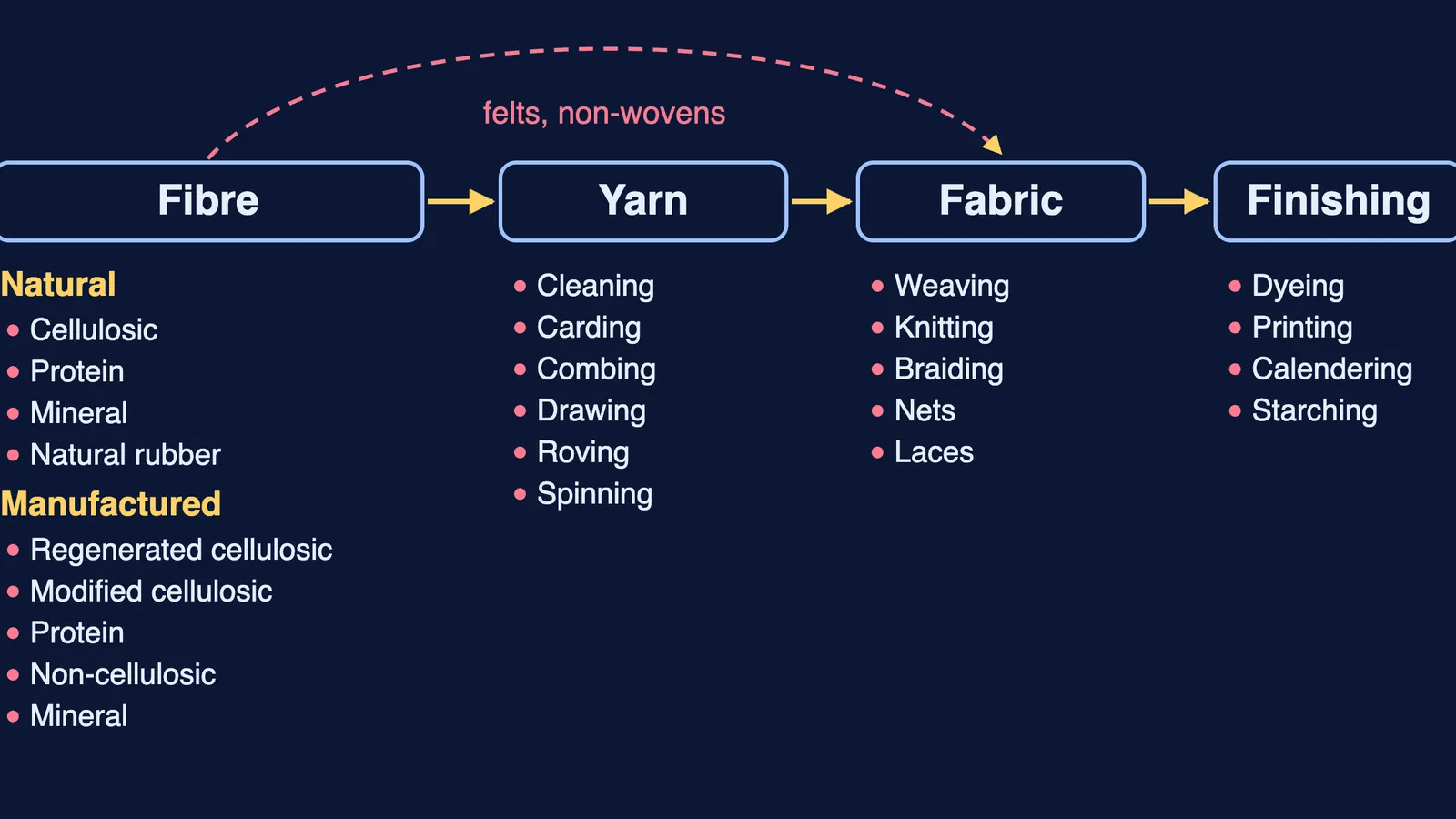
(3 marks) Ravi manages a 300-room hotel. Name three finishing steps his laundry must get right, and say why.
(4 marks) Compare the two circulation systems in driers on air temperature, air speed, and humidity of exhaust air.
(5 marks, 2 + 3) I. State two kinds of knowledge a laundry career needs. II. Explain three ways a hospital laundry's priorities differ from a hotel laundry's.
Answers: 1 (c). 2: rinse water filled and drained each cycle; frequent operator steps between stages.
Where can this chapter lead?
NCERT calls this a technical field needing knowledge of fibres, processes, chemicals and machines. Short laundry management courses, internships and textile degrees lead to laundries in railways, airlines, shipping, hotels and hospitals, or to your own business. See BSc Home Science career options and our Consumer Education and Protection chapter guide.
Not sure where to start tonight? Fermi's AI tutor works out what you already know and builds a plan for the session.