On this page
These ten original items cover Carbon and its Compounds, a chapter in the CBSE 2026-27 Class 10 Science syllabus, and Chapter 4 of the NCERT Class 10 Science textbook. The CBSE Class 10 Science sample paper for 2026-27 uses assertion-reason items with the same four options as below. For how the whole paper is built, see our CBSE Class 10 Science paper strategy.
How do you answer assertion-reason questions?
Work in three steps:
Is the Assertion true on its own?
Is the Reason true on its own?
Only if both are true: does NCERT give R as the cause of A?
Our assertion-reason strategy post has more step 3 examples.
Keys for Q1 to Q6:
(A) Both A and R are true and R is the correct explanation of A.
(B) Both A and R are true but R is NOT the correct explanation of A.
(C) A is true but R is false.
(D) A is false but R is true.
Keys for Q7 to Q10:
(A) Both statements are correct.
(B) Both statements are incorrect.
(C) Statement I is correct, Statement II is incorrect.
(D) Statement I is incorrect, Statement II is correct.
Assertion-reason questions on Carbon and its Compounds
Answer facts come from NCERT Class 10 Science, Chapter 4.
Q1 (easy). Assertion (A): Methane has a low melting point and a low boiling point. Reason (R): In covalent compounds, the forces between molecules are weak.
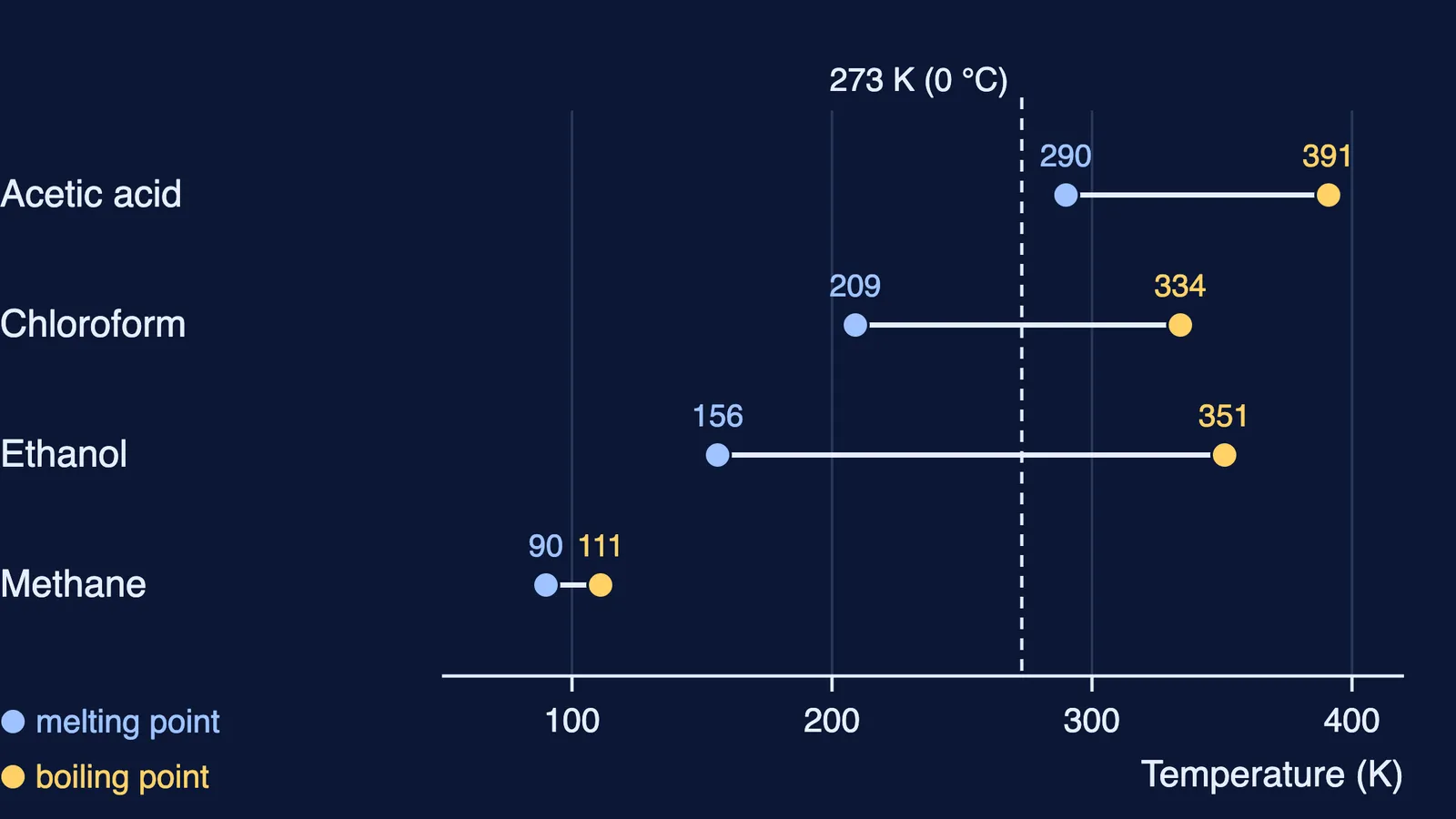
Answer: (A). Both are true. NCERT Table 4.1 gives methane a melting point of 90 K and a boiling point of 111 K, and the chapter says weak intermolecular forces cause the low values.
Trap: thinking strong covalent bonds inside the molecule must mean a high boiling point.
Q2 (easy). Assertion (A): Graphite is a very good conductor of electricity, unlike most non-metals. Reason (R): Diamond and graphite have the same chemical properties.
Answer: (B). Both are true, but R is about chemical properties, and conduction is a physical property. NCERT links the different physical properties of diamond and graphite to how their carbon atoms are bonded.
Trap: picking (A) because both lines compare the two allotropes.
Q3 (medium). Assertion (A): A saturated hydrocarbon always burns with a clean blue flame, whatever the air supply. Reason (R): When the air supply is limited, even saturated hydrocarbons burn incompletely and give a sooty flame.
Answer: (D). A is false because of the word "always". R is true, and it is exactly why A fails.
Trap: remembering "saturated means clean flame" and ignoring the air supply.
Q4 (medium). Assertion (A): Vegetable oils can be hydrogenated using a nickel catalyst. Reason (R): Vegetable oils generally have long saturated carbon chains.
Answer: (C). A is true. R is false: NCERT says vegetable oils generally have long unsaturated chains, while animal fats have saturated chains.
Trap: mixing up which of oils and fats is saturated.
Q5 (hard). Assertion (A): Methane reacts with chlorine in sunlight by an addition reaction. Reason (R): In sunlight, chlorine can replace the hydrogen atoms of methane one by one.
Answer: (D). A is false: the reaction CH4 + Cl2 → CH3Cl + HCl is a substitution reaction, because one atom takes the place of another. R is true.
Trap: the textbook says chlorine "is added" to hydrocarbons in sunlight, but it names the reaction substitution.
Q6 (hard). Assertion (A): The bonds carbon forms with most other elements are very strong, so its compounds are very stable. Reason (R): Carbon is a small atom, so its nucleus holds the shared pairs of electrons strongly.
Answer: (A). Both are true, and NCERT gives carbon's small size as a reason for these strong bonds.
Trap: choosing (B) because you expected catenation or tetravalency as the reason.
Statement I and Statement II questions on Carbon and its Compounds
Judge each statement on its own against NCERT Chapter 4; there is no "because" step.
Q7 (easy). Statement I: Ethanol is soluble in water in all proportions. Statement II: Pure ethanoic acid melts at 290 K, so it often freezes in cold winters.
Answer: (A). Both are correct. The freezing is where the name glacial acetic acid comes from.
Trap: assuming nothing freezes above 273 K (0 °C); pure ethanoic acid freezes at 290 K, about 17 °C.
Q8 (medium). Statement I: Heating ethanol at 443 K with excess concentrated sulphuric acid gives ethene. Statement II: In this reaction, concentrated sulphuric acid adds oxygen to ethanol, so it acts as an oxidising agent.
Answer: (C). Statement I is correct. Statement II is incorrect: ethene contains no oxygen. The acid acts as a dehydrating agent, removing water from ethanol; oxidising agents add oxygen instead.
Trap: calling every reagent that changes ethanol an oxidising agent.
Q9 (medium). Statement I: Warming an ester with sodium hydroxide gives back the carboxylic acid and the alcohol. Statement II: Soaps are sodium or potassium salts of long-chain carboxylic acids.
Answer: (D). Statement I is incorrect: saponification gives the alcohol and the sodium salt of the acid, not the free acid. Statement II is correct.
Trap: treating saponification as esterification run backwards.
Q10 (hard). Statement I: Cyclohexane, C6H12, is unsaturated because its formula fits CnH2n, the general formula of alkenes. Statement II: A molecule of butane, C4H10, has 14 covalent bonds.
Answer: (B). Both are incorrect. Cyclohexane has only single bonds in its ring, so it is saturated even though its formula fits CnH2n. Butane has 3 C–C bonds and 10 C–H bonds, so 13 covalent bonds; 14 is the number of atoms.
Trap: judging saturation from the formula instead of the structure, and counting atoms instead of bonds.
How should you use this set?
Cover the answers and write your key for all ten, with one line on why.
Wrong on whether a statement is true? Reread that NCERT section. Wrong only between (A) and (B)? Find the textbook's own reason.
Note the traps you fell for; many hinge on one word, such as "always" or "added".
Moving to PCM in Class 11? This chapter grows into Hydrocarbons in Class 11 chemistry.
If a trap shows a concept gap, such as what makes a compound saturated, the Fermi Concept Library has a lesson for every concept in chemistry, each with its place in the map.