On this page
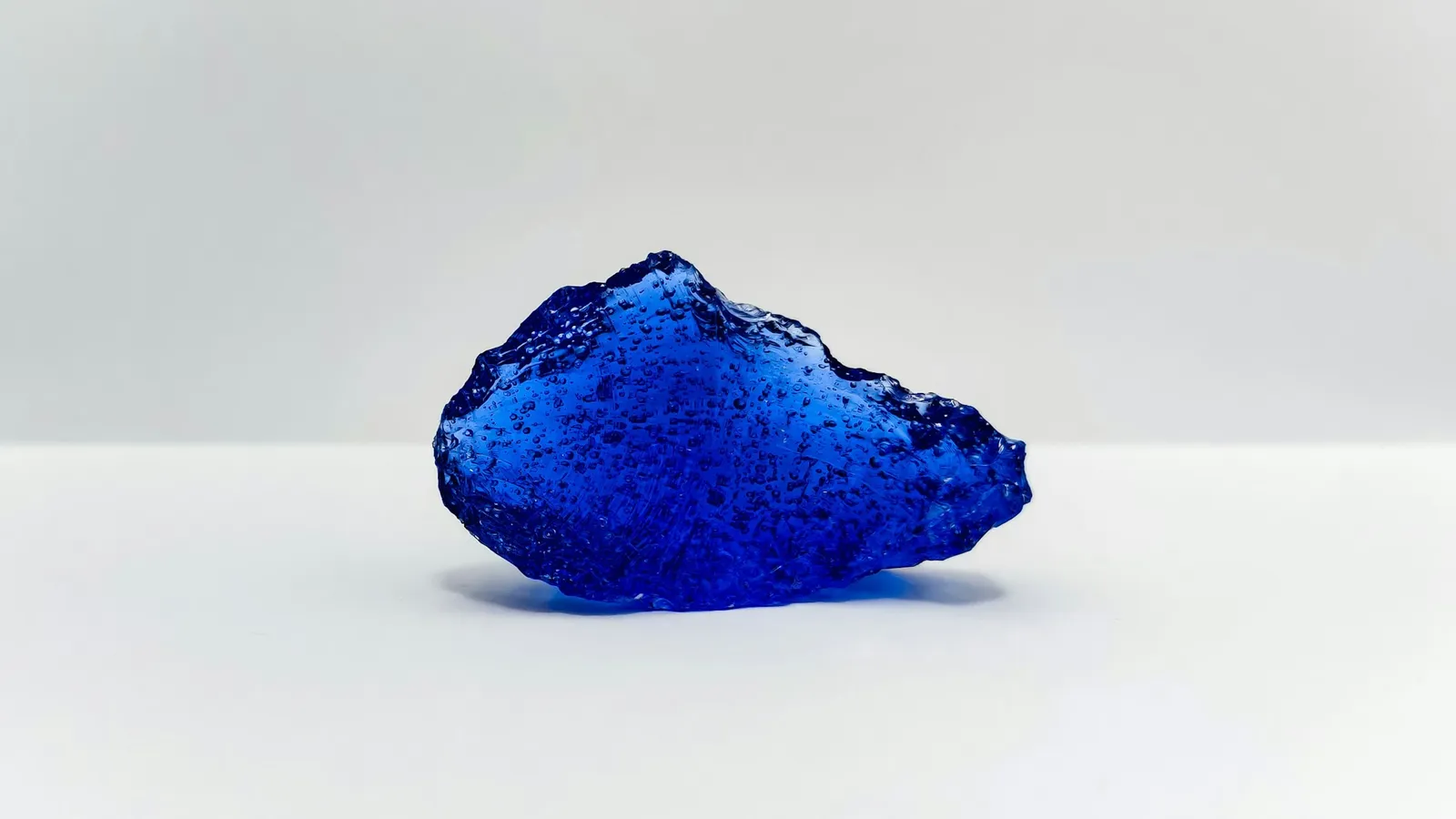
Glassmakers were making blue glass for more than 3,000 years before anyone knew which element made it blue. The oldest cobalt-coloured glass comes from Egypt's eighteenth dynasty (1550–1292 BC). The metal behind that colour got its scientific identity only in the 1730s, in a Swedish laboratory.
Who discovered cobalt?
Georg Brandt was a Swedish chemist, born on 26 June 1694 in Riddarhyttan and died in Stockholm on 29 April 1768. According to the Linda Hall Library, around 1735 Brandt separated cobalt from bismuth and proved that the blue colour came from cobalt. That made him the first person since prehistory to identify a new metal. Until then only the seven classical metals were known, plus four semi-metals: zinc, bismuth, antimony and arsenic.
Why did people blame bismuth? Cobalt and bismuth often occurred together, so the better-known metal got the credit. In writing from around 1741, Brandt set out how cobalt differs from bismuth and called it a new "half-metal".
Where does the name cobalt come from?
The word goes back to German silver miners in the 1500s and an ore that caused trouble when they smelted it. Cobalt ores usually contain arsenic, and smelting turned that arsenic into a highly toxic, volatile oxide. The ill effects were blamed on kobolds, the goblins of German folklore, and the ore and later the metal took the name. WebElements gives the root as the German *kobald*, "goblin" or evil spirit. Some sources suggest the Greek *kobalos*, "sprite", instead.
So element 27 is named after a time when nobody understood the chemistry and a poisonous ore really did seem cursed.
Why is cobalt glass blue?
You see the light a material does not absorb.
In cobalt-blue glass, cobalt sits as Co²⁺ surrounded by four oxygen atoms (tetrahedral coordination). A 2016 study in Scientific Reports by Meulebroeck and colleagues describes three absorption bands close to 535 nm, 596 nm and 640 nm, which come from Co²⁺ held by four oxygens in this way. Those wavelengths are green, yellow and orange-red. Take them out of white light and mostly blue gets through.
The same team used these bands, with other glass signatures, to show that two stained-glass panels thought to be 14th-century were most probably made in the second half of the 19th century. For other metals, see how glass bangles get their colours from metals and light.
Why are some cobalt complexes blue and others pink?
The same Co²⁺ ion can look pink or blue. It depends on which ligands surround it and in what shape. Doc Brown's spectra notes give the figures:
[Co(H₂O)₆]²⁺ is octahedral and pink. Its absorption peaks near 540 nm and is weak.
[CoCl₄]²⁻ is tetrahedral and deep blue. Its absorption peaks near 720 nm and is strong, across the yellow-to-red region.
The two are linked by an equilibrium: [Co(H₂O)₆]²⁺ + 4Cl⁻ ⇌ [CoCl₄]²⁻ + 6H₂O. Adding hydrochloric acid pushes it to the blue side.
Worked example: predict the colour in four steps. You add concentrated HCl to a pink cobalt(II) solution. What happens, and why?
Find the oxidation state. Cobalt stays +2, so this is not a redox change.
Count the ligands and name the shape. Six waters make an octahedron. Four chlorides make a tetrahedron.
Ask where the absorption sits. In crystal field theory, a tetrahedral field splits the d levels by only about 4/9 as much as an octahedral one, and chloride comes before water in the spectrochemical series (it is a weaker-field ligand). Both lower the energy gap, so the absorption moves to longer wavelengths (around 720 nm, red).
Read off what you see. Red and yellow are removed, so the solution looks blue. Add water and Le Chatelier's principle sends it back to pink.
These four steps work for most "why is this complex coloured" questions. Step 3 depends on ligand order, so revise the spectrochemical series and how to use it. Cobalt blue also appears in salt analysis: the cobalt nitrate test gives blue for aluminium and green for zinc.
If crystal field splitting still feels like a list of rules, the Fermi Concept Library gives each concept its own lesson and its place in the map. To practise, the Fermi Problem Library has worked problems with a step-by-step solver that explains the reasoning rather than printing an answer.
Next time you see a cobalt-blue bottle, you can name the chemist, the goblin and the three wavelengths it takes out of the light.