On this page
Unit 10 rewards students who can separate similar terms: warming up from limbering down, skill from technique, strategy from tactics.
What does Unit 10 cover in 2026-27?
The CBSE Physical Education (048) curriculum for 2026-27 gives Unit 10, Training & Doping in Sports, 07 of the 70 theory marks (practical 30, total 100) and lists five topics:
Concept and principles of sports training
Training load: overload, adaptation and recovery
Warming-up and limbering down: types, method and importance
Concept of skill, technique, tactics and strategies
Concept of doping and its disadvantages
The prescribed book is CBSE's own Physical Education Class XI textbook, whose Unit 10 follows these topics.
What are the principles of sports training?
The textbook treats sports training as a planned, scientific process preparing a player for competition. Its ten principles, one line each:
Continuity: train regularly; long breaks let fitness fall.
Progression and overload: raise load carefully; constant excess lowers performance.
Specificity: general fitness first, then more sport-specific work.
Uniformity: start together, then adjust for sex, age, psychology and training level.
Periodisation: plan in cycles, ending each with recovery.
Warming up and limbering down: before and after every session.
Active participation: the player is ready and involved.
Variety: change exercises, timing, group or setting.
Ensuring result: needs all the other principles applied.
Rest and recovery: the body rebuilds during rest.
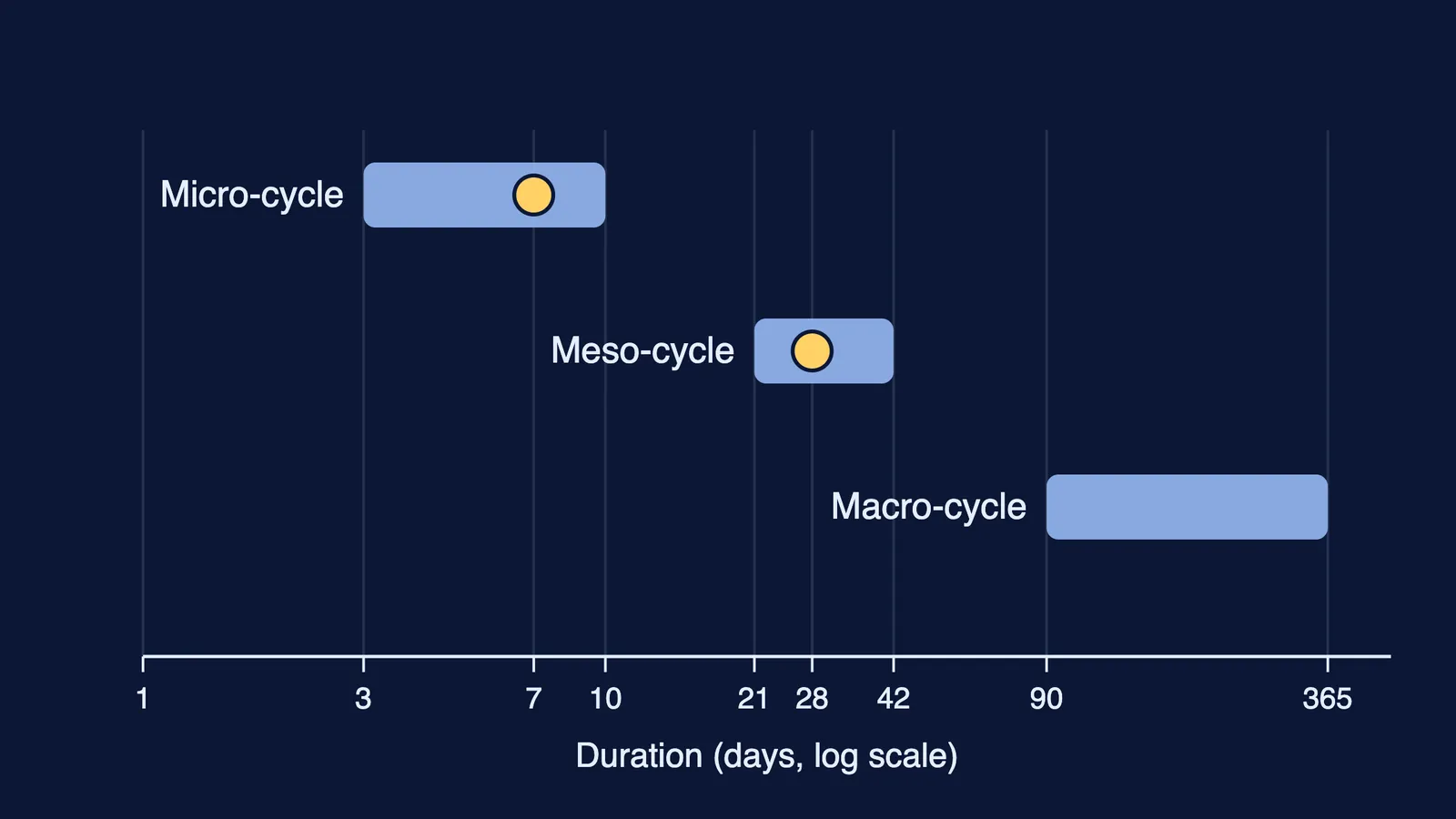
Textbook cycle lengths: micro-cycle three to ten days, meso-cycle three to six weeks, macro-cycle three months to one year (plotted above).
How do overload, adaptation and recovery fit together?
In the textbook, load is outer load (intensity, volume, the exercise) and inner load (the body's response). Overload is a load too high or badly managed, leading to poorer performance, injury or illness. Its causes are grouped as faulty training method, life, social and health factors; its symptoms as psychological, performance and somatic-functional.
Adaptation, the body adjusting to repeated load, needs load matched to capacity, recovery in proportion to load, and load-recovery cycles repeated for 10 to 20 days. Recovery has three stages: during activity; from the session's end until the body is back to normal (minutes to 2 to 3 hours); and rebuilding, over hours to several days.
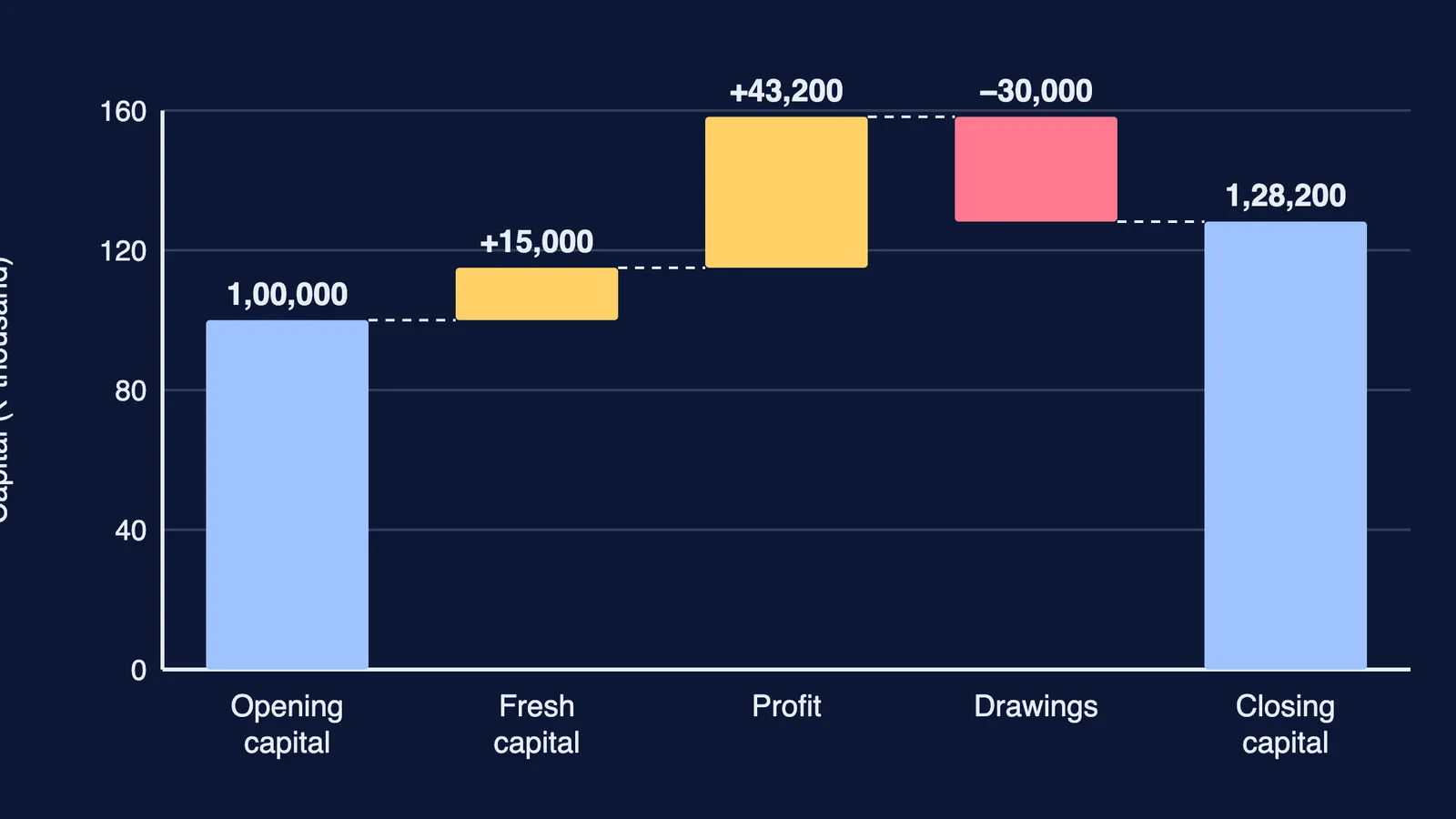
We invented these figures to show how the cycles nest, not as a training plan or health advice; real loads come from your PE teacher or coach. Check: (9 − 8) ÷ 8 = 0.125, (10 − 9) ÷ 9 ≈ 0.111, 7 ÷ 10 = 0.70.
What is the difference between warming up and limbering down?
The textbook separates passive warming up (external heat such as massage or warm drinks) from active warming up, which takes 10 to 30 minutes and is general (jogging, stretching, striding) or specific (sport skills, such as lay-ups). Benefits include lower anxiety, injury prevention, flexibility and higher muscle temperature.
Limbering down (cooling down) brings the body gradually back towards rest with a slow jog or walk and static stretches. The book lists six benefits, including steadying heart rate, lowering body temperature, preventing injury and reducing lactic acid build-up.
How are skill, technique, tactics and strategy different?
In football, skill is a learned ability you perform reliably, such as shooting. Technique is the scientific way of doing it, such as striking with the laces. Strategy is the overall plan made beforehand, often from a SWOT analysis. Tactics carry out that plan during play, such as switching play to a slow defender's wing. The textbook warns against using strategy and tactics interchangeably.
What should you know about doping, and how can you practise Unit 10?
The textbook describes doping as taking banned drugs or using banned methods to boost training and competition results. It also lists the eight anti-doping rule violations in Articles 2.1 to 2.8 of the WADA Code, so refusing a sample, tampering, possession and trafficking also count. Substance classes, side effects and testing are in our Class 11 guide to doping types and side effects. See also changing trends and careers in physical education for Unit 1.
Practice questions (our suggested marks):
A season plan runs from June to February in four-week blocks, each split into six-day blocks. Name each cycle and check its length against the textbook range. (3 marks)
After a sudden jump in training, a swimmer sleeps badly and makes more errors. Name the condition and give two causes. (3 marks)
A kabaddi team has 20 minutes before a match. Plan one general and one specific warm-up activity, and say which comes first. (3 marks)
Before a hockey final, a coach plans to defend deep and counter-attack; at 1-0 up she moves a forward back. Identify the strategy and the tactic. (2 marks)
After a hard 800 m session, one athlete sits down at once; another walks, then stretches. Using the benefits of limbering down, explain who is better placed. (4 marks)
Unsure where to start on Unit 10? Fermi's AI tutor works out what you already know and builds a plan for the session.