

On this page
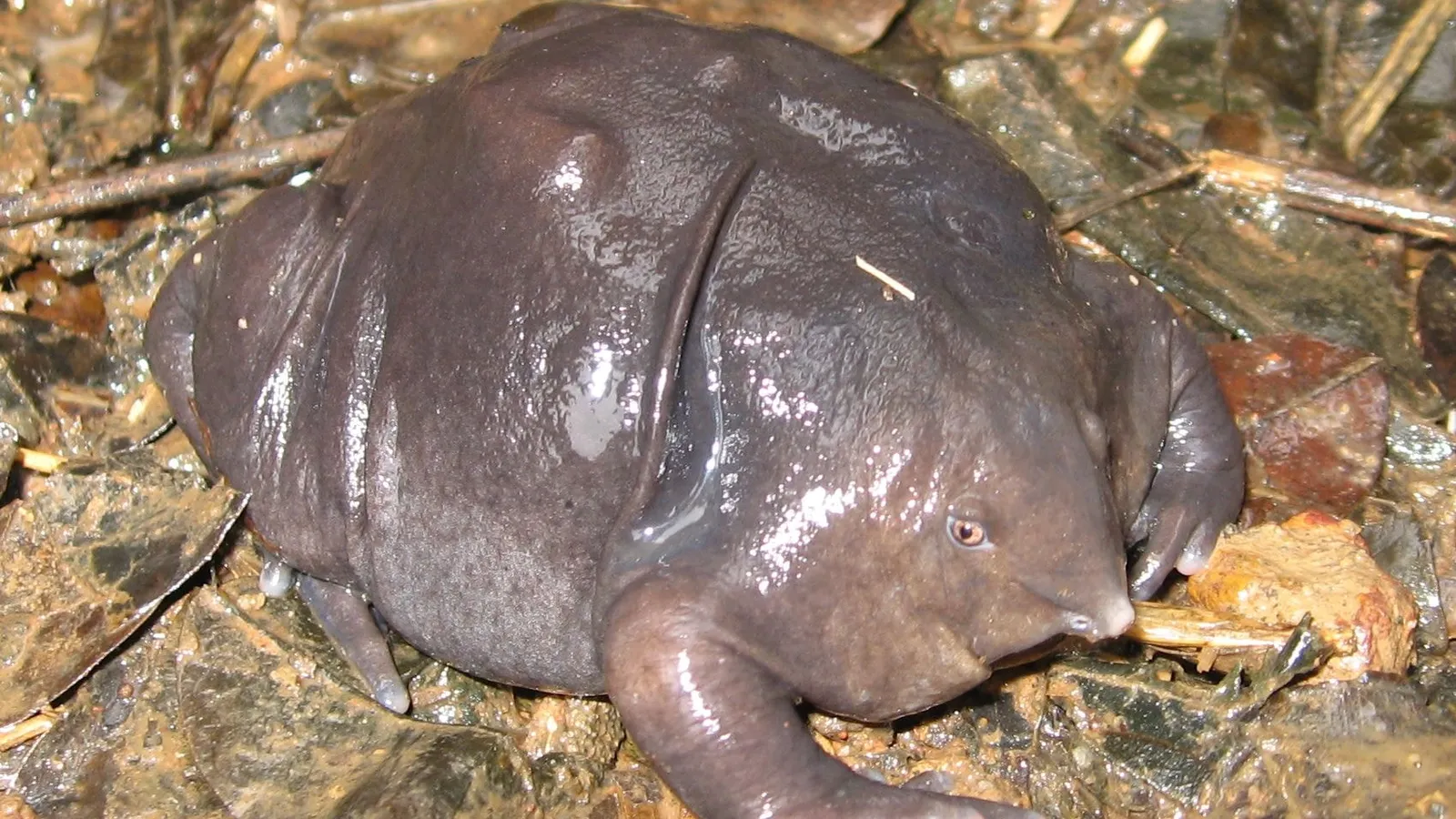
The purple frog, *Nasikabatrachus sahyadrensis*, is a plump, dark frog with a pointed snout from the Western Ghats. It was described only in 2003, in a new family of its own, by S. D. Biju and Franky Bossuyt in Nature.
Why does the purple frog live underground?
The best-supported answer is food. The purple frog spends much of its life underground and comes out for only a few days each year, at the start of the monsoon, to breed, according to the EDGE of Existence programme. The same page notes that adults feed on small invertebrates, mainly termites.
A detailed account of how this works comes from a 2007 study in Current Science by C. Radhakrishnan, K. C. Gopi and Muhamed Jafer Palot of the Zoological Survey of India. One frog brought to them had been dug out of its burrow about 3 feet below the ground in a rubber plantation in Malappuram, Kerala. Plantation workers said they find the frog while cutting trenches during the monsoon, June to October.
The researchers point out that termites may help the frog in a second way. Their tunnels and mounds let rainwater soak in and let air into the soil, which keeps the ground below cool and moist. The authors suggest this might indirectly benefit the frog.
How does the purple frog eat termites underground?
Most frogs have a wide mouth and flip their tongue out at prey. The purple frog cannot. The 2007 study describes its feeding kit:
A hard, knobbed snout with a calloused tip, which the authors suggest lets it push into termite tunnels.
A small mouth on the underside of the head with a narrow gape.
A flexible, flap-like lower jaw that meets the rigid upper jaw to form a grooved opening.
A small fluted tongue, attached at the back, which comes out through that groove to pick termites out of cracks and tunnels.
In the lab, the team kept one frog in damp soil for five months, July to November 2005. It never came out, not even at night to feed. It ignored earthworms but thrived on termites, and its gut later held half-digested termites. With its small eyes, it probably relies more on smell and touch to find prey, the authors suggest.
For the termites' side of the monsoon, read why winged termites swarm around lights after the first rain.
When does the purple frog come out of the ground?
Mainly to breed. Adults come up as the rainy season begins and breed in mountain streams, according to a 2016 PLoS ONE study of the frog's skeleton by Gayani Senevirathne and colleagues. Eggs are laid in small, shaded rock pools in the beds of fast streams, EDGE notes, and tadpoles take about 100 days to become frogs.
The tadpoles have a large sucker on the underside of the mouth and use it to cling to rocks in rushing water. The 2016 study found they start digging before metamorphosis is finished, while the last of the tail is still being absorbed. Then they go underground.
What body adaptations help the purple frog dig?
From the 2007 Zoological Survey of India study:
Short hind limbs. The frog does not leap, unlike most frogs.
Spade-like feet. Each hind foot has a large, crescent-shaped bump called the inner metatarsal tubercle. The frog uses it to scrape soil outward and backward.
Hard palms. The forelimbs press the body down into the hole it is digging.
A plump, compact body. At rest it lies flat with its limbs tucked in.
Small eyes and a touch-sensitive snout. It seems to rely more on touch and smell than sight.
In loose, damp soil the frog dug itself out of sight in 3 to 5 minutes. On hard ground it tried hard to burrow, made little progress and moved away.
How do you turn this into an exam answer?
Use a three-step chain: habitat, problem, adaptation. Here is a worked example for "Explain two adaptations of the purple frog to underground life" (3 marks).
Habitat: it lives in damp forest soil and feeds there mainly on termites.
Problem 1, digging: it must move through soil. Adaptation: short hind limbs with spade-like metatarsal tubercles scrape soil backward, and hard palms push the body down.
Problem 2, feeding in tunnels: a small mouth with a narrow gape rules out the usual frog tongue flick. Adaptation: a hard snout pushes into termite tunnels, and a small fluted tongue reaches out through a groove in the jaw.
Try the same chain on why Ichthyophis is a limbless amphibian, not a snake, or on why the Indian bullfrog turns yellow in the monsoon.
If adaptation still feels fuzzy, the Fermi Concept Library covers every biology concept with its own lesson. If you don't know where to begin, Fermi's AI tutor can work out what you already know and build a plan for the session.
Next monsoon, when frogs call near a Ghats stream, one of them may have spent most of the year in the soil, eating termites.


