

On this page
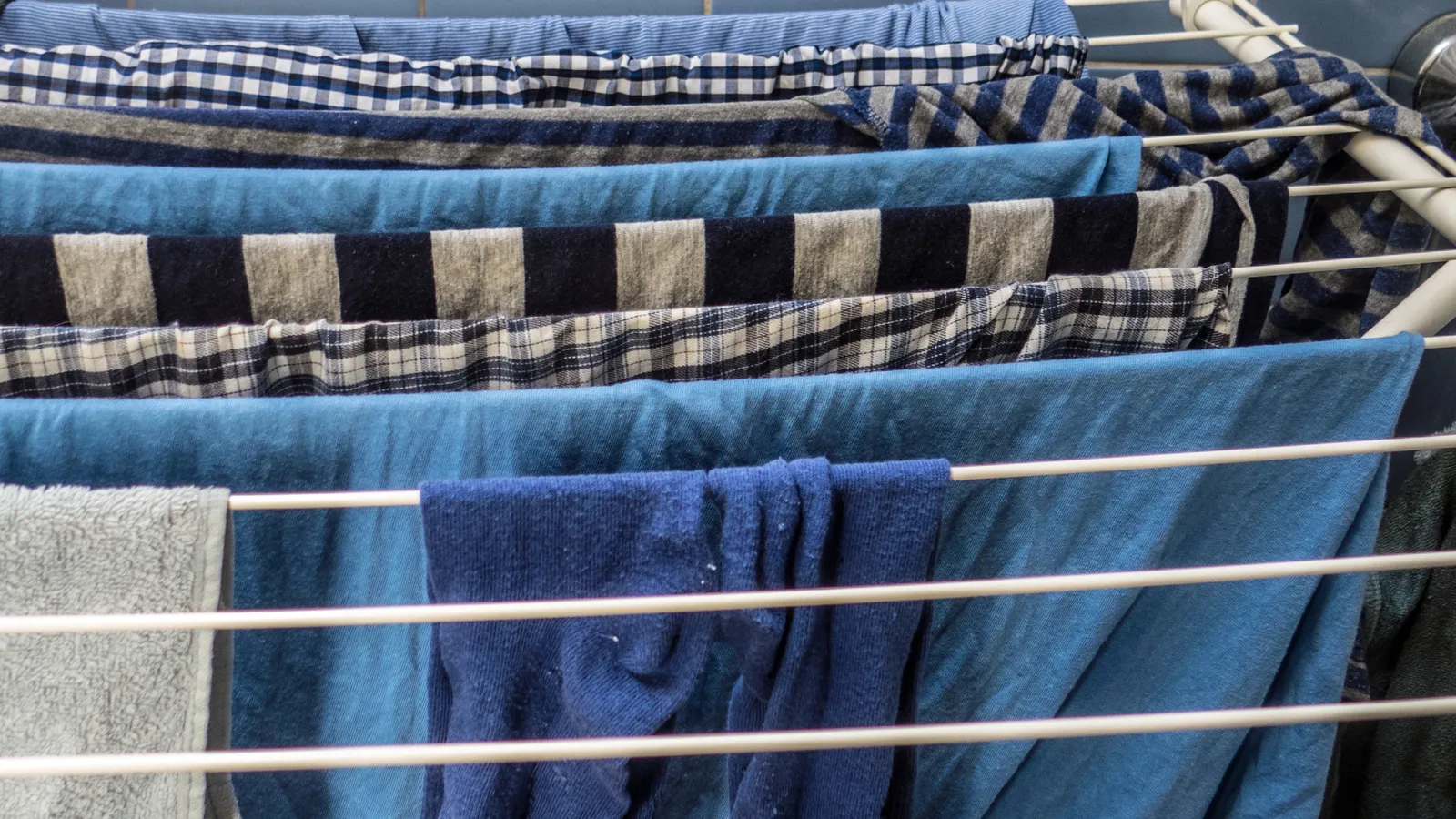
You hang a washed school shirt in the bedroom because it is pouring outside, and when it finally dries it smells sour. The smell comes from bacteria, and the longer fabric stays wet, the longer they have to grow.
Why do clothes smell bad when dried indoors in the monsoon?
In 2012, Japanese researchers studied the smell that people notice when laundry is "hung to dry indoors", which they described as a "wet-and-dirty-dustcloth-like malodor" (Kubota et al., Applied and Environmental Microbiology).
The main compound in that smell had been identified as 4-methyl-3-hexenoic acid (4M3H), and the team found that the bacterium Moraxella osloensis has the potential to generate it in laundry (Kubota et al., 2012).
The same study found that M. osloensis tolerates drying out and UV light well, one possible reason it survives in laundry "during and even after drying".
What are the bacteria feeding on?
Human sebum, the oil your skin makes, is "the major constituent of the organic soil load on textiles", according to a 2020 review (Van Herreweghen et al., Microorganisms). Sweat, sebum and bacterial by-products stick to clothing and can act as the starting material for bad smells, although the review notes that the exact precursors of 4M3H are not yet known. If you want the skin side of this story, see our explainer on why sweat starts to smell after some time.
Detergent does not simply wash away either. The same review notes that detergent compounds and fragrances attach to fibres during the wash. A 2024 review adds that some fungi can use anionic and non-ionic surfactants as nutrients (Osta-Ustarroz et al., Antibiotics). Our guide to anionic, cationic and non-ionic detergents explains what those words mean.
A 2025 study of synthetic T-shirts worn by 31 people found that washing reduced known smelly compounds, but intact bacteria on the fabric went up, with washing-machine microbes displacing skin bacteria (Díez López et al., BMC Biology).
Why does slow drying make the smell worse?
The 2025 BMC Biology study tested two drying conditions directly (Díez López et al., 2025):
Drying at 24.5 °C and 50% relative humidity did not make the washed shirts smell worse, and odour intensity dropped.
Drying at 31.8 °C and 80% relative humidity "strongly increased the malodour" of shirts that had been worn and washed, and bacteria grew on the fabric.
Warm, muggy air like that second condition is common during the monsoon. The authors suggest the difference could be related to "how quickly and well the clothes dry": in dry conditions, water leaves the fabric faster.
The physics is the evaporation you meet in Class 9. Water evaporates more slowly when the air already holds a lot of water vapour, and faster when fresh air keeps moving over the surface, when the wet surface area is larger and when the water is warmer (Evaporation, Wikipedia). We walk through the same factors in why clothes dry faster on a windy day.
How do you dry clothes faster in the monsoon?
Each step works on one of the evaporation factors above.
Before hanging
Hang clothes as soon as the machine finishes. Wet clothes sitting in a closed drum start the damp clock early.
Run the highest spin your fabric allows, so less water is left to evaporate.
Use the detergent dose on the pack, not extra, since detergent compounds can stay attached to the fibres.
Fan and airflow
Put the rack under or in front of a running fan. Moving air carries vapour away from the fabric.
Keep the room door open so humid air does not collect around the rack. Avoid a closed bathroom; its air is already full of vapour.
Spacing
Leave about a hand's width between garments, and never fold one item over another.
Hang shirts on hangers, unfolded, so both sides face the air.
Turn jeans and pockets inside out and put thick items such as towels on the outer rods, where air reaches them first.
Sunlight
When the rain breaks, move everything outside or to a sunny window. The 2020 review advises steady, fast drying, "preferably outdoors and in sunlight", and notes that the UVB in sunlight is known to reduce fungal load (Van Herreweghen et al., 2020).
Do not count on the sun to sterilise. M. osloensis tolerates UV well (Kubota et al., 2012), so think of sunlight mainly as a way to dry clothes faster.
If a dried shirt still smells sour, wash it again rather than spraying perfume over it.
Where does this fit in what you study?
One laundry problem, three subjects: evaporation from physics, fatty acids from chemistry, bacterial growth from biology. If any feel shaky, the Fermi Concept Library has a lesson for every concept in physics, chemistry and biology.
Next rainy wash day, try the fan and spacing steps on one load and smell the difference.


