

On this page
These 15 original questions cover Human Health and Disease, Chapter 7 in NCERT's Class 12 Biology (Reprint 2026-27). The NMC's NEET (UG)-2026 syllabus places it in Unit 8, Biology and Human Welfare. The NEET (UG)-2026 information bulletin gives Biology 90 of the 180 questions, with +4 for a correct answer and −1 for a wrong one.
This is a study summary, not medical advice. Diseases and drugs appear only as NCERT describes them.
Which human health and disease statements are correct?
How to attack this format: mark each statement T or F on its own before you look at the options. Most false ones swap a single word.
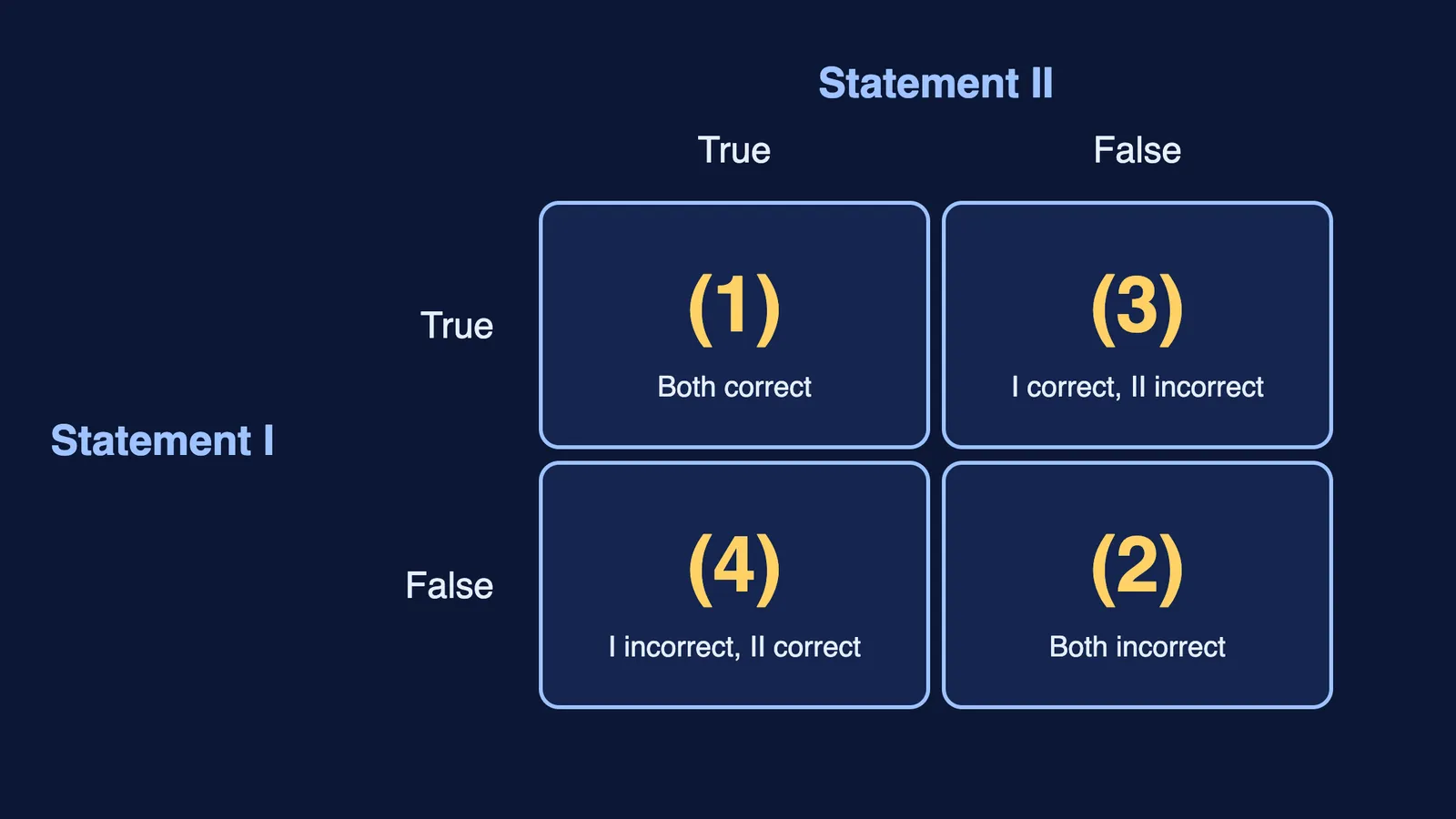
Options for Q1 to Q5: (1) Both correct. (2) Both incorrect. (3) I correct, II incorrect. (4) I incorrect, II correct.
Q1 (easy). Statement I: Rhinoviruses that cause the common cold infect the lungs. Statement II: In pneumonia, the bronchioles fill with mucus.
Answer: (2). NCERT says rhinoviruses spare the lungs, and pneumonia fills the alveoli with fluid.
Q2 (easy). Statement I: Neutrophils and monocytes in blood and macrophages in tissues form a cellular barrier of innate immunity. Statement II: Tears and saliva are physical barriers.
Answer: (3). NCERT groups tears, saliva and stomach acid as physiological barriers.
Q3 (medium). Statement I: Active immunity is quick and gives its full response at once. Statement II: Colostrum carries plenty of IgA, which protects the newborn passively.
Answer: (4). NCERT calls active immunity slow; it takes time to reach full effect.
Q4 (medium). Statement I: Even after tissue and blood group matching, a transplant patient takes immunosuppressants for life. Statement II: The cell-mediated immune response causes graft rejection.
Answer: (1). Both match section 7.2.2; T-lymphocytes mediate CMI.
Q5 (medium). Statement I: Antibodies made against allergens are of the IgE type. Statement II: Allergy symptoms follow the release of histamine from neutrophils.
Answer: (3). NCERT says histamine and serotonin come from mast cells.
Q6 (hard). Which statements about cancer match NCERT? A. X-rays and gamma rays can cause neoplastic transformation by damaging DNA. B. UV, being non-ionising, cannot damage DNA. C. Proto-oncogenes (c-onc) are present in normal cells. D. Chemotherapy drugs have no side effects. E. α-interferon is given as a biological response modifier.
(1) A, C and E only (2) A, B and C only (3) B, D and E only (4) A, C, D and E only
Answer: (1). NCERT says UV also damages DNA, and most drugs cause hair loss or anaemia.
How do you match the lists in this chapter?
How to attack this format: fix the one pair you are surest of and strike out every code that disagrees. A second pair settles any tie.
Q7 (easy). List-I: A. *Salmonella typhi*; B. *Haemophilus influenzae*; C. *Entamoeba histolytica*; D. *Wuchereria malayi*. List-II: I. Amoebiasis; II. Filariasis; III. Typhoid; IV. Pneumonia.
(1) A-III, B-IV, C-I, D-II (2) A-IV, B-III, C-I, D-II (3) A-III, B-IV, C-II, D-I (4) A-I, B-IV, C-III, D-II
Answer: (1). *H. influenzae* and *Streptococcus pneumoniae* are NCERT's two pneumonia bacteria.
Q8 (medium). List-I: A. Bone marrow; B. Lymph nodes; C. Peyer's patches; D. Thymus. List-II: I. Lobed organ beneath the breastbone, very small by puberty; II. Main lymphoid organ, where all blood cells form; III. Trap antigens in lymph and tissue fluid; IV. Secondary lymphoid tissue of the small intestine.
(1) A-I, B-III, C-IV, D-II (2) A-II, B-III, C-IV, D-I (3) A-II, B-IV, C-III, D-I (4) A-III, B-II, C-IV, D-I
Answer: (2). Bone marrow and thymus are primary lymphoid organs; the other two are secondary.
Q9 (medium). List-I: A. Opioids; B. Cannabinoids; C. Nicotine; D. Morphine. List-II: I. Makes the adrenal gland release adrenaline and nor-adrenaline; II. Bind specific receptors in the CNS and gastrointestinal tract; III. Effective sedative and painkiller after surgery; IV. Known for effects on the cardiovascular system.
(1) A-II, B-IV, C-I, D-III (2) A-IV, B-II, C-I, D-III (3) A-II, B-IV, C-III, D-I (4) A-II, B-I, C-IV, D-III
Answer: (1). Morphine is itself an opioid, but NCERT ties the sedative and post-surgery painkiller use to morphine by name.
Q10 (hard). List-I: A. Biopsy; B. CT; C. MRI; D. ELISA. List-II: I. Strong magnetic fields and non-ionising radiation; II. Widely used test for AIDS; III. Stained thin tissue sections under a microscope; IV. X-rays used to build a three-dimensional image.
(1) A-III, B-I, C-IV, D-II (2) A-III, B-IV, C-I, D-II (3) A-II, B-IV, C-I, D-III (4) A-IV, B-III, C-I, D-II
Answer: (2). Only CT uses X-rays.
Which single option is correct?
How to attack this format: answer in your head first, then look for it. For a "NOT" question, mark all four options T or F.
Q11 (easy). Which two diseases does NCERT link to *Aedes* mosquitoes? (1) Malaria and filariasis (2) Dengue and chikungunya (3) Typhoid and amoebiasis (4) Ascariasis and ringworm
Answer: (2). Malaria spreads through female *Anopheles*; filariasis through other female mosquito vectors.
Q12 (medium). Which vaccine does NCERT give as an example made in yeast by recombinant DNA technology? (1) Tetanus antitoxin (2) Hepatitis B vaccine (3) Smallpox vaccine (4) Snake antivenom
Answer: (2). Antitoxin and antivenom are preformed antibodies, which is passive immunisation.
Q13 (medium). Which is NOT a route of HIV transmission in NCERT? (1) Sexual contact (2) Transfusion of contaminated blood (3) Shared infected needles (4) Mere touch or physical contact
Answer: (4). NCERT says HIV spreads only through body fluids.
Q14 (medium). Anxiety, shakiness, nausea and sweating after a regular dose is stopped suddenly describe: (1) Tolerance (2) Addiction (3) Dependence (4) Allergy
Answer: (3). NCERT defines dependence by this withdrawal syndrome.
Q15 (hard). Which effect of anabolic steroid misuse does NCERT list for females but not males? (1) Mood swings (2) Depression (3) Increased aggressiveness (4) Deepening of voice
Answer: (4). The other three appear in both lists.
How should you use this set?
Do all 15 with the answers covered, writing T or F beside each statement.
For every miss, find the NCERT line and note the word you misread.
Redo the misses three days later.
Next, try our assertion-reason set on this chapter. For quick definitions, read the human health and disease key terms; for written answers, see our Class 12 board exam guide to the chapter.
Not sure which part of this chapter to revise first? Fermi's AI tutor works out what you already know and builds a plan for the session.


