

On this page
If you have met "Birds are glorified reptiles" as an assertion-reason question or a short board answer, the idea is simple. Birds evolved from reptilian ancestors, kept several reptile features, and added new ones (the "glorified" part) that let them fly and keep a steady body temperature. Here is the evidence, then how to write it.
Where does the phrase "glorified reptiles" come from?
The idea goes back to the zoologist Thomas Henry Huxley. In an 1867 paper he wrote that birds resemble reptiles so closely in their basic structure that "the phrase 'Birds are greatly modified Reptiles' would hardly be an exaggerated expression of the closeness of that resemblance", as quoted in Thomas Holtz's University of Maryland lecture notes on the origin of birds.
Huxley put birds and reptiles together in one group, the Sauropsida, and listed the features that define it, including a single occipital condyle and an amnion and allantois in the embryo, according to the 1911 Encyclopaedia Britannica entry on Sauropsida. Modern palaeontology goes further: the same Holtz lecture notes explain that birds evolved from theropod dinosaurs, so every bird species is a dinosaur.
The "glorified" part is the set of upgrades. The NCERT Class 11 Biology chapter on the Animal Kingdom describes birds as having feathers, forelimbs modified into wings, a completely four-chambered heart and a constant body temperature (homoiothermous). The same chapter describes reptiles as poikilotherms whose heart is usually three-chambered, though four-chambered in crocodiles.
What reptile features do birds still have?
Scales on the legs. Reptiles are covered by dry, cornified skin with epidermal scales or scutes, and in birds "the hind limbs generally have scales", says the NCERT Animal Kingdom chapter. Look at a hen's feet: the scaly legs are the reptile part.
Shelled eggs laid on land. Both reptiles and birds have internal fertilisation and are oviparous, according to the same NCERT chapter. Their eggs are amniotic: LibreTexts' biology text on amniotes/29:_Vertebrates/29.04:_Reptiles/29.4A:_Characteristics_of_Amniotes) explains that the shell retains water while letting gases through, which freed these animals from needing water to breed.
A single occipital condyle. The occipital condyle is the knob at the back of the skull that sits on the first neck vertebra, the atlas. Reptiles, including dinosaurs and birds, tend to have a single ball-shaped occipital condyle, while mammals have a pair, as palaeontologist Matt Wedel explains on Sauropod Vertebra Picture of the Week.
The same jaw hinge and blood cells. Huxley's list of features that, taken together, set birds and reptiles apart from other classes also includes a lower jaw made of many bones, hinged to the skull by a quadrate bone, and nucleated red blood cells, per the 1911 Britannica Sauropsida entry.
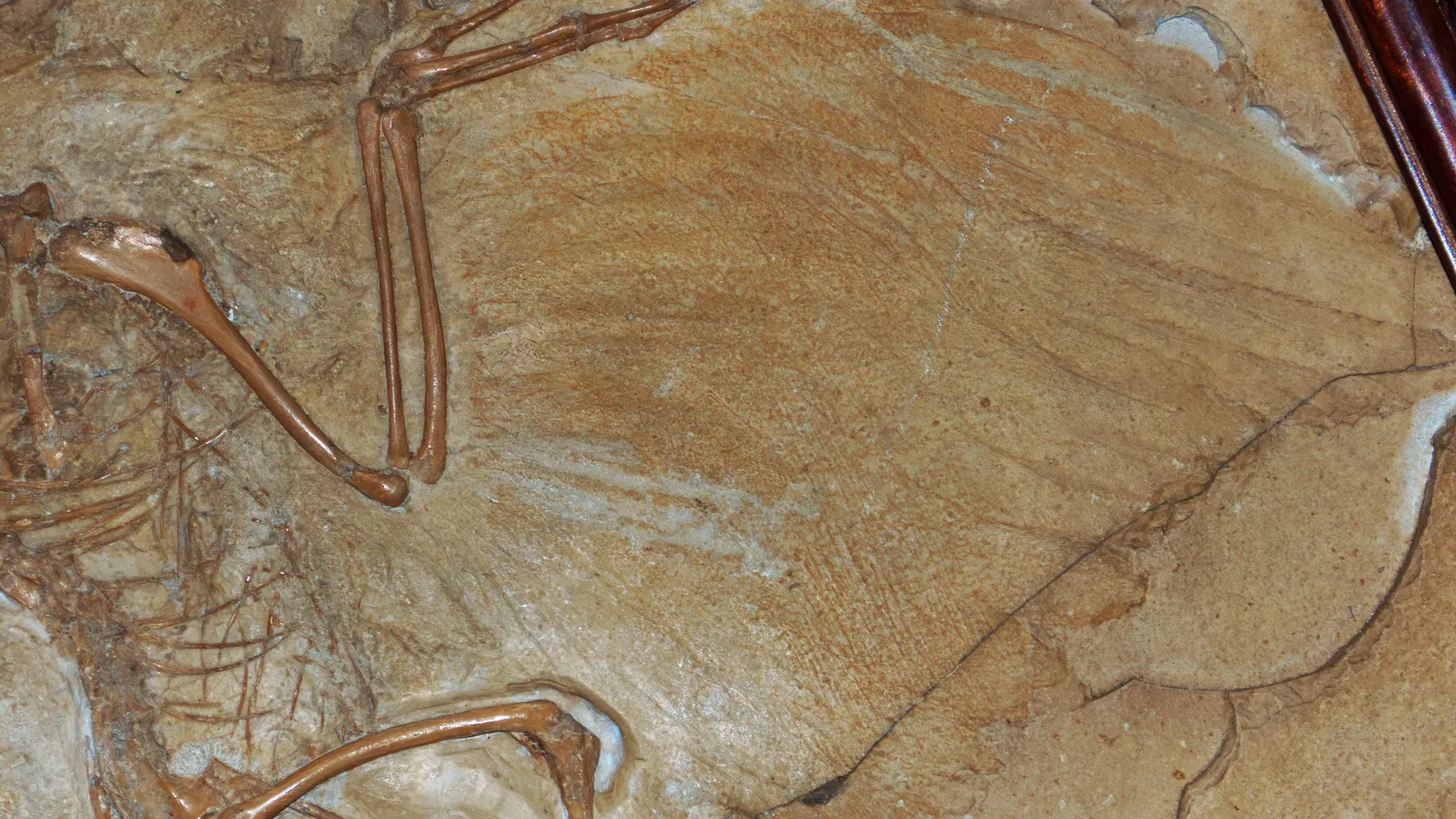
Archaeopteryx, a bird with reptile parts. Archaeopteryx lived in the Late Jurassic, 149 to 145 million years ago, and was found in limestone quarries near Solnhofen in Germany, says the Natural History Museum, London. It had feathered wings but also sharp teeth and a long, bony tail, unlike any modern bird. The first skeleton, found in 1861, showed feathers and a wishbone (furcula), and a specimen found in the 1870s showed separate clawed fingers, per the Holtz lecture notes.
For more on that fossil, read our explainer on Archaeopteryx as the connecting link between reptiles and birds, and for the living examples, see connecting links such as Peripatus, lungfish and platypus.
How do you write "birds are glorified reptiles" in an exam?
Use this five-line plan for a 3- to 5-mark answer:
Meaning: birds evolved from reptilian ancestors and are reptiles with improvements.
Retained features: scales on the legs, shelled eggs with internal fertilisation, a single occipital condyle.
Improvements: feathers, wings, a completely four-chambered heart, warm blood.
Fossil evidence: Archaeopteryx had feathers and a wishbone, plus teeth, clawed fingers and a long bony tail.
Conclusion: birds are best seen as greatly modified reptiles, as Huxley put it.
A worked answer: "Birds are called glorified reptiles because they evolved from reptiles and still show reptilian features: scales on their hind limbs, shelled eggs after internal fertilisation, and a single occipital condyle. They have added feathers, wings, a four-chambered heart and a constant body temperature. Archaeopteryx, a Jurassic fossil with feathers as well as teeth, clawed fingers and a bony tail, links the two groups."
Before you submit, check these three things:
Do not use the heart as a clean reptile-versus-bird difference without the exception: crocodiles also have a four-chambered heart. Our guide to heart chambers in fish, amphibians, reptiles and birds lays out every class.
The occipital condyle is double in amphibians and mammals, per the A Dictionary of Zoology entry on Encyclopedia.com, so a single condyle is what groups birds with reptiles.
Write "reptilian ancestors", not "lizards". Birds did not descend from any living reptile.
If terms like amnion or occipital condyle still feel hazy, the Fermi Concept Library gives each concept in biology its own lesson and shows where it sits in the map. For assertion-reason practice, the Fermi Problem Library has worked problems with a step-by-step solver that explains the reasoning rather than printing an answer.


