

On this page
If you are revising evolution for your exams, Archaeopteryx is a fossil worth knowing well. The question is often short ("Why is Archaeopteryx called a connecting link?"), but a good answer names the right features on each side and draws the right conclusion. Here is what the fossil shows, what scientists have learned recently, and a plan for writing the answer.
What is Archaeopteryx?
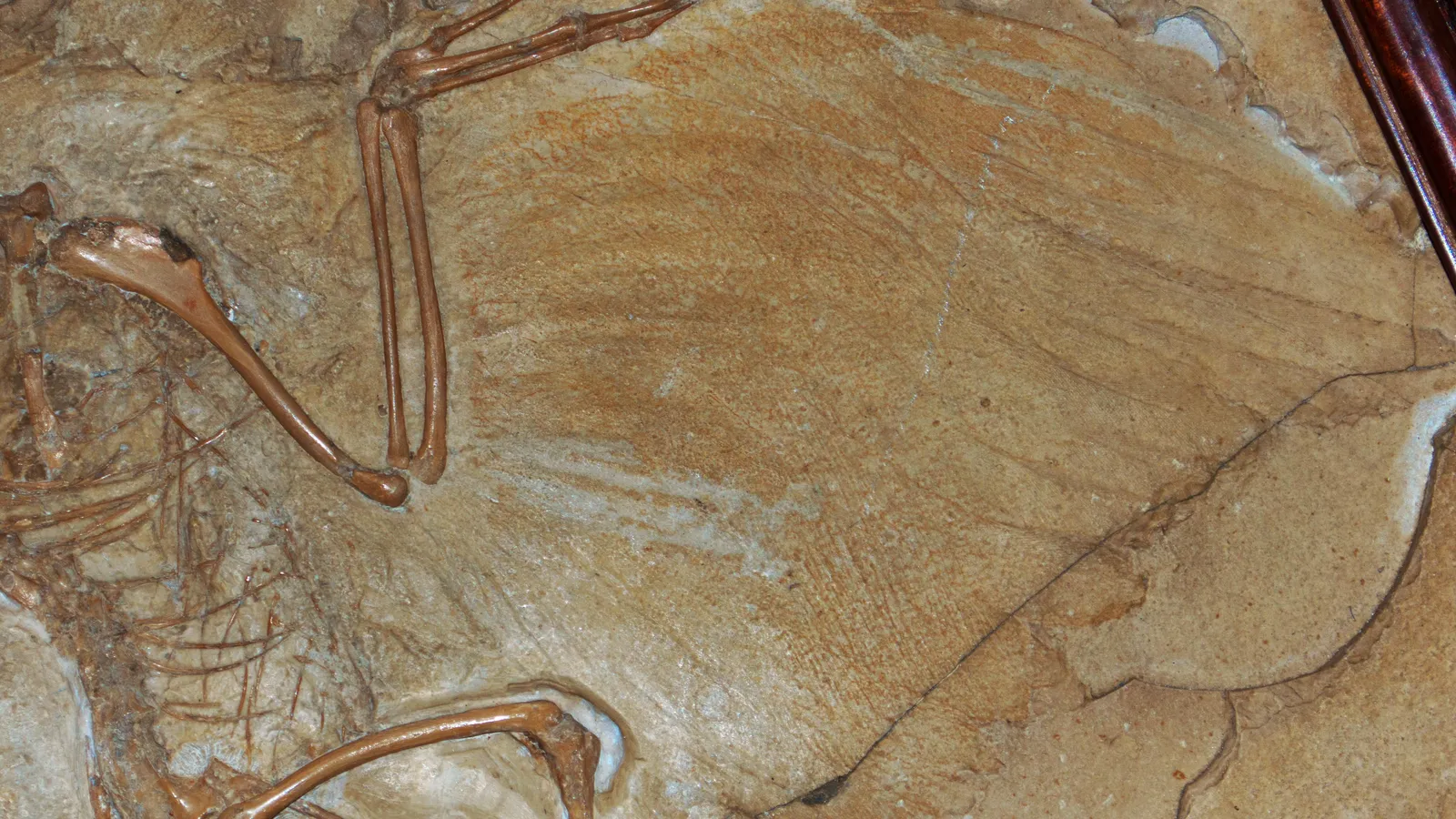
Archaeopteryx lived about 150 million years ago, and its fossils come from the Jurassic Solnhofen limestone of southern Germany, according to the University of California Museum of Paleontology. All known Archaeopteryx fossils originate from limestone deposits near Solnhofen, as Smithsonian Magazine reports.
The most recently described specimen, the "Chicago Archaeopteryx", is the 14th known specimen and the smallest, roughly the size of a pigeon, as reported by the Chinese Academy of Sciences. It was described in Nature in May 2025 by a team led by Jingmai O'Connor and Han Hu.
Why is Archaeopteryx called a connecting link between reptiles and birds?
A connecting link is an organism that shows characters of two different groups, which is what you would expect to find if one group evolved from the other. Archaeopteryx fits because its skeleton and feathers mix the two, as the University of California Museum of Paleontology sets out.
Bird-like features:
feathers
wings
a furcula, or wishbone
reduced fingers
Reptile-like features:
a full set of teeth (the Field Museum describes Archaeopteryx as having fifty tiny teeth)
a long, bony tail
three claws on each wing
a rather flat breastbone and belly ribs (gastralia)
Unlike all living birds, Archaeopteryx had teeth, a long bony tail and clawed wings, yet it also had feathers and wings like modern birds. One animal carrying both sets is the point.
What did Darwin say about Archaeopteryx?
Archaeopteryx was discovered shortly after Darwin published On the Origin of Species, and its discovery "offered strong support for the theory of evolution", says the Chinese Academy of Sciences. Darwin added it to later editions of his book, describing "that strange bird, the Archeopteryx, with a long lizard-like tail, bearing a pair of feathers on each joint, and with its wings furnished with two free claws" (Darwin Online variorum).
Is Archaeopteryx the ancestor of all birds?
Not necessarily, and this is where many answers go wrong. A connecting link shows that two groups are related; it does not have to be the direct parent of the later group.
The evidence now points more precisely to theropod dinosaurs. A nearly complete specimen described in Science in 2005 showed a hyperextendible second toe like those of dromaeosaurs and troodontids, and no fully reversed first toe, which the authors read as further evidence for the theropod ancestry of birds. The Chicago specimen's palate is intermediate between that of troodontids and more derived Cretaceous birds (Chinese Academy of Sciences).
Feathers alone do not make a bird, either. "Archaeopteryx isn't the first dinosaur to have feathers, or the first dinosaur to have 'wings.' But we think it's the earliest known dinosaur that was able to use its feathers to fly," says Jingmai O'Connor, a paleontologist at Chicago's Field Museum and lead author of the Nature paper (Smithsonian Magazine).
How do you write a 5-mark answer on Archaeopteryx?
Use this five-step plan. It fits in a short paragraph.
Define a connecting link in one sentence.
Name the fossil and place it: Archaeopteryx, Jurassic, about 150 million years ago, Germany.
List at least three bird-like features.
List at least three reptile-like features.
Conclude: it is fossil evidence that birds evolved from reptiles (more precisely, from theropod dinosaurs), without being the ancestor of every bird.
A model answer: "A connecting link is an organism with characters of two groups, showing they are related by evolution. Archaeopteryx, a Jurassic fossil from Germany, had feathers, wings and a wishbone like birds, but also teeth, clawed fingers and a long bony tail like reptiles. It therefore suggests that birds evolved from reptiles."
Three common mistakes to avoid:
writing that it had a beak with no teeth
listing feathers as a reptile feature
saying modern birds evolved "from Archaeopteryx"
If the gap is the wider topic, such as how fossils, homologous organs and connecting links fit together as evidence, the Fermi Concept Library covers every concept in biology, each with its own lesson and its place in the map. For worked problems with a step-by-step solver that explains the reasoning, try the Fermi Problem Library.
Next time you revise evolution, write the two lists from memory first, then check them against this page.


