

On this page
Section 4.2.11.6 of the NCERT Class 11 Biology chapter on the Animal Kingdom ends with one line of seven bird examples. It is quick to read, quick to forget, and the raw material for match-the-column, odd-one-out and picture questions. Here are the names, the two flightless birds, memory hooks and a self-test.
What are the seven NCERT bird examples and their common names?
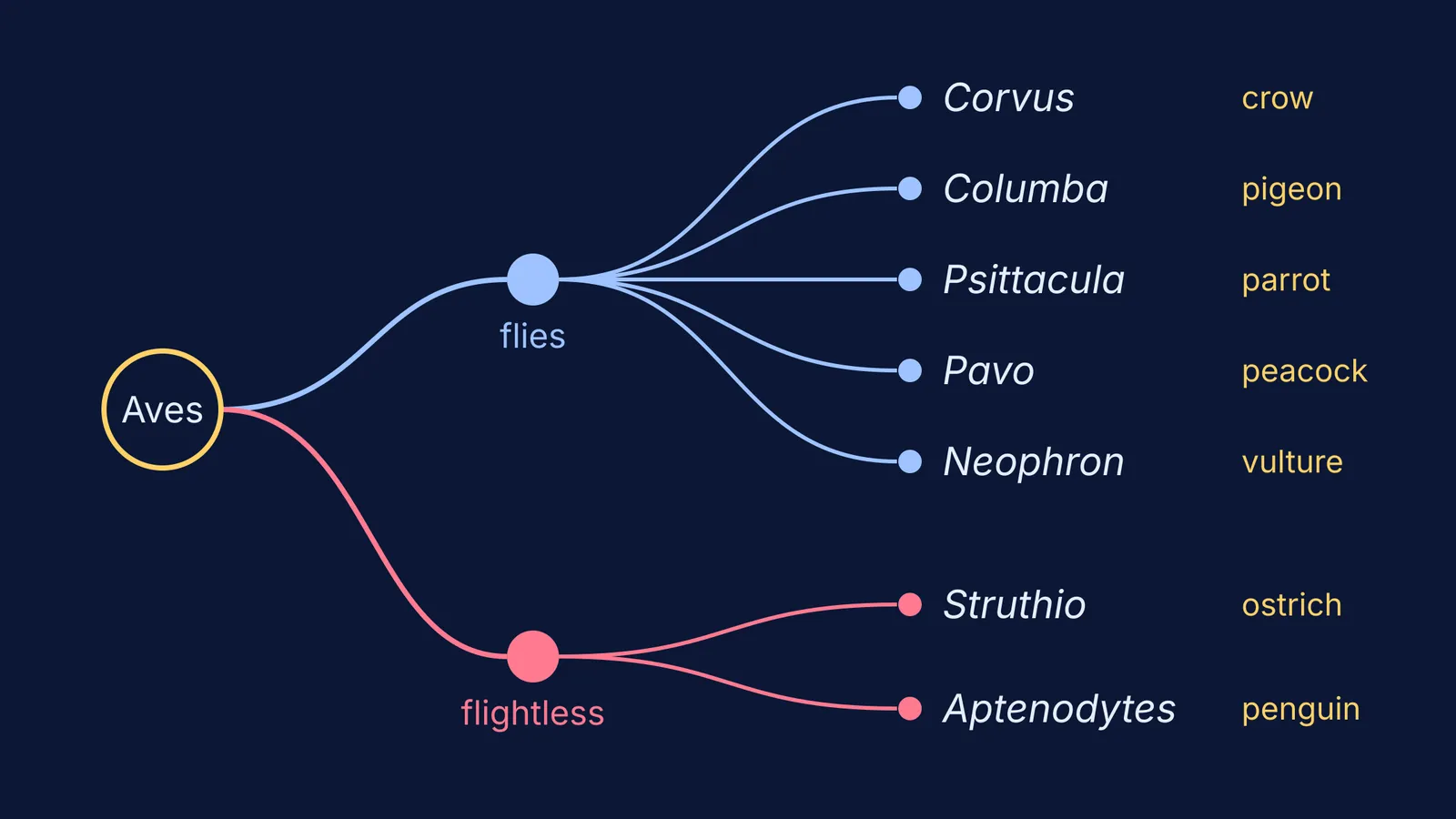
NCERT's examples for Class Aves are *Corvus* (crow), *Columba* (pigeon), *Psittacula* (parrot), *Struthio* (ostrich), *Pavo* (peacock), *Aptenodytes* (penguin) and *Neophron* (vulture), on page 50 of the Animal Kingdom chapter. Each is a genus, the first word of a two-part scientific name, so it starts with a capital letter. One real species per genus helps the name stick:
*Corvus*, crow: the house crow of Indian towns is *Corvus splendens* (house crow).
*Columba*, pigeon: city pigeons descend from domestic forms of the rock dove, *Columba livia* (rock dove).
*Psittacula*, parrot: the rose-ringed parakeet is *Psittacula krameri*, though the IUCN and some other bodies now place it in a new genus, *Alexandrinus* (rose-ringed parakeet). In your exam, write NCERT's *Psittacula*.
*Struthio*, ostrich: the common ostrich is *Struthio camelus* (Smithsonian's National Zoo).
*Pavo*, peacock: the Indian peafowl, *Pavo cristatus*, is India's national bird (Indian peafowl).
*Aptenodytes*, penguin: the genus holds the king and emperor penguins (Aptenodytes).
*Neophron*, vulture: the Egyptian vulture, *Neophron percnopterus*, is the only living species in its genus and is listed as Endangered by the IUCN (Egyptian vulture).
The same NCERT section lists what makes a bird a bird: feathers, a beak, wings in place of forelimbs, an oil gland at the base of the tail as the only skin gland, hollow pneumatic bones, a crop and gizzard, a four-chambered heart, a constant body temperature, and air sacs that supplement the lungs.
Which NCERT birds are flightless?
Two of the seven cannot fly: *Struthio* (ostrich) and *Aptenodytes* (penguin).
NCERT names only one, saying most birds can fly except flightless birds such as the ostrich (NCERT, section 4.2.11.6). The Smithsonian's National Zoo describes ostriches as completely flightless but swift runners. Penguins are flightless birds that propel themselves underwater with their flippers, according to the Australian Antarctic Division. The genus name gives it away: *Aptenodytes* is built from Ancient Greek elements meaning without-wings diver (Aptenodytes).
The trap is *Pavo*. A peacock's long train makes it look grounded, but the Indian peafowl can fly, even though it usually escapes danger by running into undergrowth (Indian peafowl).
How do you remember Corvus, Columba, Psittacula, Pavo and Neophron?
Tie each name to a sound or a picture. These are memory hooks, not word origins, except for *Aptenodytes*.
*Corvus*: caw-vus, the crow's call.
*Columba*: pigeons lined up on a column.
*Psittacula*: psst, the parrot that repeats your secrets.
*Struthio*: an ostrich that struts but never takes off.
*Pavo*: a peacock showing off its train at a pav bhaji stall.
*Aptenodytes*: the real meaning, without-wings diver.
*Neophron*: a neo (new) vulture circling overhead.
Then sort them, as in the diagram above: five fliers (*Corvus*, *Columba*, *Psittacula*, *Pavo*, *Neophron*) and two that walk or swim (*Struthio*, *Aptenodytes*). Odd-one-out questions test the sorting, not just the pairs.
If the names slip because Aves blurs into Reptilia and Mammalia, go back to the class features first. The Fermi Concept Library covers every concept in biology, each with its own lesson and its place in the map, so you can see where Aves sits before drilling the examples again.
Quick self-test: can you match all seven?
Cover the answers and write yours on paper first.
What is the common name of *Neophron*?
Which genus does NCERT give for the parrot?
Which two of the seven are flightless?
Odd one out by flight: *Corvus*, *Columba*, *Struthio*, *Psittacula*.
True or false: *Pavo* is flightless.
Which four genera are drawn in Figure 4.23?
Match *Columba*, *Corvus* and *Pavo* with crow, peacock and pigeon.
According to NCERT, which is the only gland in a bird's skin?
Answers: 1. vulture; 2. *Psittacula*; 3. *Struthio* and *Aptenodytes*; 4. *Struthio*; 5. false, the peafowl can fly; 6. *Neophron*, *Struthio*, *Psittacula*, *Pavo*; 7. *Columba* pigeon, *Corvus* crow, *Pavo* peacock; 8. the oil gland at the base of the tail.
What to do with your score: with 7 or 8 right, move on. With 5 or 6, redo only the misses tomorrow. Below 5, write the seven pairs from memory once a day until you get them all, then retake the test.
For the rest of the chapter, try these 12 NEET questions on Animal Kingdom NCERT examples, the Animal Kingdom exceptions and odd-one-out set and the Animal Kingdom diagram-based questions.


