

On this page
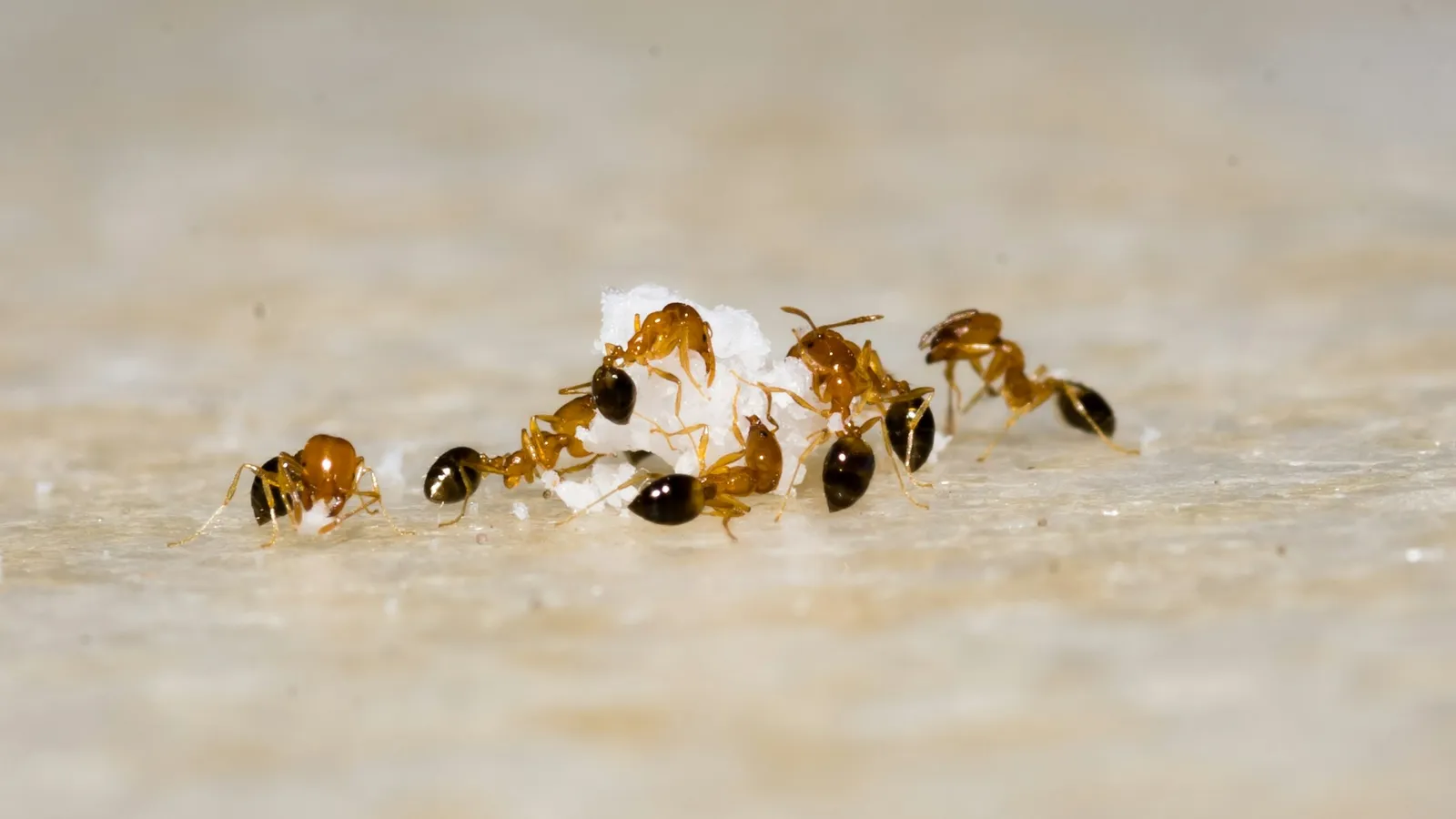
Look closely at a rose bud or hibiscus shoot and you may find a line of ants walking up the stem to a crowd of tiny, soft-bodied insects. The ants are not hunting them. They are farming them, and the deal explains why some garden pests are so hard to shift.
Why do ants protect aphids on plants?
Aphids feed on plant sap and excrete a sweet, nutritious liquid called honeydew, which ants drink (National Geographic).
That makes an aphid colony a food supply worth defending. The University of California's pest guide puts it plainly: to protect their food source, ants ward off many predators and parasites of aphids (UC IPM, Aphids). The best-known of those enemies are ladybird adults and larvae, lacewing larvae and hoverfly larvae, the same insects gardeners count on to eat aphids.
The partnership is not fixed. A review by Bernhard Stadler and Anthony Dixon says ant-aphid interactions range from antagonistic to mutualistic, depending on what each side has to offer relative to the other's needs (Stadler and Dixon, 2005).
How do ants keep aphids from wandering off?
A farmer needs a herd that stays put. Thomas Oliver of Imperial College London and colleagues found that the black garden ant, Lasius niger, leaves chemicals in its footsteps, and aphids that walked on paper where ants had walked moved about 30% more slowly than aphids on untouched paper (National Geographic). Their paper also notes that ants are known to limit winged aphids by removing wings and by chemically interfering with wing development, which keeps aphids at higher local densities and gives the ants more honeydew (Oliver et al., 2007). The authors suggest the slowdown could help or harm the aphids, depending on why aphids disperse in the first place.
Worked example: who gains and who loses?
Try interaction signs on the four players on one stem. Our table of population interaction signs has the full set.
Ant and aphid: both benefit, so mutualism (+, +).
Ladybird and aphid: the ladybird eats the aphid, so predation (+, -).
Aphid and plant: the aphid drinks sap and the plant loses it (+, -).
Ant and plant: no direct contact, yet the plant loses, because ants caring for aphids increase the damage those pests do (UC IPM, Ants).
Point 4 is the one most students miss: a mutualism between two species can hurt a third. For a contrasting case where the partners and the plant all gain, read how figs and fig wasps depend on each other. If these interaction types blur together, the Fermi Concept Library gives every biology concept its own lesson and its place in the map, so you can see where mutualism sits next to predation and parasitism.
What does this mean for pest control?
Because ants shield aphids from their natural enemies, the UC guide calls managing ants a key part of aphid management (UC IPM, Aphids). It suggests a sticky band around the trunk, pruning other ant routes, ground baits and a strong spray of water, and warns that most insecticides also kill the helpful insects.
Field trials show the effect is real but not simple. In greenhouse peppers in southern Spain, excluding ants raised the number of parasitised aphid mummies by 22.2% and cut the number of aphid colonies, though total aphid numbers varied from year to year and were not affected by the ants (Foronda et al., 2026). In a five-year trial in an organic citrus grove, keeping ants out of the tree canopies increased aphids instead. The authors think the barriers also kept out crawling predators such as the European earwig, since aphids were scarcer where earwigs were more common (Piñol et al., 2009).
For the syllabus side, see our guide to biocontrol agents and biofertilisers.
Garden observation checklist
Visit the same plant on three days and take notes.
Find the colony: turn leaves over, since many aphids prefer the underside (UC IPM, Aphids).
Follow the ant trail down the stem and note where it goes.
Watch one ant for two minutes: does it touch aphids with its antennae and drink a droplet?
Count ants and aphids on one shoot each visit.
Look for ladybirds, lacewing larvae or hoverfly larvae, and see what ants do when one comes close.
Look for golden-brown, crusty aphids: these are mummies, aphids parasitised by tiny wasps.
Check leaves below the colony for stickiness or black sooty mould growing on honeydew.
Write one hypothesis, such as: shoots with more ants have fewer ladybirds.
When you turn your notes into an answer, the Fermi Problem Library has worked problems with a step-by-step solver that explains the reasoning rather than printing an answer. Next time you see an ant trail on a stem, follow it.


