On this page
Questions on biocontrol and biofertilisers look easy because the list is short. Marks are lost when a student puts Trichoderma with the biofertilisers, or says Bt kills every insect. This post sorts each microbe by its job and mechanism, works through a sample field calculation and a matching question, and ends with a short routine.
What exactly does the syllabus ask?
The NEET (UG) 2026 syllabus lists microbes in human welfare "in household food processing, industrial production, sewage treatment, energy generation and as biocontrol agents and biofertilizers." The last two are sections 8.5 and 8.6 of NCERT Class 12 Biology, Chapter 8. Check the syllabus for your own exam year when NMC publishes it.
Our chapter map of microbes in human welfare covers the whole chapter. Here we go deeper into the last two sections.
What is biocontrol, and why does NCERT prefer it?
NCERT defines biocontrol as the use of biological methods to control plant diseases and pests. Its argument is that chemical insecticides, pesticides and weedicides are toxic and pollute soil, ground water, fruits and vegetables. The organic farmer, in NCERT's description, does not try to wipe pests out, but keeps them at manageable levels through checks and balances in the ecosystem, because beneficial predators and parasites depend on them.
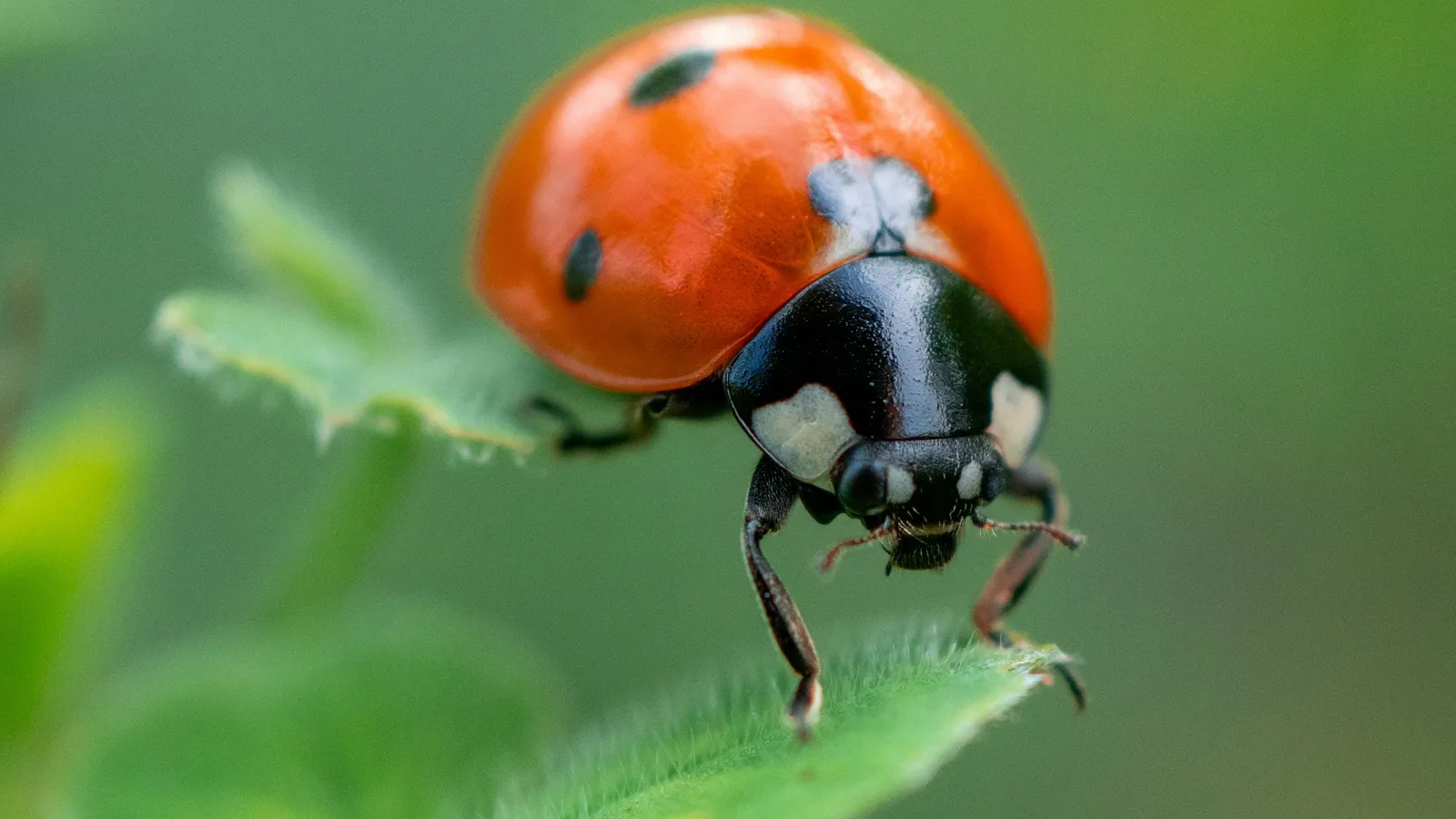
NCERT's insect examples come first: ladybirds against aphids and dragonflies against mosquitoes. Then come three microbes.
How do the three microbial biocontrol agents work?
Bacillus thuringiensis (Bt), a bacterium. Sold as dried spores, mixed with water and sprayed on plants such as brassicas and fruit trees. Insect larvae eat it, the toxin is released in the gut, and the larvae die. NCERT says it kills butterfly caterpillars but leaves other insects unharmed. Chapter 10 adds the mechanism: the toxin exists as an inactive protoxin, the alkaline pH of the insect gut solubilises the crystals and activates it, and the active toxin binds the midgut lining and makes pores that lyse the cells. A review of how Bt Cry and Cyt toxins work describes the same primary action, lysing midgut epithelial cells by forming pores, and notes that members of these toxin families are active against insects of different orders, including Lepidoptera, the butterflies and moths.
Trichoderma, a fungus. Free-living and very common around roots, and effective against several plant pathogens. A review in Nature Reviews Microbiology found that Trichoderma strains colonise roots and trigger the plant's own resistance responses, and are also parasites of other fungi.
Baculoviruses, mostly genus Nucleopolyhedrovirus. Pathogens of insects and other arthropods. NCERT calls them species-specific and narrow spectrum, with no negative effect on plants, mammals, birds, fish or non-target insects, which makes them useful in integrated pest management (IPM).
Which microbes act as biofertilisers?
NCERT defines biofertilisers as organisms that enrich the nutrient quality of the soil, and names bacteria, fungi and cyanobacteria as the main sources.
Rhizobium: symbiotic, in root nodules of legumes; fixes atmospheric nitrogen into organic forms.
Azospirillum and Azotobacter: free-living in soil; fix nitrogen.
Glomus (mycorrhiza): a fungus living with roots; absorbs phosphorus from soil and passes it to the plant. Plants also gain resistance to root-borne pathogens and tolerance to salinity and drought.
Cyanobacteria such as Anabaena, Nostoc and Oscillatoria: autotrophs that fix nitrogen; important in paddy fields, and they add organic matter to soil.
Notice the pattern: every biofertiliser except Glomus is about nitrogen. Glomus is the phosphorus answer.
Worked example 1: reading a field trial
The numbers here are sample numbers for practice, not a real trial.
A farmer counts caterpillars on cabbage in two plots before and a week after spraying Bt in one of them.
Sprayed plot: 60 before, 9 after.
Unsprayed plot: 58 before, 52 after.
Drop in the sprayed plot: (60 − 9) / 60 = 51 / 60 = 0.85, or 85%.
Drop in the unsprayed plot: (58 − 52) / 58 = 6 / 58 ≈ 0.103, or about 10%.
The extra effect of Bt is roughly 85 − 10 = 75 percentage points.
The unsprayed plot matters. Without it you would credit Bt with the 10% fall that happened anyway.
Worked example 2: a matching question
Match the microbe to its role: (a) Glomus, (b) Trichoderma, (c) Azotobacter, (d) Nucleopolyhedrovirus. Roles: (i) narrow-spectrum insect pathogen, (ii) free-living nitrogen fixer, (iii) phosphorus uptake, (iv) control of plant pathogens.
Answer: a-iii, b-iv, c-ii, d-i. Trichoderma is a fungus like Glomus, but its job is biocontrol, not nutrition.
Which mistakes cost marks?
Bt kills all insects. NCERT says it kills caterpillars and leaves other insects unharmed.
Bt toxin is active inside the bacterium. It is an inactive protoxin until the alkaline gut activates it.
Azotobacter is symbiotic. It is free-living; Rhizobium is the symbiotic one.
Mycorrhiza fixes nitrogen. It helps with phosphorus.
Biocontrol means killing every pest. NCERT describes keeping pests at manageable levels.
A practice routine for these two sections
Day 1: make two columns, biocontrol and biofertiliser, and write each organism with its kingdom (bacterium, fungus, virus, cyanobacterium).
Day 2: write the Bt mechanism in four steps, from spray to dead larva.
Day 3: make four matching questions of your own like the one above.
Day 4: connect forward to Bt cotton in the biotechnology applications chapter.
When a term like protoxin or IPM blocks you, the Fermi Concept Library covers every concept in physics, chemistry, biology, mathematics and computing, so you can clear the idea before going back to the list.
Before you sleep, say the two column headings aloud and name every microbe that belongs under each.