

On this page
Air conditioning was not invented to keep people cool. It was invented because damp paper ruined colour printing. The engineer who solved that problem, Willis Carrier, worked out that the real target was the water in the air, not just its temperature. This post covers his story, the physics of humidity and dew point, a worked example on cooling power using latent heat, and what his working habits can teach you.
Who was Willis Carrier?
The National Inventors Hall of Fame records that Willis Haviland Carrier was born on 26 November 1876 near Angola in western New York, graduated from Cornell University with a mechanical engineering degree in 1901, and died on 7 October 1950. His patent "Apparatus for Treating Air", US 808,897, was filed in 1904 and granted on 2 January 1906, assigned to his employer, the Buffalo Forge Company.
What problem was he asked to solve?
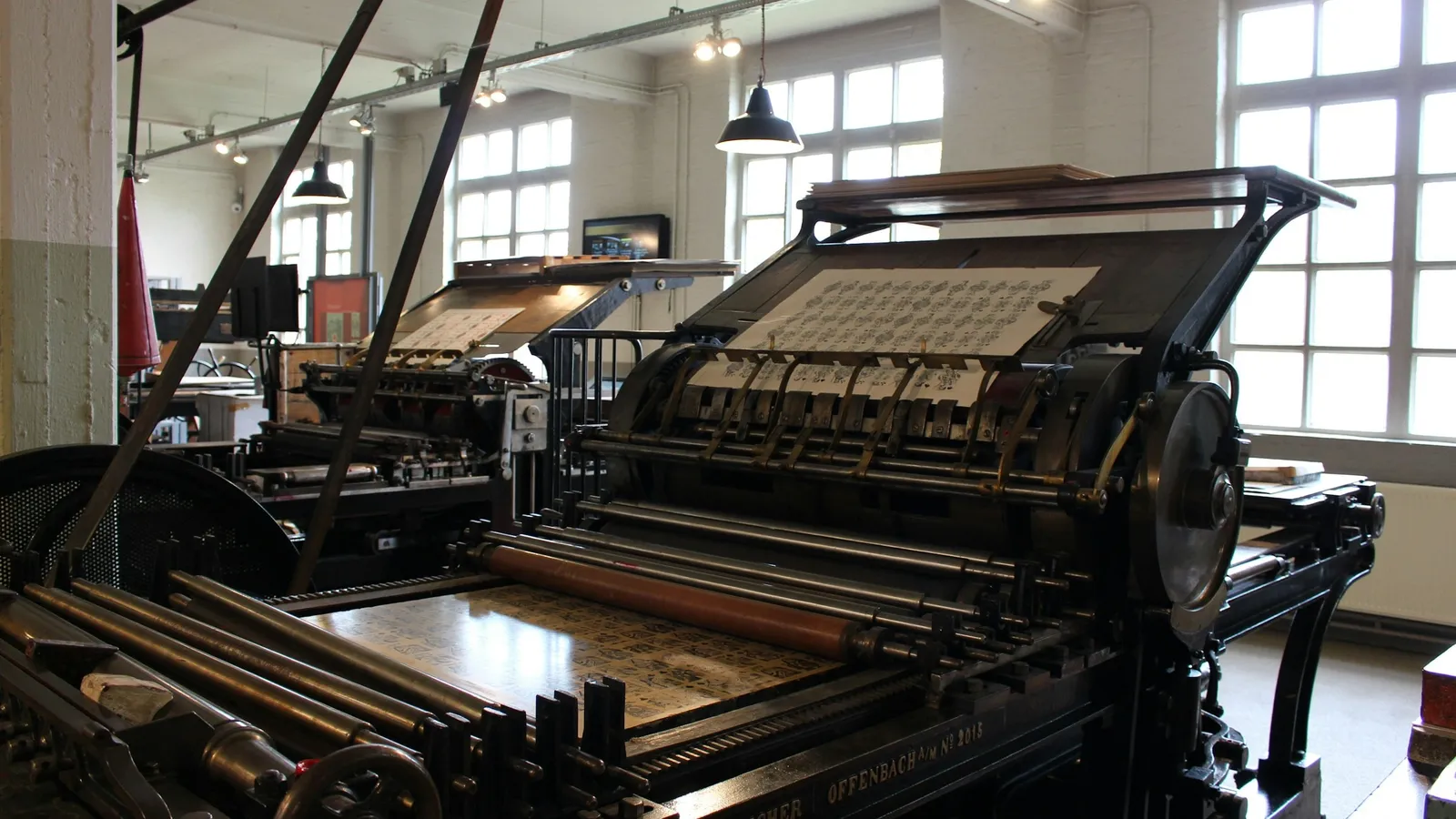
The company's own history site, Willis Carrier: The Weathermakers, tells the story. In 1902 the Sackett and Wilhelms printing company in Brooklyn had a problem: colour prints were made one ink at a time, and humidity made the paper expand and shrink between passes, so the colours did not line up.
Carrier tested a cloth soaked in calcium chloride brine. It removed moisture but added heat, salt and smell. He then ran cold water through coils, balancing the coil temperature against the airflow to pull the air down to a chosen dew point. His drawings are dated 17 July 1902. The coils went in late that summer, with an ammonia compressor added in 1903. The system was designed to hold the plant at 55% humidity all year.
Why does cooling air remove water?
Warm air can hold more water vapour than cold air. Cool air enough and it reaches its dew point; below that, vapour condenses into liquid, like water drops on a cold glass. Pass air over a coil colder than the dew point you want, drain off the water, and the air leaves drier.
The same history site says Carrier later did something that sounds backwards: he dried air by passing it through a fine spray of water. Controlling the temperature of the spray controlled the dew point of the air leaving it. In 1911 he presented his "Rational Psychrometric Formulae" to the American Society of Mechanical Engineers; the Hall of Fame says they remain the basis of air-conditioning calculations.
Worked example: how powerful was the 1902 system?
The design was rated as having "the equivalent cooling effect of melting 108,000 pounds of ice per day". Let us turn that into watts using the latent heat of fusion of ice, Lf = 3.33 × 10⁵ J/kg, from the NCERT Class 11 thermal properties chapter.
Pounds to kilograms. 1 lb = 0.4536 kg, so 108,000 × 0.4536 ≈ 48,990 kg.
Heat absorbed by melting. Q = m × Lf = 48,990 × 3.33 × 10⁵ ≈ 1.63 × 10¹⁰ J per day.
Seconds in a day. 24 × 3,600 = 86,400 s.
Power. 1.63 × 10¹⁰ / 86,400 ≈ 1.89 × 10⁵ W, about 190 kW.
For scale, using NCERT's latent heat of vaporisation, Lv = 22.6 × 10⁵ J/kg, condensing just 1 kg of water vapour an hour releases 2.26 × 10⁶ / 3,600 ≈ 628 W. Removing moisture is real work.
What mistakes do students make with latent heat?
Using specific heat during a phase change. While ice melts, temperature stays at 0 °C; use m × L, not m × c × ΔT.
Mixing up Lf and Lv. Melting and freezing use Lf; boiling and condensing use Lv, which for water is almost seven times larger.
Forgetting units of time. "Per day" must become per second before you can call the answer watts.
Our post on refrigerators and heat pumps covers how the cooling machine itself moves heat. When a mixed heat problem has too many steps to keep straight, the Fermi Problem Library has a step-by-step solver that explains the reasoning.
What can you take from how Carrier worked?
Find the real variable. The printers asked for cooler air; the problem was water in the paper.
Test, then measure. He tried the brine cloth, saw what it added, and moved on.
Turn experience into formulas. His 1911 formulae let other engineers design systems without repeating his experiments.
Practice routine: work out the power needed to melt 500 kg of ice in 10 hours, then the power to condense 2 kg of steam in one hour, using NCERT's values.
Next step: put a cold glass of water on your desk, watch for the first drops, and write one line explaining why they form.


