On this page
Every sentence here hides one fact from the NCERT chapter on Principles of Inheritance and Variation, the fourth in Class 12 Biology (2026-27 reprint). In the NEET (UG) 2026 syllabus this material falls under Unit 7, Genetics and Evolution, as heredity and variation.
A blank gives you no options to lean on. If you can write the word cold, you will spot it among four choices. All 25 sentences are ours, roughly easy to hard, each with one answer.
This is a study summary, not medical advice.
What did Mendel and the early breeders work with?
Long before genetics had a name, breeders turned wild cattle into Indian breeds such as the Sahiwal, which NCERT places in _____.
Thousands of years before Mendel, people knew that one source of differences between parents and offspring lay in _____ reproduction.
Mendel's pea studies mark the first time biology borrowed _____ analysis, together with mathematical logic, to test its ideas.
Among the seven pea characters in Mendel's table, flower position came in two forms, axial or _____.
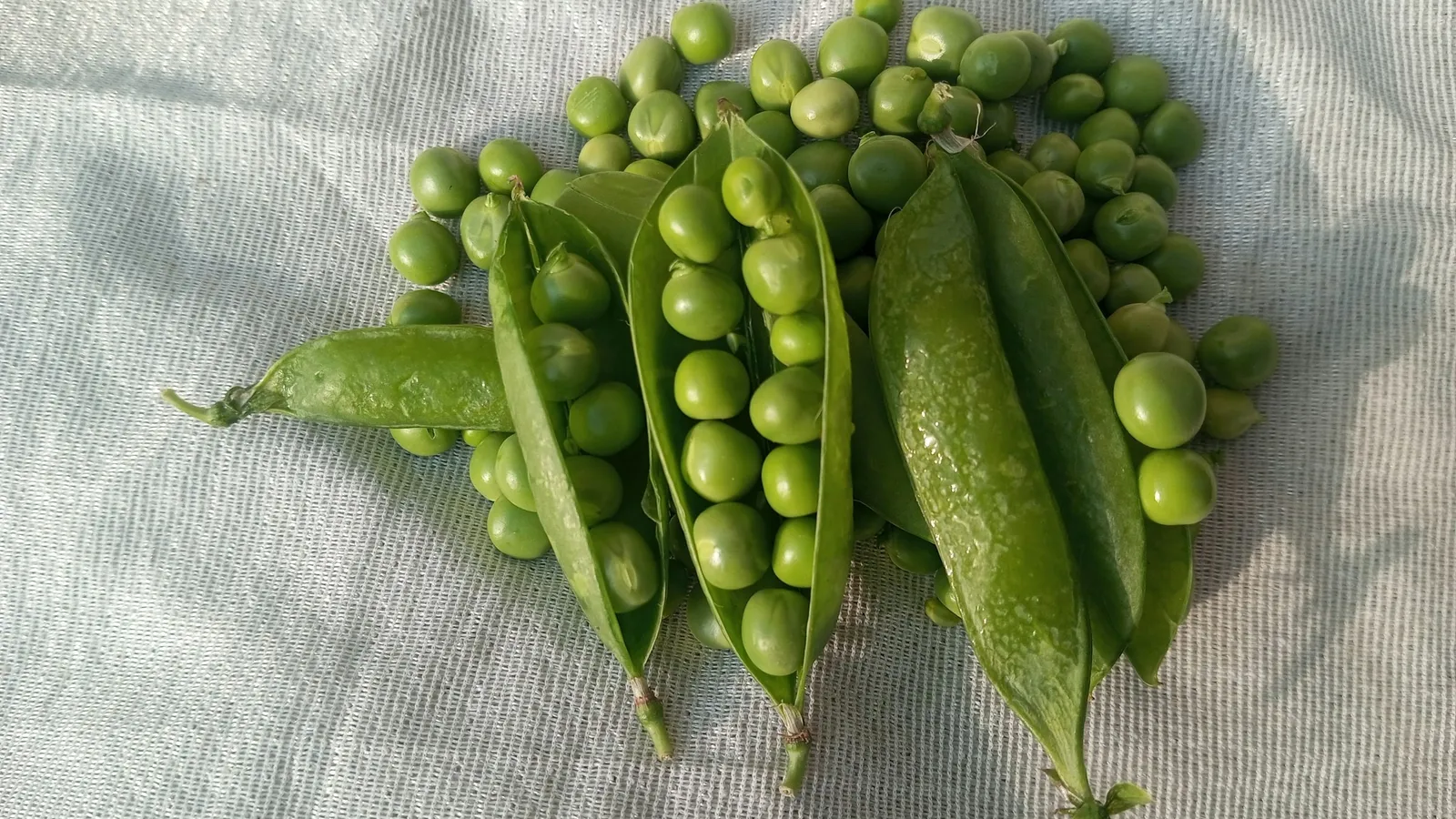
Crossing true-breeding tall peas with dwarf ones gave an F1 in which every single plant was _____.
How do alleles and chromosomes behave beyond simple dominance?
The snapdragon, which NCERT uses to show incomplete dominance, goes by the common name _____ flower.
Pea seeds of genotype bb build smaller starch grains and end up _____ once they mature.
In NCERT's notation, the gene for human ABO blood groups is written with the capital letter _____.
Since any one person holds just two alleles of a gene, a third allele can only come to light through _____ studies.
Chromosomes, literally "coloured bodies", were named for the way they showed up after _____.
Sutton and Boveri could match genes to chromosomes because the two alleles of a pair sit at matching sites on a _____ pair of chromosomes.
Today, maps built from recombination frequencies are a common first step before scientists sequence a whole _____.
What else shapes a trait, and how is sex decided?
In a polygenic trait each allele's contribution simply adds to the rest, so NCERT calls the effect of each allele _____.
In NCERT's three-gene model of human skin colour, the genotype aabbcc gives the _____ skin colour of all.
In many birds the female carries two unlike sex chromosomes, named Z and _____.
A drone honey bee hatches from an egg that no sperm has entered, a route NCERT calls _____.
Which change sits behind which disorder?
Haemophilia turns up in many descendants of Queen _____, who was herself a carrier.
Red-green colour blindness traces to a faulty red-sensing or green-sensing _____ in the eye.
NCERT classes phenylketonuria as an inborn error of _____.
Phenylalanine derivatives spill into the urine in phenylketonuria because the _____ takes them back poorly.
When too few globin chains are made in thalassemia, the abnormal haemoglobin that results causes _____.
Besides a furrowed tongue, NCERT notes a characteristic palm _____ on the broad palm in Down's syndrome.
A Turner's syndrome female (45, X0) cannot reproduce because her _____ stay rudimentary.
NCERT's sketch of Turner's syndrome shows a figure of _____ stature with underdeveloped feminine character.
Klinefelter's syndrome (47, XXY) gives masculine development overall, yet breast development also appears, a feature NCERT names _____.
Answers
Punjab: NCERT's example of artificial selection and domestication from wild ancestral cows (NCERT chapter introduction).
Sexual: humans knew this as early as 8000-1000 B.C. and used natural variation to breed selectively (NCERT chapter introduction).
Statistical: his large sampling size also made his data more credible (NCERT 4.1).
Terminal: flower position is one of the seven characters in Table 4.1 (NCERT 4.1).
Tall: the F1 resembled one parent, and dwarf plants came back as 1/4 of the F2 (NCERT 4.2).
Dog: red RR crossed with white rr gives a pink Rr F1 that matches neither parent (NCERT 4.2.2.1).
Wrinkled: BB seeds are round, and Bb seeds are round but carry starch grains of intermediate size (NCERT 4.2.2.2).
I: it has three alleles, IA, IB and i (NCERT 4.2.2.2).
Population: ABO, with three alleles for one character, is NCERT's case of multiple alleles (NCERT 4.2.2.2).
Staining: better microscopy let scientists watch these nuclear bodies double and divide before each cell division (NCERT 4.3.2).
Homologous: this pairing is why chromosome behaviour runs parallel to gene behaviour (NCERT 4.3.2).
Genome: NCERT points to the Human Genome Sequencing Project as one such case (NCERT 4.3.3).
Additive: the number of dominant alleles sets how dark or light the skin is (NCERT 4.4).
Lightest: AABBCC gives the darkest skin, and three dominant with three recessive alleles give an intermediate shade (NCERT 4.4).
W: the female makes two kinds of gametes (female heterogamety), while the male has two Z chromosomes (NCERT 4.6).
Parthenogenesis: drones are haploid, while queens and workers come from fertilised eggs (NCERT 4.6.2).
Victoria: haemophilia is a sex-linked recessive disease passed from carrier females to some of their sons (NCERT 4.8.2).
Cone: the faulty genes sit on the X chromosome, so far more males than females are affected (NCERT 4.8.2).
Metabolism: it is inherited as an autosomal recessive trait (NCERT 4.8.2).
Kidney: the missing enzyme normally converts phenylalanine into tyrosine (NCERT 4.8.2).
Anaemia: NCERT calls thalassemia a quantitative problem, unlike the faulty globin of sickle-cell disease (NCERT 4.8.2).
Crease: the disorder comes from an extra copy of chromosome 21 (NCERT 4.8.3).
Ovaries: other secondary sexual characters are also lacking (NCERT 4.8.3).
Short: Figure 4.17 sets it beside a tall, feminised figure for Klinefelter's syndrome (NCERT 4.8.3).
Gynaecomastia: one extra X chromosome causes it, and such individuals are sterile (NCERT 4.8.3).
How should you use your misses?
Sort your misses by heading; three or more under one heading marks the section to reread first. If the slips cluster, our common mistakes in principles of inheritance explains the usual mix-ups. For a full chapter plan see our NEET preparation plan for this chapter.
Not sure which section to revisit first? Fermi's AI tutor works out what you already know and builds a plan for the session.