On this page
In 2019, a team at MIT gave Fitbit trackers to students in a first-year chemistry class and watched their sleep for a whole semester. The paper, by Kana Okano, Jakub R. Kaczmarzyk, Neha Dave, John D. E. Gabrieli and Jeffrey C. Grossman, appeared in npj Science of Learning. Its most useful finding is about when sleep counts.
What did the MIT sleep and grades study measure?
The question: do objectively measured sleep patterns track real grades in a real course? The full paper describes the setup.
Who: 100 volunteers from the 370 students in Introduction to Solid State Chemistry at MIT, USA; 88 finished the study (45 women), mostly first-years, with a mean age of 18.19 years.
How long: a 14-week semester, wearing a Fitbit Charge HR; the 88 wore it 89.4% of the time on average.
What was measured: sleep duration, a Fitbit "sleep quality" score from 0 to 10, and sleep inconsistency (how much nightly sleep varied from day to day).
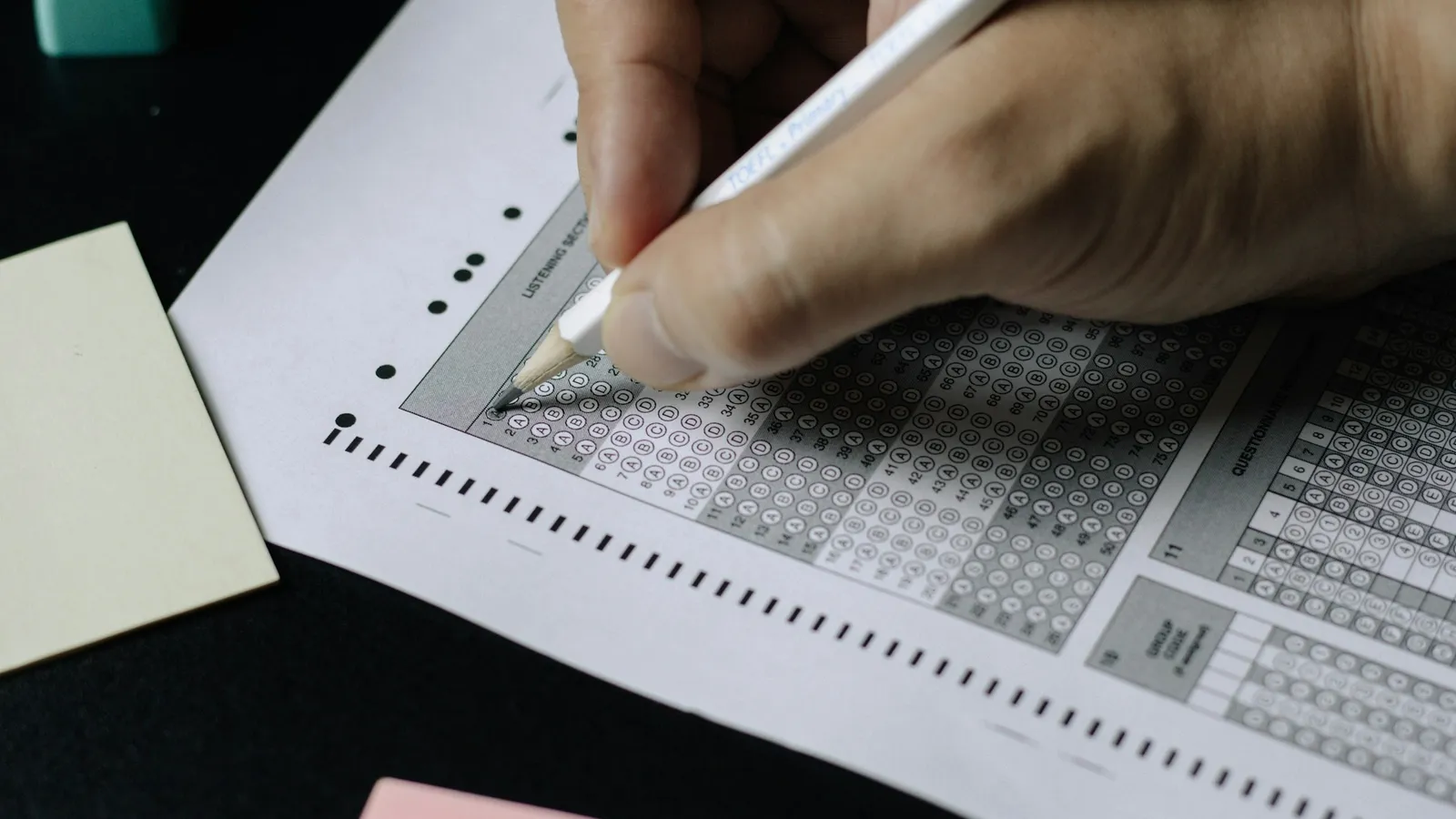
Outcome: marks on the course's weekly quizzes, three midterms and a final exam.
It was observational: nobody was told how to sleep, and there was no control group.
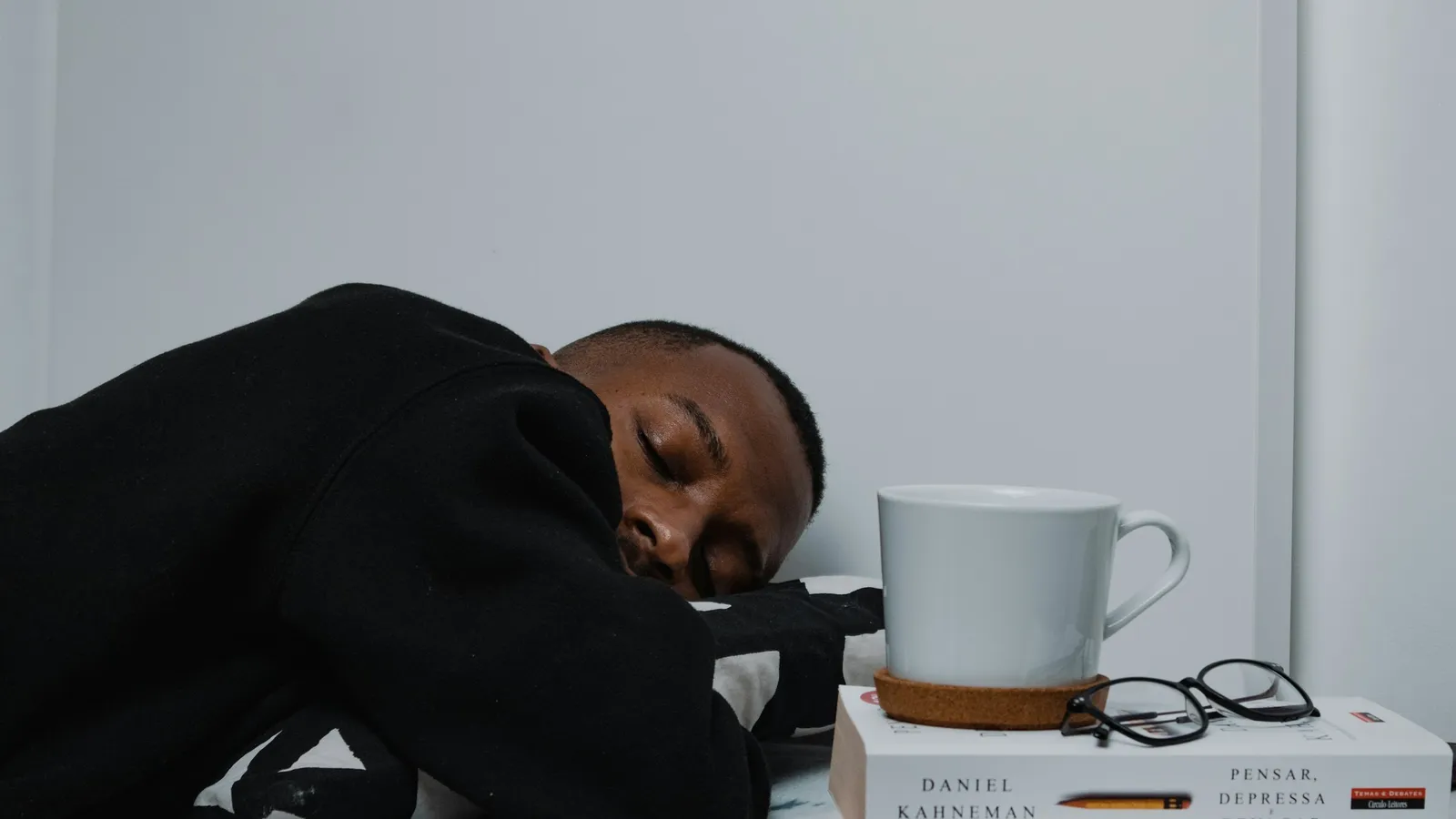
Does sleeping well the night before an exam help?
Not in this study. Sleep on the single night before a midterm showed no significant link with that midterm's score (all r values below 0.20), and quizzes showed the same, according to the paper.
Average sleep duration over the month before each midterm correlated with the score (r from 0.25 to 0.34). The authors' reading is that sleep counts most while the tested topics are being learned.
What were the key numbers?
All figures below are from Okano et al. (2019) in npj Science of Learning.
Students slept 7 h 8 min a night on average, going to bed at about 1:54 a.m. and waking at about 9:17 a.m.
Longer average sleep correlated with a higher overall score (r = 0.38).
Better sleep quality correlated with a higher score (r = 0.44).
More inconsistent sleep correlated with a lower score (r = -0.36).
Students who went to bed before the class's median bedtime averaged 77.25% overall, against 70.68% for later sleepers.
Together, duration, quality and consistency explained 24.44% of the variation in overall scores.
Women in the class scored higher than men, but the gap was no longer significant once sleep quality was accounted for. MIT News reported the same.
What does the study not show?
The authors list the limits themselves in the paper.
Correlation, not cause. Stress, motivation or personality could affect both sleep and grades.
One class, 88 students, one elite university. Results may not carry over to other students or subjects.
Fitbit's quality score is proprietary, with no published evidence that it validly measures sleep quality.
About 75% of the variation in marks was not explained by sleep.
A later, larger study by other researchers points the same way, with a twist. Creswell and colleagues, in PNAS (2023), tracked the sleep of 557 first-year students at three universities, across five studies, for a month early in the term. Each extra hour of average nightly sleep went with a 0.07 rise in end-of-term GPA, and averaging under 6 hours a night looked like the point where sleep turned from helpful to harmful. Unlike the MIT link between irregular sleep and lower marks, bedtime variability did not reliably predict GPA across their studies, though the two papers measured regularity differently. So "sleep enough, for weeks" is the sturdier lesson.
What can a JEE or NEET student take from this?
This section is our inference, not a finding: the study was on American university students and tested no advice. Still, the pattern suggests a plan:
Plan sleep by the month, not the night. If a unit test or mock is four weeks away, those four weeks are the sleep that may matter.
Pick a fixed bedtime and wake time that fit your school or coaching timings, and keep them within about an hour on weekends.
Protect sleep in heavy weeks. Cut a lower-value task, such as rereading notes you already know, instead of sleep.
The CDC recommends 8-10 hours of sleep for teens aged 13-17 and 7 or more for adults.
Worked example. Riya's JEE Main mock is on the 28th. She sleeps 12:30 a.m. to 6 a.m. on weekdays and till 10 a.m. on Sundays. Her plan: lights out at 11 p.m., up at 6:30 a.m. every day. The night before the mock is just night 28 of the same routine.
If late nights come from being stuck on one problem, the Fermi Problem Library has a step-by-step solver that explains the reasoning, so a doubt does not have to eat your sleep.
If poor sleep lasts weeks or comes with low mood or worry, talk to a parent, a doctor or Tele MANAS (14416). Read more on how sleep helps you remember what you studied, why sleep before an exam beats an all-nighter, and how to test study-habit claims for correlation vs causation.