

On this page
Each sentence below hides one NCERT fact behind a blank: a name, a part of the kidney or a step in a process. All 25 test Chapter 16 of Class 11 Biology (NCERT kebo116, Reprint 2026-27), which the NEET (UG) 2026 syllabus files under Unit 5, Human Physiology. The wording is ours, and none is a past or predicted question. This is a study summary, not medical advice.
The blanks run roughly from easy to hard, and each has one correct answer (a word or short term). Write yours down first, then check the key, where each answer has a one-line reason and its NCERT section. For the full chapter explained with worked numbers, read our NEET guide to excretion, from the nephron to counter-current. If you keep mixing up segments or hormones, our common excretion mistakes in NEET Biology shows the usual swaps and how to fix them.
How do animals and other organs get rid of wastes?
Ammonia is readily _____ in water, so ammonotelic animals can usually let it diffuse out through the body surface, or through the gills in fish.
Flatworms such as Planaria excrete through protonephridia, which NCERT also calls _____ cells.
Among the organs that share excretion with the kidneys, NCERT describes the liver as the _____ gland in our body.
Along with bilirubin, biliverdin, cholesterol, vitamins and drugs, the bile made by the liver carries degraded _____ hormones.
What are the parts of the kidney and nephron called?
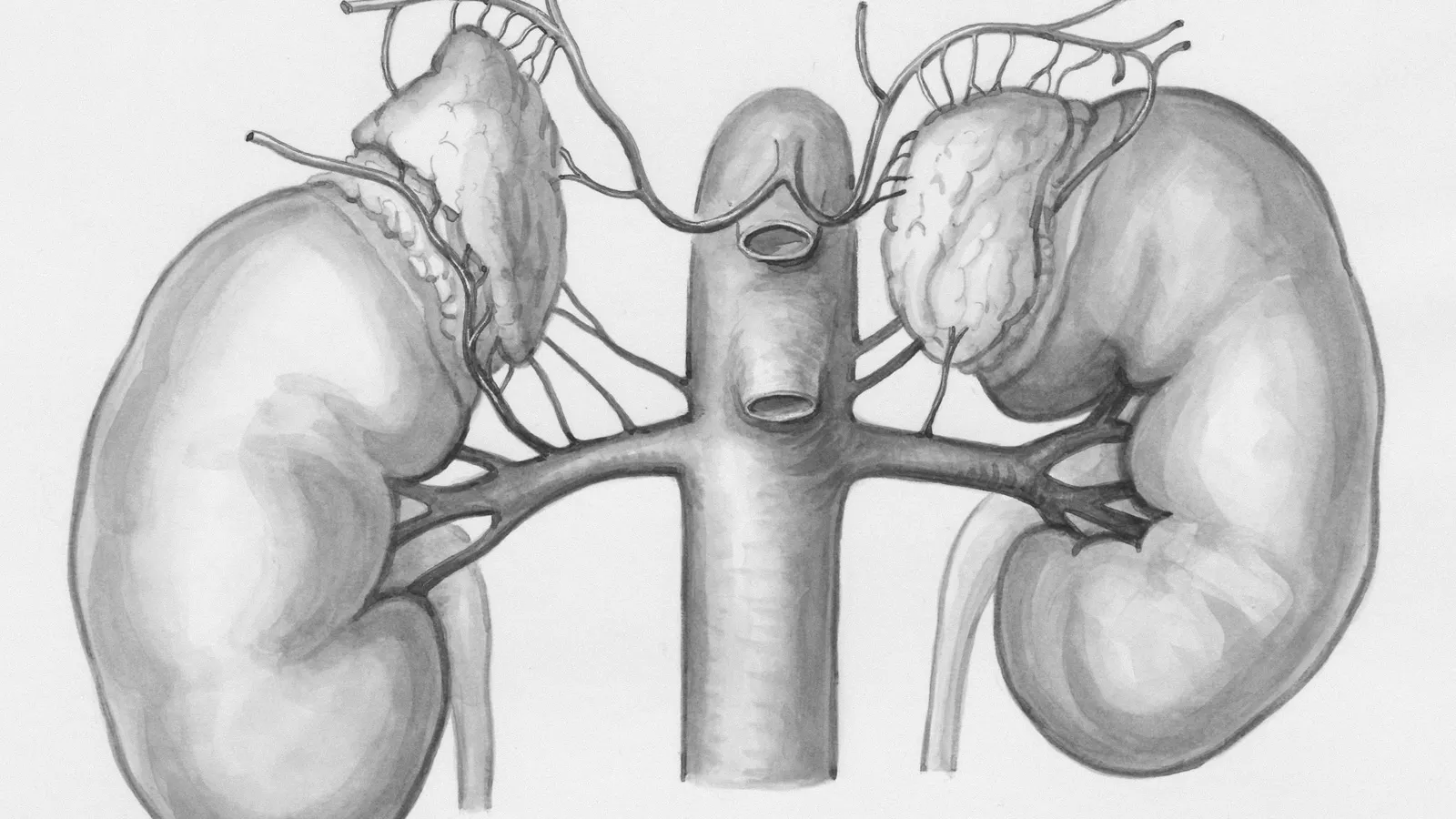
Each human kidney is reddish brown and shaped like a _____.
Apart from the glomerulus, the other main part of every nephron is the renal _____.
The double-walled cup that encloses the glomerulus is named _____ capsule.
A glomerulus together with the cup around it makes up the Malpighian body, also called the renal _____.
What happens to the filtrate inside the nephron?
Of the three layers that blood crosses during filtration, the one sandwiched between the glomerular endothelium and the capsule epithelium is the _____ membrane.
The tiny gaps that podocytes leave between themselves are known as filtration slits or _____ pores.
When tubular cells move H+, K+ and ammonia into the filtrate, the step is called tubular _____.
The collecting duct is a long tube that starts in the cortex and runs to the inner parts of the _____.
Water leaves the collecting tubule easily because the interstitial fluid around it holds a concentration _____ set up by the counter current mechanism.
How is the kidney controlled, and what leaves it?
Antidiuretic hormone, released from the neurohypophysis, is also known as _____.
True to its name, antidiuretic hormone prevents _____ by helping the later parts of the tubule take back water.
ANF, the vasodilator released when more blood flows into the atria of the heart, is short for atrial _____ factor.
Urine release is set off through a neural pathway that NCERT names the micturition _____.
When the bladder empties, motor messages from the CNS make its _____ muscles (the involuntary type) contract while the urethral sphincter relaxes.
Normal urine is a watery fluid, light _____ in colour and slightly acidic.
The presence of glucose in urine is given the name _____.
What does NCERT say about kidney failure?
For patients with uremia, NCERT describes clearing urea from the blood outside the body by a process called _____.
In that process, blood is pumped into a unit that NCERT also calls an _____ kidney.
Inside the unit runs a coiled tube made of porous _____.
The tube is bathed in a fluid that matches plasma except for nitrogenous wastes; it is called the _____ fluid.
NCERT calls kidney _____, using a working kidney from a donor, the ultimate method for correcting acute renal failure.
Answers
soluble: it diffuses out, and kidneys play no significant part in removing it (NCERT chapter opening).
flame: protonephridia, mainly used for osmoregulation, are also found in rotifers, some annelids and Amphioxus (NCERT chapter opening).
largest: the liver passes its waste substances out in bile (NCERT 16.7).
steroid: most of these bile substances finally leave with the digestive wastes (NCERT 16.7).
bean: NCERT calls the kidneys reddish brown and bean shaped (NCERT 16.1).
tubule: NCERT splits every nephron into just these two parts (NCERT 16.1).
Bowman's: the renal tubule begins with this cup (NCERT 16.1).
corpuscle: glomerulus plus Bowman's capsule is the Malpighian body or renal corpuscle (NCERT 16.1).
basement: it lies between the other two layers (NCERT 16.2).
slit: NCERT gives both names for these spaces (NCERT 16.2).
secretion: it helps hold the ions and pH of body fluids steady (NCERT 16.2).
medulla: the duct crosses from the cortex to the inner medulla (NCERT 16.3).
gradient: the osmolarity of the medullary interstitium rises towards the inner medulla (NCERT 16.4).
vasopressin: the hypothalamus releases ADH, or vasopressin, from the neurohypophysis (NCERT 16.5).
diuresis: ADH aids water reabsorption in the latter tubule (NCERT 16.5).
natriuretic: by widening vessels, ANF lowers blood pressure and so acts as a check on renin-angiotensin (NCERT 16.5).
reflex: the release of urine is micturition, driven by the micturition reflex (NCERT 16.6).
smooth: the bladder's smooth muscles contract as the sphincter relaxes (NCERT 16.6).
yellow: NCERT gives urine a pH of about 6.0 and a characteristic odour (NCERT 16.6).
glycosuria: with ketonuria, NCERT links it to diabetes mellitus (NCERT 16.6).
haemodialysis (hemodialysis): it is used for uremic patients (NCERT 16.8).
artificial: the dialysing unit is NCERT's artificial kidney (NCERT 16.8).
cellophane: molecules cross it along their concentration gradient (NCERT 16.8).
dialysing: with no nitrogenous wastes in it, those wastes move out of the blood (NCERT 16.8).
transplantation: a close relative is the preferred donor, to lower the chance of rejection (NCERT 16.8).
Group your misses: 1 to 4 send you back to the chapter opening and 16.7, 5 to 13 to sections 16.1 to 16.4, and 14 to 25 to 16.5 onwards.
Which blanks did you miss twice? Fermi's AI tutor works out what you already know and builds a plan for the session.


